6 Clear Differences Between Emission Nebula vs Reflection Nebula Types

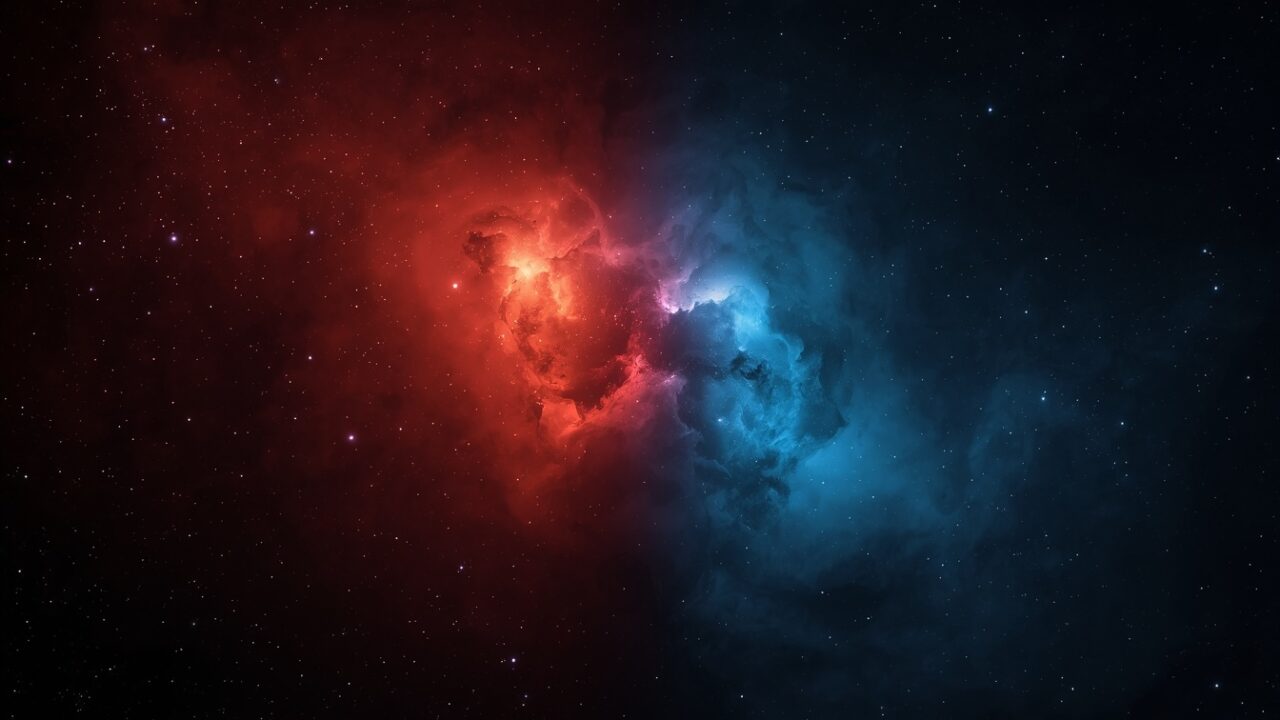
Emission Nebula vs Reflection Nebula Types:
Two of the most commonly photographed nebula categories often get confused by beginners: emission and reflection nebulae. Understanding Emission nebula vs reflection nebula differences transforms how you interpret color in deep-space photography, since these two object types glow through completely different physical processes.
The Core Difference: Self-Glowing vs Reflected Light
The fundamental distinction in Emission nebula vs reflection nebula comparisons comes down to light source. Emission nebulae generate their own glow through ionized gas, while reflection nebulae produce no light of their own — they simply scatter and reflect light from nearby stars, much like fog scattering a car’s headlights.
Why Emission Nebulae Glow Red
Emission nebulae typically appear red or pink in photographs because their hydrogen gas becomes ionized by intense ultraviolet radiation from nearby hot, young stars. As electrons recombine with hydrogen ions, they emit light at a specific wavelength known as hydrogen-alpha, producing the characteristic red glow seen in objects like the Orion Nebula.
Why Reflection Nebulae Glow Blue
In contrast, reflection nebulae appear blue because their dust particles scatter shorter blue wavelengths of starlight more efficiently than longer red wavelengths. This Emission nebula vs reflection nebula color difference mirrors why Earth’s daytime sky appears blue — the same scattering physics applies on a cosmic scale.
Temperature Requirements Differ
Emission nebulae require extremely hot, young stars — typically spectral types O and B — with enough ultraviolet output to ionize surrounding hydrogen gas. Reflection nebulae, however, can form around cooler stars, since they only need enough visible light to scatter through surrounding dust rather than ionization-level energy.
Famous Examples of Each Type
The Orion Nebula stands as a textbook emission nebula example, glowing brightly red due to intense star-forming activity. Meanwhile, the nebulosity surrounding the Pleiades star cluster represents a classic reflection nebula, with blue haze scattered from the cluster’s hot, young stars without any ionization-driven glow.
Can a Nebula Be Both Types?
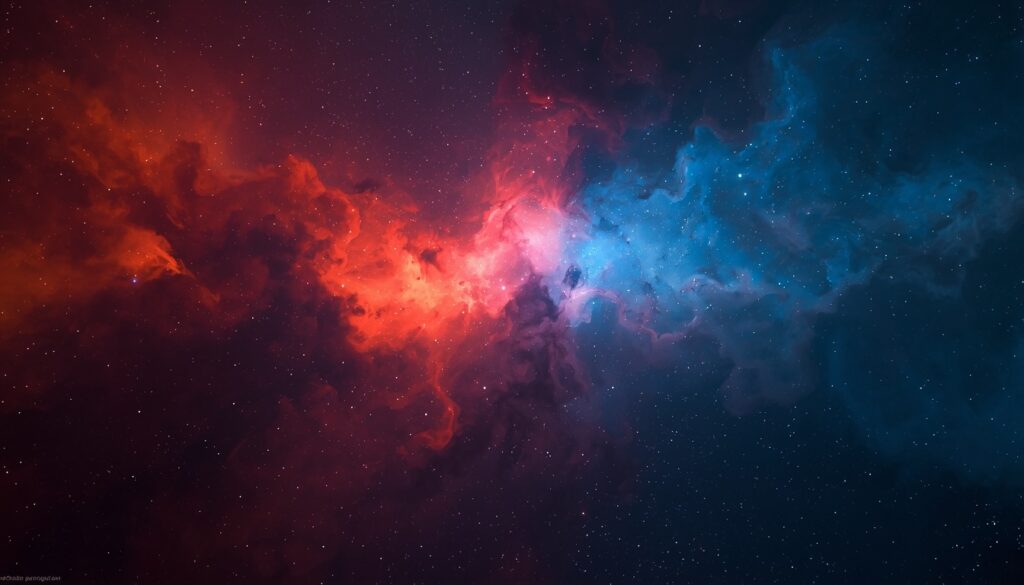
Interestingly, some nebulae display characteristics of both categories simultaneously, containing regions of ionized hydrogen alongside dust clouds reflecting nearby starlight. This Emission nebula vs reflection nebula overlap explains why some deep-space photographs show mixed red and blue coloring within a single object.
Imaging Techniques for Each Type
Astrophotographers often use different filter strategies depending on nebula type. Narrowband filters targeting hydrogen-alpha wavelengths work exceptionally well for emission nebulae, while reflection nebulae typically require broadband imaging to accurately capture their more subtle, continuous-spectrum blue glow.
How This Distinction Aids Identification
Learning to distinguish two nebula type characteristics helps astrophotographers and casual observers alike quickly identify what type of object they’re viewing in any given photograph, simply by observing the dominant color and considering the surrounding stellar environment.
The Physics of Scattering in Plain Language
Reflection nebulae look blue for the same basic reason the daytime sky does. Tiny particles scatter shorter, bluer wavelengths of light more efficiently than longer, redder ones. When starlight passes through a cloud of fine dust, the blue part of the light bounces toward us more strongly, so the cloud takes on a bluish glow.
The dust grains in nebulae are larger than the air molecules that color Earth’s sky, so the effect is not identical, but the result is similar. Emission nebulae work in a completely different way. They do not reflect starlight at all. Their gas is energized by ultraviolet radiation and then releases light of its own at specific wavelengths.
What Kind of Star Powers Each Type
The type of star near a cloud largely decides which kind of nebula you see. Only very hot, massive stars, usually of spectral type O or early B, produce enough ultraviolet light to ionize hydrogen across a large region. Those stars create emission nebulae.
Cooler stars, including many B-type stars, are bright but do not emit enough ultraviolet radiation to ionize the gas strongly. Their light simply reflects off the dust. That is why the Pleiades, whose brightest stars are hot but not hot enough, are surrounded by blue reflection nebulosity rather than a red emission region.
Spectroscopy Settles the Question
Before photographs showed colors clearly, astronomers used spectroscopy to tell the two types apart. The spectrum of an emission nebula shows bright lines at specific wavelengths, the signatures of hydrogen, oxygen, nitrogen and other elements.
A reflection nebula shows a spectrum that looks like a copy of the nearby star’s light, with dark absorption lines rather than bright emission lines. Vesto Slipher used this method in 1912 to show that the nebulosity around the Pleiades was reflecting starlight. Edwin Hubble later confirmed the link between star temperature and nebula type in the 1920s.
Camera Settings for Each Type
Two nebula type imaging requires different approaches. Emission nebulae respond well to narrowband filters, which isolate hydrogen-alpha, oxygen-III and sulfur-II light and cut through light pollution. You can image emission nebulae even from a suburban backyard.
Reflection nebulae emit light across a broad range of wavelengths, so narrowband filters block most of their light. They need broadband color imaging under dark skies, with long total exposure time. A one-shot color camera or an LRGB filter set usually gives the best results for targets like the Iris Nebula or the Witch Head Nebula.
A Quick Way to Tell Them Apart in Photos
In most true-color images, red or pink clouds are emission nebulae, while blue clouds near bright stars are reflection nebulae. Dark lanes cutting across either type are usually foreground dust.
Be careful with false-color images, including the popular Hubble palette. In those images, colors are assigned to specific filters, so a blue region may represent oxygen emission rather than reflection. Always check the image caption to see how colors were mapped before drawing conclusions.
Examples Worth Photographing
For emission nebulae, the North America Nebula in Cygnus and the Heart Nebula in Cassiopeia are large, bright targets. For reflection nebulae, the Iris Nebula (NGC 7023) in Cepheus and the blue glow around the Pleiades are classic choices. Imaging one of each on the same season’s nights is a practical way to see the difference for yourself.
Final Thoughts
Understanding two nebula type physics adds a valuable layer of scientific context to nebula photography, turning simple color observations into meaningful clues about the underlying astrophysical processes at work.
Keep exploring with our guides to Nebula types visual guide, Witch Head Nebula images and Light pollution filter guide astrophotography. For official information, visit NASA’s universe science hub.
Frequently Asked Questions
What’s the main difference between emission and reflection nebulae?
Emission nebulae glow from ionized gas, while reflection nebulae only scatter nearby starlight.
Why do emission nebulae look red?
Ionized hydrogen gas emits light at a red wavelength called hydrogen-alpha.
Why do reflection nebulae look blue?
Dust particles scatter shorter blue wavelengths more efficiently than red light.
Can a nebula show both emission and reflection characteristics?
Yes, some nebulae display mixed red and blue coloring from both processes occurring together.
Which filters work best for each type?
Narrowband filters suit emission nebulae, while broadband filters better capture reflection nebulae.
Keep exploring
2 comments