5 Eerie Witch Head Nebula Images and the Science Behind Them

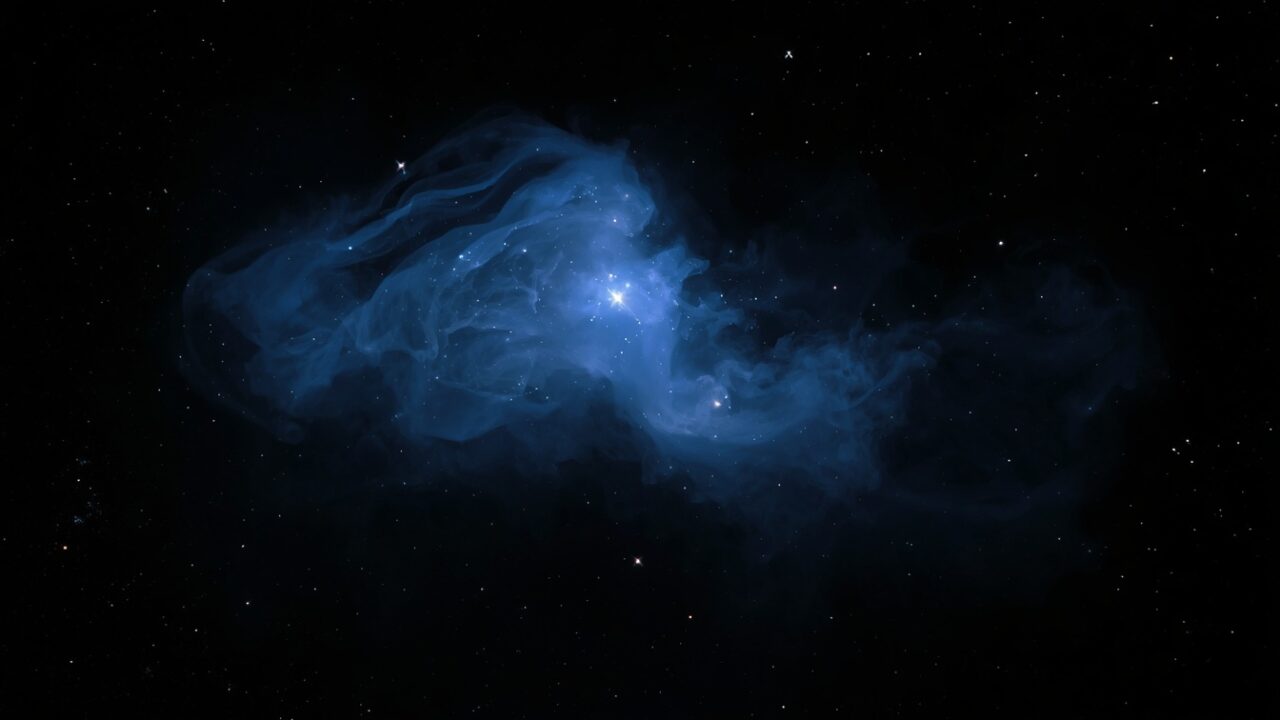
Witch Head Nebula Images:
Among the more hauntingly shaped objects in deep-space photography, Witch Head Nebula images reveal a wispy, blue structure bearing an uncanny resemblance to a cackling witch’s profile. Located roughly 900 light-years away near the bright star Rigel, this reflection nebula offers a unique example of how starlight scattering can create dramatic, recognizable shapes.
A Reflection Nebula, Not a Glowing Cloud
Unlike many popular nebulae, Witch Head Nebula images show a reflection nebula rather than an emission nebula, meaning it produces no light of its own. Instead, its wispy blue appearance results entirely from dust particles scattering light from the extremely bright, nearby supergiant star Rigel.
Why It Appears Blue
This nebula’s signature blue coloring, prominent in every detailed Witch Head Nebula images collection, results from the same scattering physics responsible for Earth’s blue sky — dust particles scatter shorter blue wavelengths of Rigel’s intense light more efficiently than longer red wavelengths.
The Witch-Like Silhouette
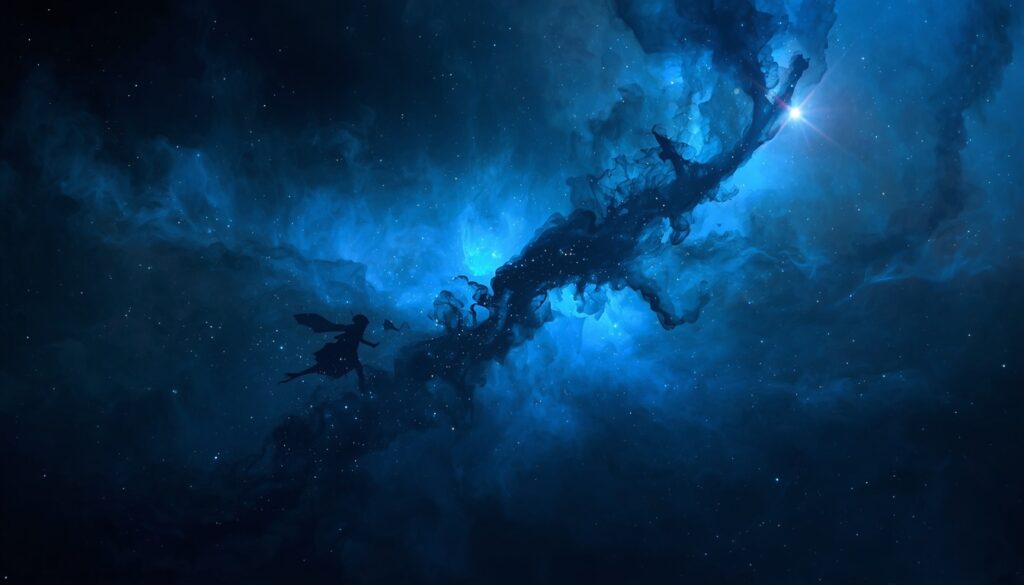
The nebula’s elongated, wispy structure creates a shape resembling a screaming or cackling witch’s profile when viewed in wide-field astrophotography, complete with what appears to be a pointed nose and open mouth formed by the nebula’s natural dust distribution patterns.
Proximity to Rigel
These images are typically captured alongside or near the bright supergiant star Rigel, whose intense light output makes the surrounding reflection nebula visible despite the relatively diffuse, low-density dust responsible for the scattering effect.
Star Formation Within the Nebula
While primarily known for its reflective properties, portions of the Witch Head Nebula also show evidence of ongoing, low-level star formation, with some infrared observations revealing young stellar objects embedded within the denser sections of the dust cloud.
Challenges in Photographing This Object
Due to its relatively faint, diffuse structure, capturing detailed Witch Head Nebula images requires longer exposure times and larger telescope apertures compared to brighter emission nebulae, making it a moderately challenging but rewarding target for experienced astrophotographers.
Comparing to Other Reflection Nebulae
While the Pleiades reflection nebulosity ranks among the most famous examples of this nebula type, these images offer a dramatically different, more elongated and wispy structure, demonstrating the visual diversity possible within the same broad reflection nebula category.
Cultural Recognition of the Shape
The nebula’s uncanny resemblance to a witch’s profile has made Witch Head Nebula images particularly popular around Halloween-themed astronomy content, offering a natural, science-backed connection between deep-space photography and popular seasonal imagery.
Where to Find the Witch Head
The Witch Head Nebula, cataloged as IC 2118, lies in the constellation Eridanus, just west of Orion’s bright star Rigel. It is about 900 light-years away and stretches across a large area of sky.
Despite its size, it is very faint, which makes it difficult to see visually. It is primarily a target for long-exposure photography, where its distinctive profile emerges in blue reflected light.
Rigel’s Role
The Witch Head glows because it reflects light from Rigel, one of the brightest stars in the night sky. Rigel is a blue supergiant, and its intense blue-white light illuminates the dust grains in the nebula.
Because the dust scatters blue light more efficiently, the nebula appears strongly blue in photographs. These images often show Rigel just outside the frame, its brightness lighting up the cloud.
Part of a Larger Complex
The Witch Head is connected to the much larger Orion molecular cloud complex. This region contains the Orion Nebula, the Horsehead Nebula and many other star-forming clouds.
Studying the Witch Head in this broader context helps astronomers understand how star formation spreads through the complex over millions of years.
Imaging Challenges and Solutions
Capturing the Witch Head requires dark skies and long exposure times, often several hours. Light pollution easily washes out its faint glow.
Photographers also need to deal with Rigel’s brightness, which can cause glare and halos in images. Careful framing, good lenses and processing techniques help control reflections and bring out the nebula’s delicate details.
Why Reflection Nebulae Show Star Formation
Young stars have been found within the Witch Head, suggesting that star formation may be taking place in parts of the cloud. Infrared observations can reveal these hidden stars, which are difficult to detect in visible light.
This connection shows that reflection nebulae are not just passive clouds. They can also be sites of active star birth.
Observing Tips for the Witch Head
Visually, the Witch Head is extremely difficult, and most observers never see it through a telescope. Its surface brightness is very low, and Rigel’s glare makes it even harder to detect.
For photographers, the best approach is to use a fast lens or telescope with a wide field of view. Exposures of several minutes each, combined with many hours of total integration, help reveal the faint blue glow.
Other Blue Reflection Nebulae
The Witch Head is part of a family of blue reflection nebulae that includes the Iris Nebula in Cepheus and the Pleiades nebulosity in Taurus. Each shines by reflecting light from nearby bright stars.
Comparing these objects helps astronomers understand how dust composition and star brightness affect the color and appearance of reflection nebulae.
A Target for Wide-Field Surveys
Because the Witch Head is so large, it often appears in wide-field images of the Orion region. These broader views show how it connects to other clouds in the area, giving context to its position near Rigel.
Wide-field surveys also help astronomers map the distribution of dust across the constellation, adding to our understanding of the larger Orion molecular cloud complex.
The Witch Head in Popular Culture
Because of its striking profile, the Witch Head Nebula is often shared around Halloween by NASA and astronomy communities. NASA’s WISE mission released a spooky infrared image of it in 2013 that showed the nebula glowing in eerie colors.
Its fame has made it a popular target for astrophotographers looking to capture seasonal imagery.
Framing Advice
Frame the Witch Head so its profile faces toward Rigel, which sits just outside the upper edge of most compositions. This keeps the star’s glare out of the image while preserving the sense that the nebula is lit by it.
Final Thoughts
These images demonstrate how simple light-scattering physics can produce strikingly recognizable, almost eerie shapes, offering both a visually memorable astrophotography target and a clear real-world example of reflection nebula formation.
Keep exploring with our guides to Emission nebula vs reflection nebula, Horsehead Nebula photography guide and Nebula types visual guide. For official information, visit NASA’s universe science hub.
Frequently Asked Questions
What is the Witch Head Nebula?
A reflection nebula near the star Rigel, resembling a witch’s silhouette in photographs.
Why does it appear blue?
Dust particles scatter blue light from nearby Rigel more efficiently than red light.
How far away is it from Earth?
Approximately 900 light-years, located near the bright supergiant star Rigel.
Is there star formation happening in this nebula?
Yes, some infrared observations reveal young stellar objects within denser regions.
Why is it challenging to photograph?
Its faint, diffuse structure requires longer exposures and larger telescope apertures to capture clearly.
Keep exploring
1 comment