7 Amazing Defining Traits in This Ultimate Elliptical Galaxy Visual Guide

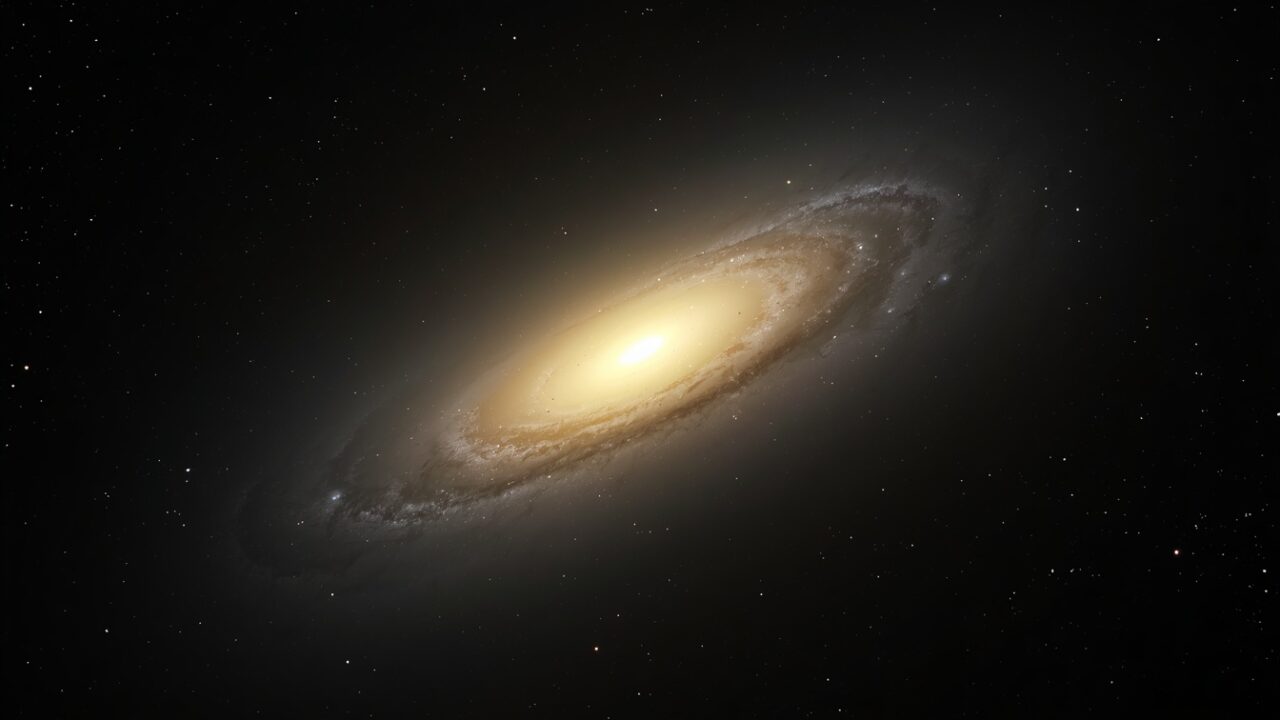
Elliptical Galaxy Visual Guide:
While spiral galaxies dominate popular astrophotography, elliptical galaxies represent an equally important category worth understanding. This Elliptical galaxy visual guide covers their distinctive smooth, featureless appearance and explains why they look so different from their spiral counterparts.
A Smooth, Featureless Structure
Unlike spiral galaxies with their dramatic arms, elliptical galaxies appear as smooth, roughly oval-shaped collections of stars with little internal structure. In this Elliptical galaxy visual guide, this smoothness is a defining visual characteristic, lacking the dust lanes and bright star-forming regions common in spiral galaxies.
Classification by Shape
Astronomers classify elliptical galaxies on a scale from E0 (nearly circular) to E7 (highly elongated), based on how flattened they appear in photographs. This classification, part of the broader Hubble sequence, helps categorize galaxies purely by their observed shape rather than internal structure.
Old Stellar Populations
Elliptical galaxies are typically dominated by older, redder stars, with comparatively little ongoing star formation. Their color in photographs tends toward yellow and red tones, contrasting with the bluer, younger star populations visible in spiral galaxy arms.
Giant Ellipticals: The Universe’s Largest Galaxies
Some of the largest known galaxies in the universe are giant ellipticals, often found at the centers of massive galaxy clusters. These galaxies can contain trillions of stars and are believed to form through repeated mergers of smaller galaxies over cosmic time.
Dwarf Ellipticals: The Smaller Cousins
On the opposite end of the scale, dwarf elliptical galaxies are much smaller and fainter, often orbiting as satellite galaxies around larger spiral or elliptical hosts. Despite their small size, they’re among the most common galaxy types in the observable universe.
Minimal Gas and Dust Content
A key feature highlighted in this Elliptical galaxy visual guide is the relative lack of gas and dust within elliptical galaxies, explaining their low rates of new star formation compared to gas-rich spiral galaxies actively producing young stars.
How Mergers Shape Elliptical Galaxies
Many astronomers believe elliptical galaxies form through the merger of two or more spiral galaxies, a violent process that disrupts organized spiral structure and redistributes stars into the smoother, more randomized orbits characteristic of elliptical shapes.
Central Supermassive Black Holes
Like spiral galaxies, ellipticals often host supermassive black holes at their centers, sometimes significantly more massive than those found in spiral galaxies, particularly within the largest giant elliptical galaxies at cluster centers.
How Astronomers Classify Ellipticals by Number
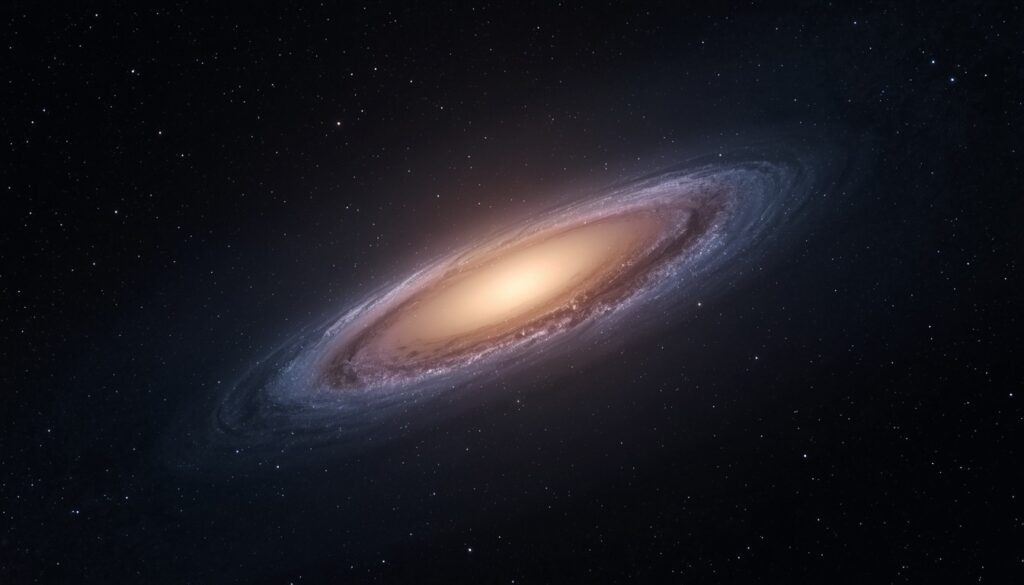
In Edwin Hubble’s classification system, elliptical galaxies are labeled from E0 to E7. An E0 galaxy looks perfectly round on the sky, while an E7 is the most stretched out. The number comes from a simple formula based on how elongated the galaxy appears.
There is an important catch. The label describes the apparent shape, not the true three-dimensional shape. A galaxy shaped like a flattened football could look round if we happen to see it end-on. That is why any elliptical galaxy visual guide should stress that the classification reflects our viewing angle as much as the galaxy itself.
Stars on Random Orbits
Spiral galaxies are flat because their stars mostly orbit in the same plane and direction, like cars on a racetrack. Elliptical galaxies are different. Many of their stars move on random orbits, tilted at all angles, more like a swarm of bees than a spinning disk.
This random motion is what gives ellipticals their smooth, puffed-up shape. Astronomers measure it by studying how much the spectral lines of the galaxy’s starlight are broadened. Wider lines mean faster, more random motion, which also helps estimate the galaxy’s total mass.
Hot Gas Invisible to Optical Telescopes
Ellipticals are often described as having little gas, but that is only partly true. They contain very little cold gas, the kind that forms stars. Many giant ellipticals, however, are surrounded by huge halos of extremely hot gas, at millions of degrees.
This gas is invisible in ordinary photographs but glows in X-rays, and observatories like NASA’s Chandra have mapped it around galaxies such as M87. The hot gas is too energetic to cool and form new stars easily, which helps explain why ellipticals have mostly stopped forming stars.
Famous Elliptical Galaxies to Know
M87 in the Virgo Cluster is probably the best-known giant elliptical. It hosts the supermassive black hole imaged by the Event Horizon Telescope and fires a powerful jet visible in many telescope images. Nearby, M49 is the brightest galaxy in the Virgo Cluster.
For a very different example, M32 and M110 are small ellipticals orbiting the Andromeda Galaxy. They are easy to spot in the same telescope field as Andromeda, which makes them a nice way to compare galaxy types in a single view.
Why Ellipticals Live in Crowded Places
Elliptical galaxies are much more common in dense galaxy clusters than in quiet regions of space. In clusters, galaxies collide and merge more often, and the hot gas that fills the cluster can strip cold gas from galaxies moving through it.
Both processes push galaxies toward becoming ellipticals. Mergers scramble the orderly orbits of spiral galaxies, while gas stripping shuts down star formation. The result is a strong link between a galaxy’s shape and its environment, known to astronomers as the morphology-density relation.
How to Spot an Elliptical in Photos
In images, ellipticals look like smooth, yellowish glows that fade gradually from a bright center, with no arms, dust lanes or blue star-forming knots. Their color comes from older, cooler stars. If you see a galaxy with a uniform glow and no internal structure, it is very likely an elliptical.
Faint shells and ripples sometimes appear around ellipticals in deep images. These are leftovers from past mergers, stars from a swallowed galaxy still settling into orbit. Spotting them requires long exposures and careful processing, but they reveal the violent history hidden behind the calm, smooth appearance.
Ellipticals Are Not All Old and Dead
Ellipticals are often described as red and dead, but some show small amounts of recent star formation, usually triggered by gas captured from a smaller galaxy. Ultraviolet surveys have found faint young stars in a number of nearby ellipticals, showing that even quiet galaxies can briefly come back to life.
Final Thoughts
This Elliptical galaxy visual guide highlights how these smooth, star-rich structures represent a fundamentally different galactic formation pathway compared to spirals, offering valuable insight into how galaxy mergers and mass shape the universe’s largest structures.
Keep exploring with our guides to Irregular galaxy visual guide, Spiral galaxy structure explained and Globular star cluster visual guide. For official information, visit NASA’s universe science hub.
Frequently Asked Questions
What does an elliptical galaxy look like?
A smooth, oval-shaped collection of stars with little internal structure or visible dust lanes.
How are elliptical galaxies classified?
On a scale from E0 (circular) to E7 (elongated) based on their observed shape.
Why do elliptical galaxies appear more red or yellow?
They contain mostly older stars with little ongoing star formation.
How do elliptical galaxies form?
Many are believed to form through mergers of smaller spiral galaxies over time.
Do elliptical galaxies have black holes?
Yes, many host supermassive black holes, sometimes larger than those in spiral galaxies.
Keep exploring