NASA Reports 80% Favorable Weather Conditions for Artemis II Moon Mission Launch

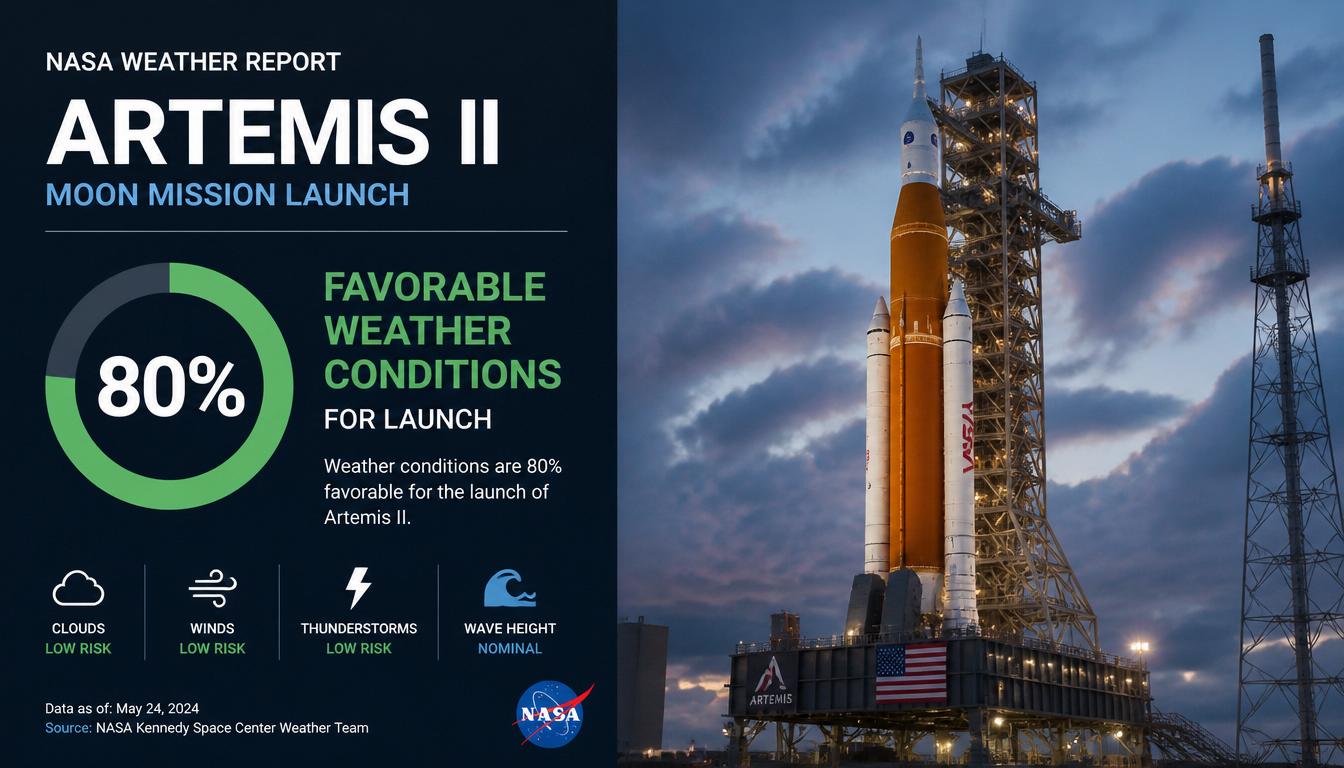
NASA Reports 80% Favorable Weather Conditions for Artemis II Moon Mission Launch
NASA is moving closer to launching its highly anticipated Artemis II mission as weather officials predict an 80% chance of favorable conditions for liftoff from Kennedy Space Center in Florida. The mission, which will send astronauts around the Moon aboard the powerful Space Launch System (SLS) rocket and Orion spacecraft, represents a major milestone in modern human space exploration.
As final launch preparations continue, NASA engineers, mission controllers, and astronauts are entering the last stages before the historic flight.
NASA Continues Countdown Preparations for Artemis II
Ahead of the official call to stations and countdown procedures, NASA teams are continuing important technical and safety preparations at Kennedy Space Center.
The call to stations is scheduled for 4:34 p.m. EDT, while the official countdown clock is expected to begin at 4:44 p.m. EDT. During this period, launch teams will carefully monitor rocket systems, communication networks, weather conditions, and spacecraft performance.
NASA is currently targeting no earlier than Wednesday, April 1, for launch of the Artemis II mission.
Weather Forecast Shows Strong Launch Possibilities
According to NASA’s latest forecast, weather conditions currently provide an 80% chance of acceptable launch weather. Although the forecast is generally positive, engineers and meteorologists are still closely monitoring several possible concerns.
Main Weather Concerns Include:
- Cloud coverage near the launch site
- Potential high ground-level winds
- Changing coastal weather conditions
- Upper-atmosphere wind patterns
Even small weather changes can affect launch operations because rockets require highly controlled environmental conditions for safe liftoff.
Why Weather Is Critical for Rocket Launches
Weather plays an extremely important role in every NASA launch. Conditions such as lightning, strong winds, heavy clouds, or rain can delay missions to protect both astronauts and equipment.
Large rockets like the Space Launch System generate massive amounts of energy during launch, and unstable weather could increase operational risks.
NASA meteorologists continuously monitor:
- Wind speeds
- Atmospheric pressure
- Cloud formations
- Electrical storm activity
- Visibility conditions
If conditions become unsafe, NASA can delay the launch until weather improves.
Artemis II Mission Represents Historic Return to Deep Space
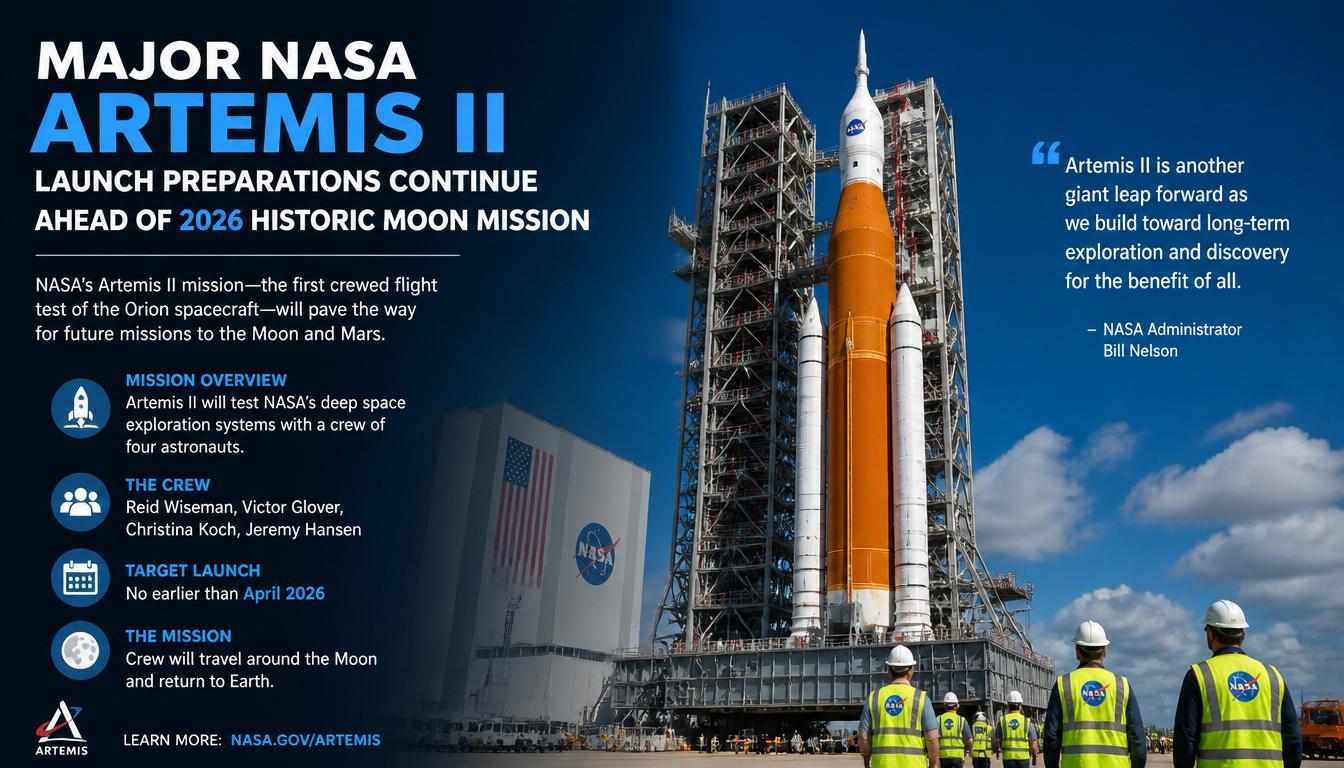
The Artemis II mission will become NASA’s first crewed Artemis mission and the first time astronauts travel around the Moon since the Apollo era.
The mission will use NASA’s giant Space Launch System rocket combined with the Orion spacecraft to carry astronauts on an approximately 10-day lunar mission.
The crew will travel around the Moon before safely returning to Earth.
Meet the Artemis II Astronaut Crew
The Artemis II mission crew includes four experienced astronauts:
- Reid Wiseman — Commander
- Victor Glover — Pilot
- Christina Koch — Mission Specialist
- Jeremy Hansen — Mission Specialist representing the Canadian Space Agency
This mission also highlights international cooperation in space exploration through NASA’s partnership with the Canadian Space Agency.
Final Technical Preparations Underway
As launch day approaches, NASA engineers are performing extensive checks on both the rocket and spacecraft systems.
Important Prelaunch Activities Include:
- Fuel system inspections
- Communication testing
- Navigation system verification
- Flight software checks
- Launch pad support testing
- Crew safety system reviews
Every system must operate perfectly before NASA approves the mission for launch.
NASA Leadership Provides Mission Updates
NASA officials are also hosting mission status briefings to provide updates about launch readiness and mission progress.
Participants in the mission update conference include:
- Amit Kshatriya
- John Honeycutt
- Charlie Blackwell-Thompson
- Emily Nelson
These officials oversee mission planning, engineering operations, launch decisions, and astronaut flight activities.
The Power Behind the Artemis II Rocket
The Artemis II mission uses NASA’s Space Launch System, commonly known as SLS. The SLS is currently the most powerful rocket developed by NASA for human deep-space missions.
Key SLS Rocket Features
- Height of more than 300 feet
- Four RS-25 main engines
- Twin solid rocket boosters
- Millions of pounds of launch thrust
- Designed for deep-space exploration
The rocket is specifically built to support future Moon missions and eventual human missions to Mars.
Orion Spacecraft Designed for Deep-Space Travel
The Orion spacecraft mounted on top of the SLS rocket is designed to safely carry astronauts beyond Earth orbit.
The spacecraft includes:
- Crew living space
- Life-support systems
- Navigation equipment
- Radiation protection systems
- Emergency safety systems
Orion is capable of supporting astronauts during long-duration missions far from Earth.
Artemis Program Supports Future Moon and Mars Missions
NASA’s Artemis program is focused on building a long-term human presence on and around the Moon. Unlike the Apollo missions, Artemis aims to support sustainable lunar exploration and scientific research.
Future Artemis missions may include:
- Lunar surface habitats
- Space stations near the Moon
- Scientific research operations
- Advanced robotic systems
- Preparation for Mars exploration
NASA believes lunar missions will help scientists and engineers develop technologies needed for future interplanetary travel.
Launch Pad 39B Ready for Historic Liftoff
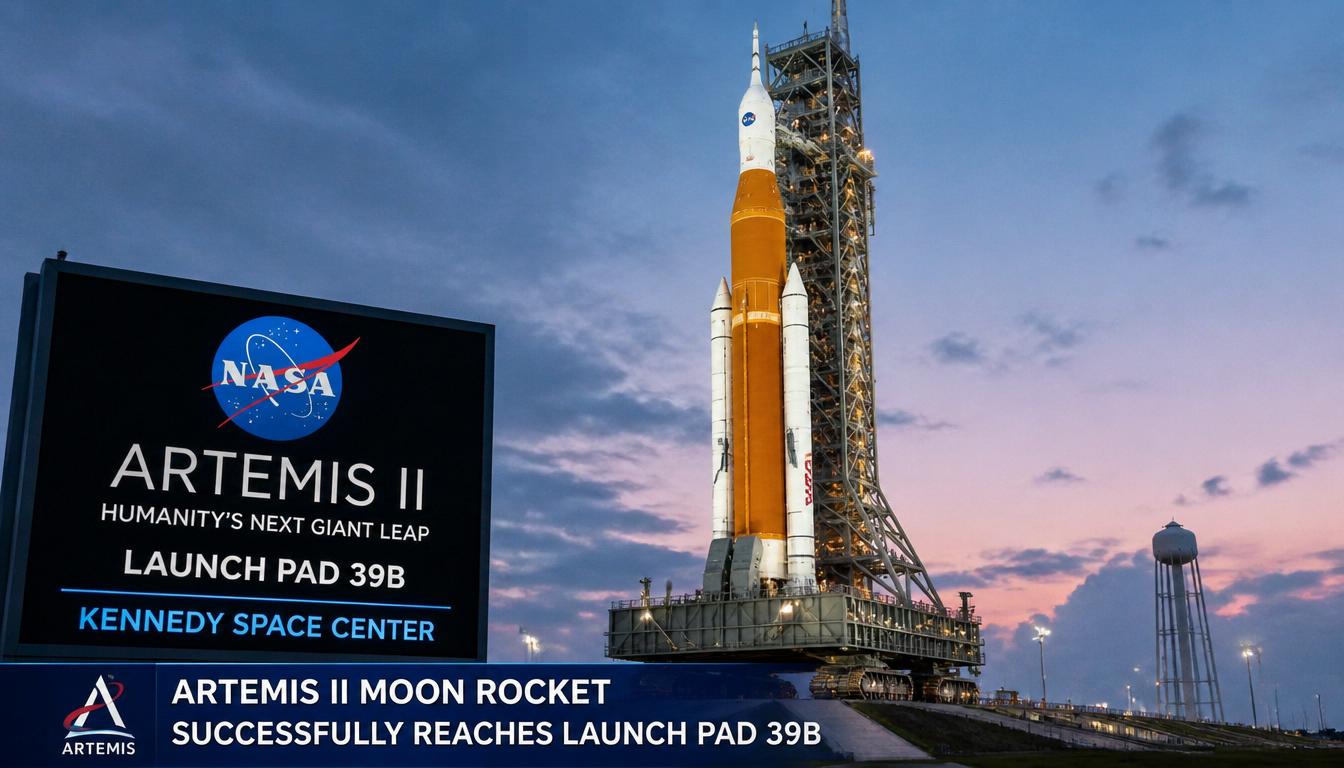
The Artemis II rocket is currently positioned at Launch Complex 39B at Kennedy Space Center in Florida. This historic launch pad has supported major NASA missions for decades, including Apollo and Space Shuttle launches.
The launch complex has been upgraded with modern systems to support Artemis missions and future deep-space exploration programs.
Frequently Asked Questions (FAQs)
What is Artemis II?
Artemis II is NASA’s first crewed Artemis mission that will send astronauts around the Moon and return them safely to Earth.
What are the current launch weather conditions?
NASA forecasts an 80% chance of favorable weather conditions for launch.
What are the main weather concerns for launch?
Cloud coverage and possible high ground-level winds are the primary concerns.
When is the Artemis II launch planned?
NASA is targeting launch no earlier than April 1, 2026.
How long will the Artemis II mission last?
The mission is projected to take roughly 10 days to complete.
Who are the Artemis II astronauts?
The crew includes Reid Wiseman, Victor Glover, Christina Koch, and Jeremy Hansen.
What rocket will Artemis II use?
The mission will use NASA’s Space Launch System (SLS) rocket and Orion spacecraft.
Why is Artemis II important?
The mission will evaluate deep-space systems while carrying astronauts aboard, paving the way for upcoming lunar landings and journeys to Mars.
Conclusion
NASA’s Artemis II mission is now entering its final stages before launch as engineers continue countdown operations and weather officials predict highly favorable conditions. With an 80% chance of acceptable launch weather, excitement continues to grow for the first crewed Artemis mission.
The launch will mark a major step forward in NASA’s return to deep-space exploration and its long-term goal of establishing a sustainable human presence on the Moon. As the world watches the countdown continue, Artemis II represents the beginning of a new chapter in human spaceflight and lunar exploration.
read another articles
Keep exploring