Nebula Types Visual Guide: 6 Best Essential Types

Nebula Types Visual Guide:
Anyone diving into deep-space photography quickly encounters a confusing range of nebula names. This Nebula types visual guide simplifies the category system astronomers use, helping readers understand what they’re actually looking at when browsing telescope images from Hubble, Webb, or backyard astrophotography setups.
Emission Nebulae: The Glowing Clouds
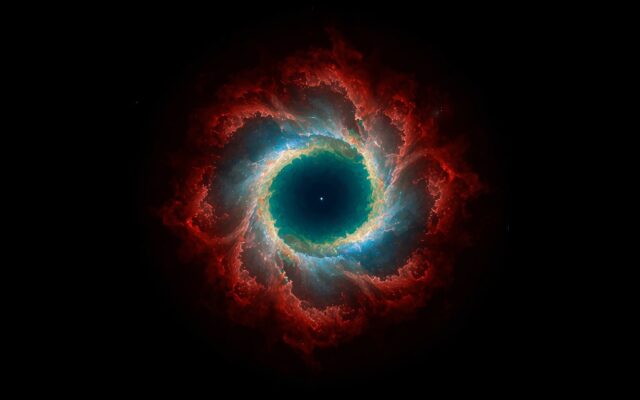
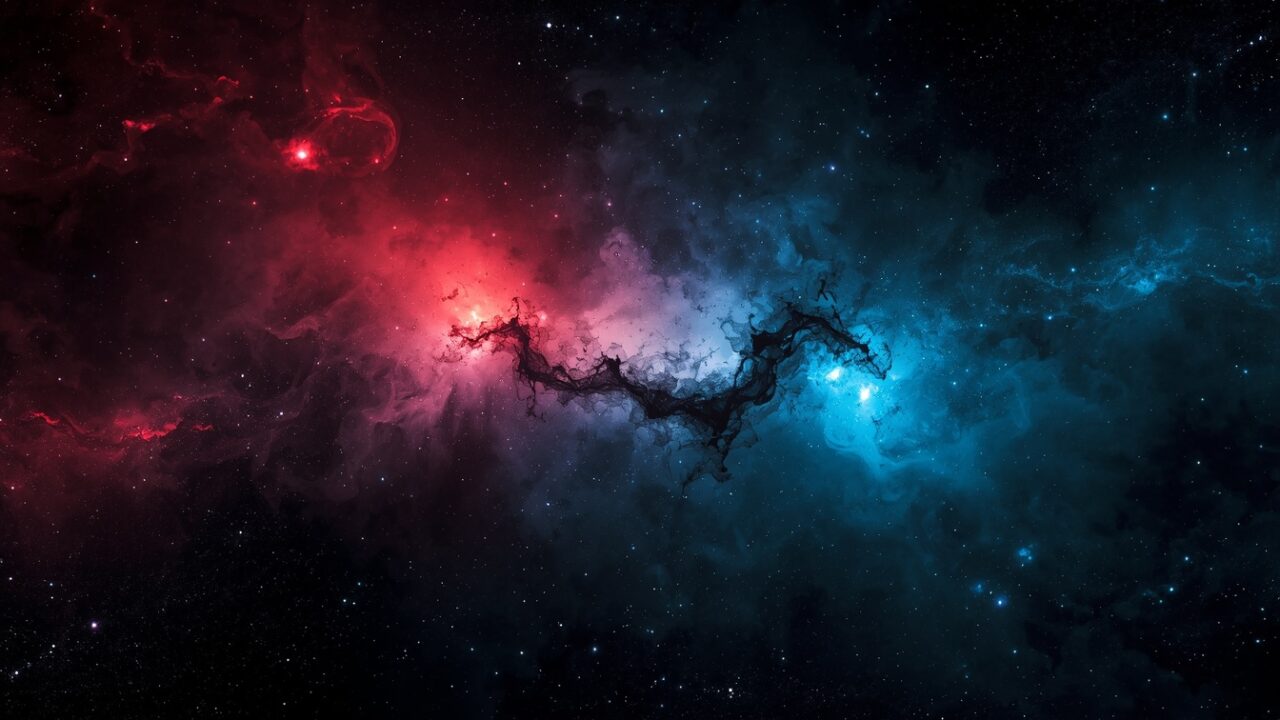
Emission nebulae are regions of ionized gas that glow because nearby hot stars energize the surrounding hydrogen and other elements. In this Nebula types visual guide, emission nebulae are typically identified by their vivid red or pink hues in photographs, caused primarily by hydrogen-alpha emission — the Orion Nebula is a classic example.
Reflection Nebulae: Starlight Scattered Through Dust
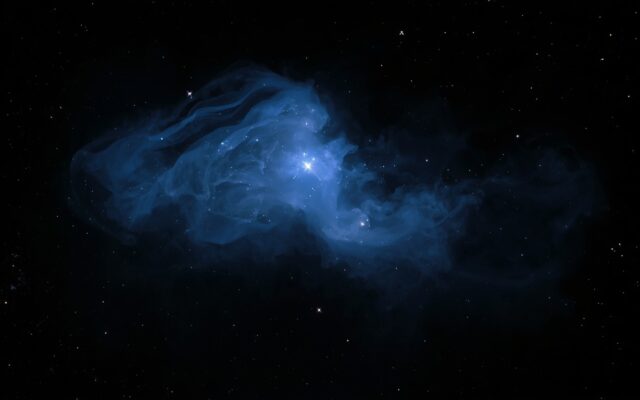
Unlike emission nebulae, reflection nebulae don’t generate their own light. Instead, they scatter and reflect light from nearby stars, typically appearing blue in photographs due to the way dust particles scatter shorter blue wavelengths more efficiently than red light — a phenomenon similar to why Earth’s sky appears blue.
Dark Nebulae: Silhouettes Against the Stars
Dark nebulae contain dense concentrations of dust and gas thick enough to block light from stars and glowing nebulae behind them. This Nebula types visual guide highlights the Horsehead Nebula as the most recognizable dark nebula, appearing as a distinctive silhouette against a brighter background of glowing gas.
Planetary Nebulae: Misleading but Beautiful
Despite the name, planetary nebulae have nothing to do with planets. They form when Sun-like stars shed their outer layers near the end of their life cycle, creating expanding shells of glowing gas. Early astronomers named them “planetary” simply because their round shapes resembled planets through small telescopes.
Supernova Remnants: Explosive Aftermath
When massive stars explode as supernovae, they leave behind expanding shells of gas and dust known as supernova remnants. These nebulae often display complex, filamentary structures, formed as the explosion’s shockwave interacts with surrounding interstellar material over thousands of years.
Why Color Coding Matters in Photography
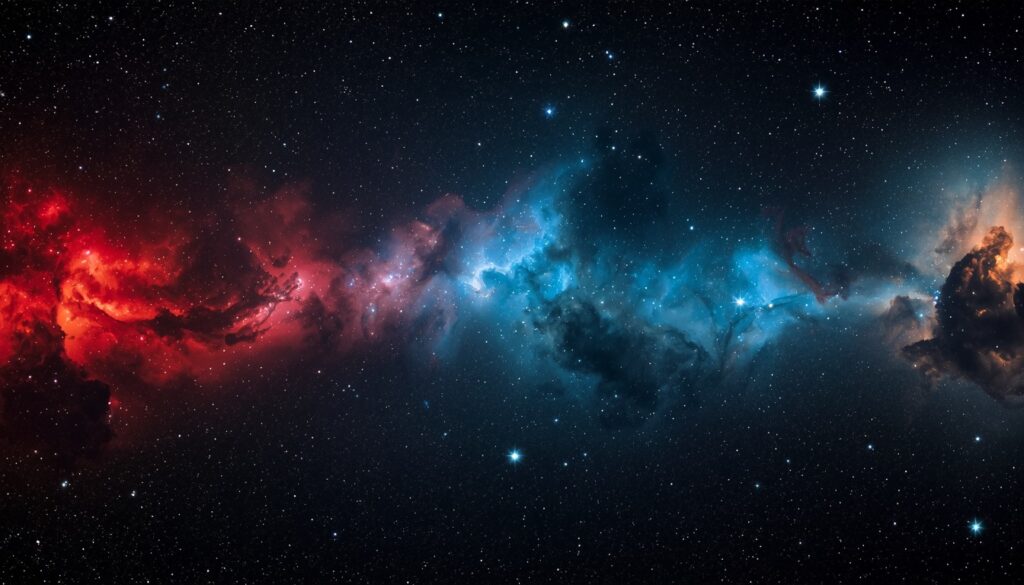
A crucial part of any Nebula types visual guide involves understanding false-color imaging. Many telescope images assign colors to specific chemical emissions — commonly using the Hubble Palette, which maps sulfur, hydrogen, and oxygen emissions to red, green, and blue channels respectively, even though these aren’t always the colors visible to the naked eye.
How Size and Distance Affect Appearance
Nebulae vary dramatically in size, from small planetary nebulae just a light-year across to massive star-forming regions spanning hundreds of light-years. Distance also plays a major role in how detailed a nebula appears in photographs, with closer nebulae like Orion offering far more structural detail than distant, compact objects.
Identifying Nebula Types in Your Own Astrophotography
For beginner astrophotographers, learning to distinguish these categories through this Nebula types visual guide helps in selecting appropriate imaging filters and exposure techniques, since emission nebulae often benefit from narrowband filters while reflection nebulae typically require broadband imaging to capture accurate colors.
H II Regions and Why Hydrogen Glows Red
Most emission nebulae are what astronomers call H II regions, clouds of hydrogen ionized by the ultraviolet light of hot young stars. When the stripped electrons recombine with hydrogen nuclei, they release light at specific wavelengths. The strongest visible one, hydrogen-alpha, sits in the deep red part of the spectrum.
That single wavelength explains why the Orion Nebula, the Lagoon Nebula and countless others look pink or red in photographs. Cameras modified to be more sensitive to hydrogen-alpha, or fitted with narrowband filters, can record these clouds far better than a standard camera, which filters out much of that red light.
Where Different Nebula Types Overlap
Real nebulae rarely fit neatly into a single category. The Trifid Nebula in Sagittarius is a classic example: a red emission region split by dark dust lanes, with a blue reflection nebula next to it. One photograph shows three types at once.
The Orion Nebula also mixes emission and reflection with dark clouds in the foreground. When you use any nebula guide, think of the categories as descriptions of processes rather than rigid boxes. The same cloud can glow, scatter light and block light in different places, depending on how close it is to bright stars.
Classic Examples to Learn Each Type
If you want to train your eye, these well-known targets are good starting points. For emission, try the Orion Nebula (M42) or the Lagoon Nebula (M8). For reflection, the blue haze around the Pleiades star cluster is a textbook case. For dark nebulae, the Horsehead Nebula in Orion and the Pipe Nebula near the Milky Way’s center stand out.
For planetary nebulae, the Ring Nebula (M57) and the Dumbbell Nebula (M27) are bright and easy to find. For supernova remnants, the Crab Nebula (M1) and the Veil Nebula in Cygnus are the classic picks. Studying one example of each type side by side makes the differences obvious very quickly.
What You Can See Through a Telescope
Visual observers should know that most nebulae look gray, not colorful, through an eyepiece. The human eye’s color-sensitive cells do not respond well in low light, so faint objects appear as ghostly smudges. Only the brightest, like the Orion Nebula, may show a hint of green or pink to some observers.
Filters help. An oxygen-III filter can dramatically improve views of planetary nebulae and the Veil Nebula, while a broader nebula filter boosts contrast for emission regions. Reflection nebulae and galaxies do not benefit much from these filters, because their light is spread across many wavelengths.
How Nebulae Fit the Life Cycle of Stars
The different nebula types are really snapshots of a single cycle. Dark and emission nebulae are the birthplaces of stars. Reflection nebulae are often leftover dust near young stars. Planetary nebulae and supernova remnants are how stars return material to space at the end of their lives.
That returned material, enriched with heavier elements made inside stars, eventually mixes into new clouds and forms the next generation of stars and planets. Seen this way, every nebula photograph shows one step in the process that produced the atoms in our own bodies.
Common Mistakes When Labeling Nebulae
Beginners often call every glowing cloud an emission nebula, but many images mix types. Check whether bright stars sit inside blue haze, which points to reflection, and look for dark lanes that mark foreground dust. When in doubt, the object’s catalog description in a reliable source like the NGC or Sharpless catalog usually states its type clearly.
Final Thoughts
Understanding these core categories transforms how you view nebula photography, turning what might look like random cosmic clouds into recognizable, scientifically meaningful structures, each telling a different story about stellar life, death, and rebirth.
Keep exploring with our guides to Emission nebula vs reflection nebula, Supernova remnant nebula images and Planetary nebula formation visual guide. For official information, visit NASA’s universe science hub.
Frequently Asked Questions
What are the main types of nebulae?
Emission, reflection, dark, planetary, and supernova remnant nebulae are the primary categories.
Why do emission nebulae appear red?
They glow due to ionized hydrogen gas emitting light at a specific red wavelength called hydrogen-alpha.
What causes reflection nebulae to look blue?
Dust particles scatter blue light more efficiently than red, similar to Earth’s atmosphere.
Are planetary nebulae related to planets?
No, the name is misleading — they form from dying Sun-like stars shedding outer gas layers.
What is the Hubble Palette in nebula photography?
A false-color mapping system assigning sulfur, hydrogen, and oxygen emissions to red, green, and blue channels.
Keep exploring