Milky Way Galaxy Structure Images: 8 Stunning Views Explained

Milky Way Galaxy Structure Images:
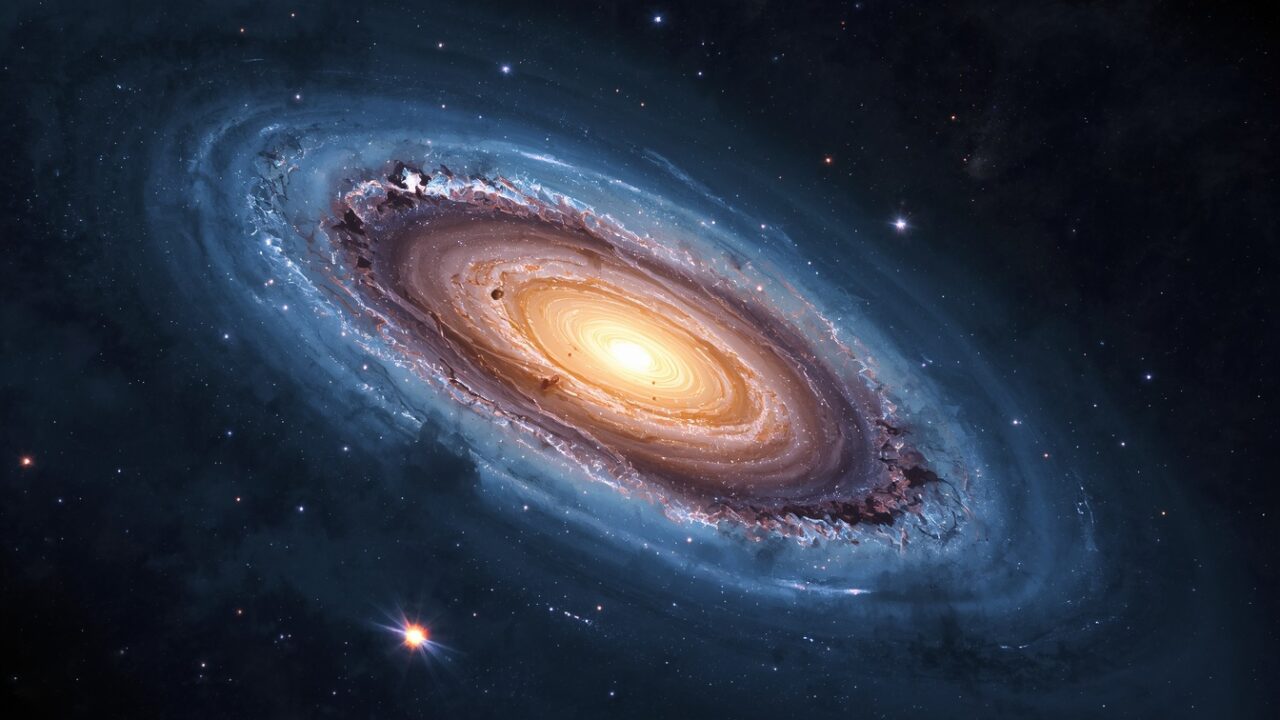
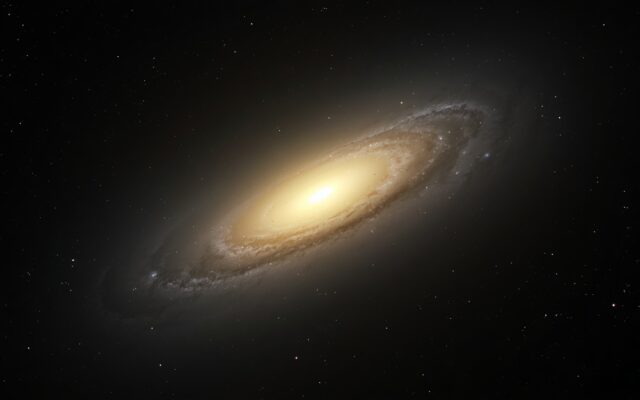
Mapping our own galaxy presents a unique challenge — we’re viewing it from inside, unable to step back for a full external photograph. Despite this, Milky Way galaxy structure images, built from radio, infrared, and visible-light data, have given astronomers a remarkably detailed picture of our galactic home.
Why We Can’t Photograph the Milky Way From Outside
Since Earth sits within the Milky Way’s disk, no direct external photograph exists. Instead, these images are typically composite illustrations combining data on star positions, gas distribution, and radio wave mapping to reconstruct what the galaxy likely looks like from an outside perspective.
The Central Bulge and Bar
Radio and infrared observations used in Milky Way galaxy structure images confirm our galaxy features a central bulge with an elongated bar structure, classifying it as a barred spiral galaxy. This bar extends across the galactic center, influencing gas flow and star formation patterns throughout the inner regions.
Mapping the Spiral Arms
Astronomers have identified several major spiral arms, including the Perseus Arm, Sagittarius Arm, and Scutum-Centaurus Arm, along with our Sun’s location within a smaller structure called the Orion Spur, sometimes called the Orion Arm. These images typically highlight these features using color-coded overlays based on star and gas density data.
The Galactic Halo
Beyond the visible disk, these images also depict an extended halo containing globular clusters, older stars, and significant dark matter, extending far beyond the bright, visible portion of the galaxy that dominates most illustrations.
Using Radio Astronomy for Mapping
Since visible light struggles to penetrate the galaxy’s dense dust lanes, radio astronomy plays a crucial role in constructing accurate Milky Way galaxy structure images, particularly for mapping hydrogen gas distribution throughout the spiral arms, largely invisible in standard optical photography.
Gaia Mission’s Contribution
The European Space Agency’s Gaia mission has dramatically improved Milky Way galaxy structure images by precisely measuring the positions and movements of over a billion stars, allowing astronomers to build increasingly accurate 3D models of our galaxy’s true shape and structure.
Our Sun’s Position Within the Galaxy
Most Milky Way galaxy structure images place our Sun roughly 27,000 light-years from the galactic center, situated within the Orion Spur, a relatively minor structure connecting two larger spiral arms rather than sitting directly within a major arm itself.
Comparing Illustrations to Real Data
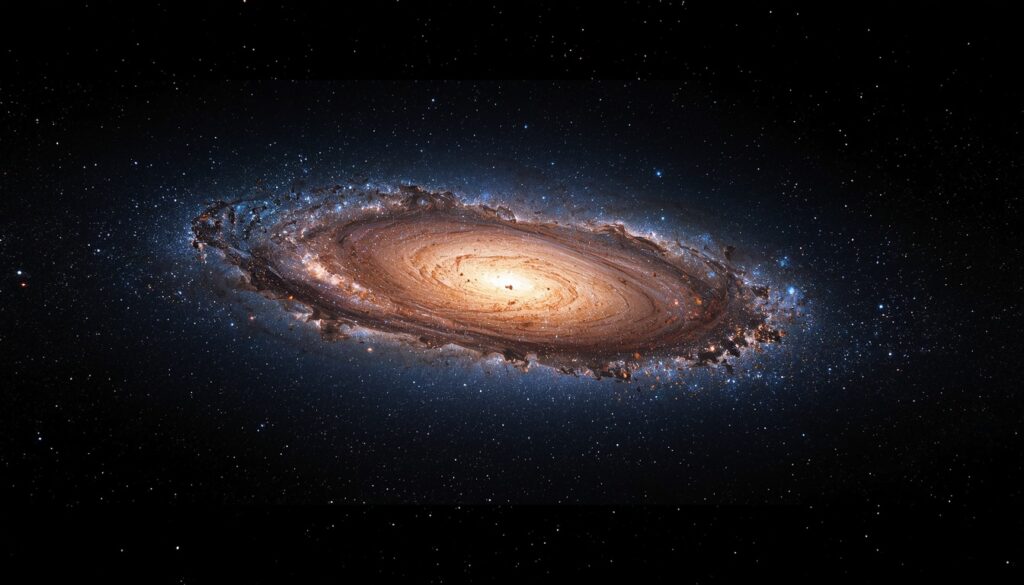
While many popular Milky Way galaxy structure images are artistic representations, they’re grounded in genuine astronomical data, continuously refined as new telescope surveys and missions like Gaia provide increasingly precise measurements of star positions and galactic structure.
The Famous Artist’s Illustrations
Most images you see of the Milky Way from above are artist’s impressions, not photographs. The widely used NASA illustration by Robert Hurt shows a barred spiral with two major arms. It is based on data from the Spitzer Space Telescope, radio surveys and other studies, combined into a single view.
These illustrations are carefully researched, but they are still models. When you look at Milky Way galaxy structure images, remember that the fine details, especially on the far side of the galaxy, are educated estimates. New data regularly refines the picture.
Seeing the Galaxy Edge-On From Inside
The only real photographs we can take of the Milky Way show it from within, as a bright band stretching across the sky. Wide panoramas stitched from many images, like ESA’s Gaia all-sky maps, show the galaxy as a flat disk seen edge-on, with dust lanes and a bright central bulge.
These panoramas reveal a lot. The dust lanes mark the disk, the bulge shows the direction of the galactic center, and the thickness of the band hints at how flat the galaxy is. Compared with edge-on galaxies like NGC 891, our own galaxy looks remarkably similar.
Infrared Views Through the Dust
Visible light cannot reach us from much of the galaxy because dust blocks it. Infrared light passes through dust far more easily, so infrared surveys have been key to mapping the Milky Way’s structure.
NASA’s Spitzer Space Telescope surveyed the galactic plane in infrared and helped confirm that the Milky Way has a long central bar. The 2MASS survey mapped hundreds of millions of stars in near-infrared light, producing images that show the bulge and disk clearly despite the dust.
The Warped and Flared Disk
The Milky Way’s disk is not perfectly flat. Its outer edges are warped, bending up on one side and down on the other, somewhat like the brim of a hat. Observations of stars and gas, including data from Gaia, have mapped this warp in detail.
The disk also flares, becoming thicker farther from the center. Some researchers think interactions with nearby dwarf galaxies, such as the Sagittarius Dwarf Galaxy, may contribute to these features. The warp is also thought to be slowly rotating over time.
Satellite Galaxies Around the Milky Way
The Milky Way is surrounded by dozens of smaller satellite galaxies. The Large and Small Magellanic Clouds are the brightest and are visible to the naked eye from the Southern Hemisphere. Many smaller, fainter dwarfs have been discovered in recent decades by deep sky surveys.
Some satellites are being torn apart by the Milky Way’s gravity, leaving long streams of stars across the sky. The Sagittarius Stream, for example, wraps around the galaxy and helps astronomers measure the shape and mass of the Milky Way’s dark matter halo.
The Galactic Center in Radio and Infrared
The center of the Milky Way is hidden from view in visible light, but radio and infrared telescopes reveal a busy region. Radio maps show long filaments of magnetized gas, some stretching dozens of light-years, and a complex of star clusters near the central black hole.
Images from South Africa’s MeerKAT radio telescope have produced some of the most detailed views of this region, revealing hundreds of filaments and large bubbles of gas that may have been created by past outbursts from the central black hole.
Final Thoughts
These images represent an ongoing scientific detective effort, piecing together our galaxy’s true shape from an internal vantage point using radio, infrared, and precision astrometric data rather than a single, simple photograph.
Keep exploring with our guides to Spiral galaxy structure explained, Hubble Sombrero Galaxy image and Hubble Andromeda Galaxy mosaic. For official information, visit NASA’s skywatching tips.
Frequently Asked Questions
Why can’t we photograph the Milky Way from outside?
Earth is located within the galaxy’s disk, making an external view impossible to capture directly.
What type of galaxy is the Milky Way?
A barred spiral galaxy, featuring a central bar structure and sweeping spiral arms.
Where is our Sun located within the galaxy?
Roughly 27,000 light-years from the center, within the Orion Spur.
How do astronomers map the galaxy’s structure?
Using radio astronomy, infrared data, and precision star-mapping missions like Gaia.
What is the Gaia mission’s role in galaxy mapping?
It precisely measures positions and movements of over a billion stars to build accurate 3D galactic models.
Keep exploring
1 comment