9 Amazing Facts About Hubble Ultra Deep Field Galaxies

Hubble Ultra Deep Field Galaxies:
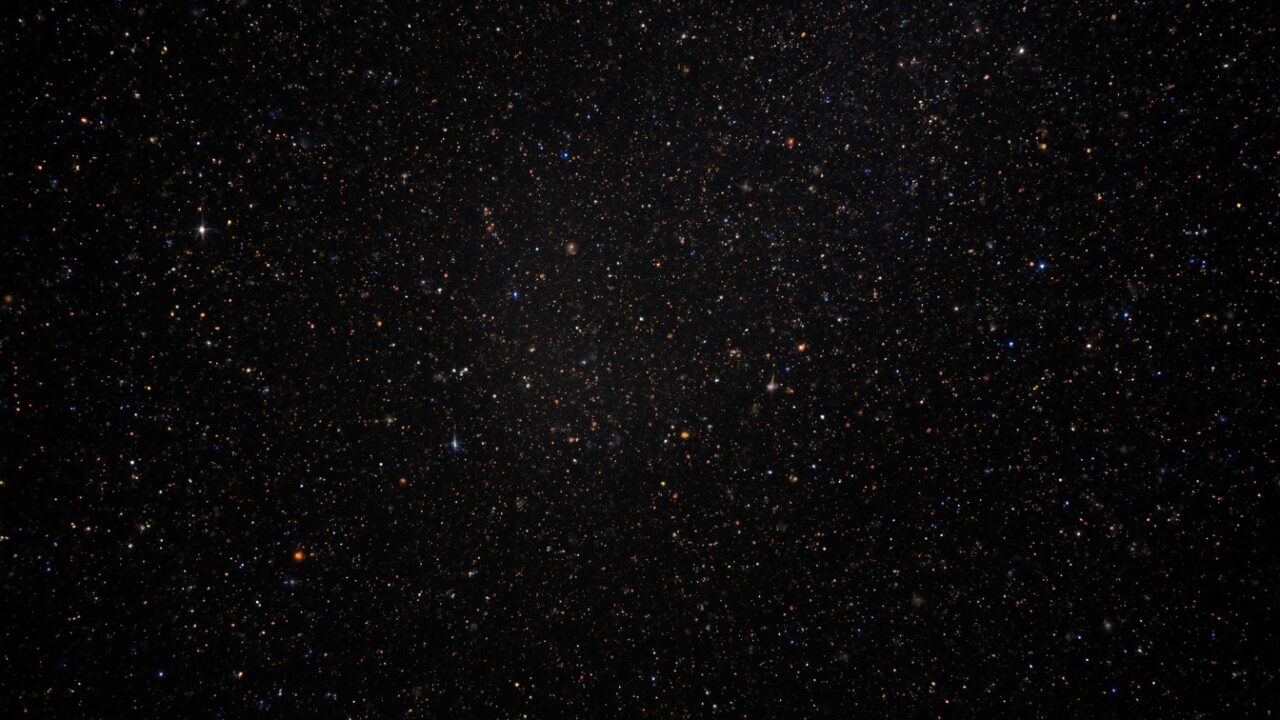
Released in 2004, the Hubble Ultra Deep Field image pushed the boundaries of deep-space photography even further than its 1995 predecessor. By staring at a single patch of sky for nearly 1 million seconds of total exposure time, Hubble revealed approximately 10,000 Hubble Ultra Deep Field galaxies packed into a region smaller than one-tenth the diameter of the full moon.
A More Ambitious Deep Field
While the original Deep Field image was groundbreaking, astronomers wanted to go deeper — literally. The Ultra Deep Field combined nearly 800 exposures captured over four months, targeting a region in the constellation Fornax. This extended exposure time allowed Hubble Ultra Deep Field galaxies to be detected even fainter and more distant than those seen in the earlier image.
How Far Back in Time Does It Look?
Some of the faintest Hubble Ultra Deep Field galaxies in the image are believed to be over 13 billion years old, appearing as they existed just a few hundred million years after the Big Bang. This makes the image one of the closest visual approximations we have of the universe’s infancy, showing galaxies still forming and evolving.
The Variety of Galaxy Types
Similar to the original Deep Field, the Ultra Deep Field showcases a mix of spiral, elliptical, and irregular galaxies. However, the increased depth revealed a much higher proportion of small, irregular, blue galaxies — thought to represent early-stage galactic building blocks before mergers formed the larger, more structured galaxies seen in the modern universe.
Why Blue Galaxies Dominate the Early Universe
Many of the deep field galaxies appear distinctly blue, a color associated with young, hot, rapidly forming stars. This suggests that early galaxies underwent intense bursts of star formation, a stark contrast to the more settled, redder galaxies common in the nearby, older universe.
Technical Achievement Behind the Image
Capturing this image required Hubble’s Advanced Camera for Surveys, along with the Near Infrared Camera and Multi-Object Spectrometer. Combining data across visible and near-infrared wavelengths allowed astronomers to estimate distances and ages for many of the deep field galaxies with reasonable scientific confidence.
Comparing to the Original Deep Field
Where the 1995 image revealed around 3,000 galaxies, the 2004 Ultra Deep Field roughly tripled that number in a smaller area of sky, demonstrating just how much technology and technique had advanced in less than a decade. The comparison remains a popular teaching example for illustrating progress in observational astronomy.
Later Extensions of the Project
Follow-up efforts, including the Hubble eXtreme Deep Field (2012), combined a decade’s worth of exposure data to refine and deepen this same patch of sky even further, adding additional faint galaxies to the census and improving distance measurements for objects already discovered.
Scientific Importance for Galaxy Evolution Studies
By studying the sizes, shapes, and colors of these deep field galaxies across different distances, astronomers built timelines showing how galaxies grew from small, chaotic clumps into the large spiral and elliptical structures common today — a cornerstone dataset for galaxy evolution research.
Where in the Sky the Field Sits
The Hubble Ultra Deep Field is located in the southern constellation Fornax, in a region chosen because it has very few bright foreground stars and relatively little dust from our own galaxy. That clean view lets the telescope stare deep into the universe without bright objects washing out the faint ones.
The patch is tiny, roughly one-tenth the diameter of the full Moon. Yet within it Hubble recorded about 10,000 galaxies. If you could tile the whole sky with images this deep, you would find hundreds of billions of galaxies, which is where many popular estimates of the size of the observable universe come from.
How Long Hubble Stared
The original Ultra Deep Field was built from observations made between September 2003 and January 2004. Hubble returned to the same spot across roughly 400 orbits, adding up to about 11 days of exposure time. Each orbit contributed a small slice of light, and the individual frames were carefully aligned and stacked into the final image.
That patience is what makes the faintest deep field galaxie visible at all. Some of them are so dim that Hubble collected only about one photon per minute from them. Only by adding up many hours of exposure could those objects rise above the background noise and appear in the finished picture.
Measuring Distance With Colors
Most galaxies in the field are too faint to measure their distance directly by spreading their light into a spectrum. Astronomers instead use a technique called photometric redshift. By comparing how bright each galaxy looks through different filters, they can estimate how much its light has been stretched by the expansion of the universe.
Galaxies that almost disappear in bluer filters but show up in redder ones are especially interesting, because that pattern suggests extreme distance. Candidates found this way were then targeted for follow-up with larger ground-based telescopes and, more recently, with Webb, which can confirm distances far more precisely.
How Webb Built on the Field
When the James Webb Space Telescope began science operations, the Ultra Deep Field was an obvious target. Webb’s infrared cameras can see galaxies whose light has been stretched beyond Hubble’s range, so observations of the same area revealed objects that Hubble could not detect at all.
Programs such as the JWST Advanced Deep Extragalactic Survey have used this region to confirm some of the most distant galaxies ever measured. The combination of Hubble’s visible-light data and Webb’s infrared data now gives astronomers a more complete record of how galaxies formed and grew over most of cosmic history.
Galaxies Smaller and Fainter Than Expected
Many of the most distant objects in the Ultra Deep Field are much smaller than today’s large galaxies such as the Milky Way. They look like compact knots of light rather than neat spirals, and many are actively forming stars at a high rate.
This supported the view that large galaxies were assembled gradually from smaller building blocks through mergers and steady gas inflow. The image effectively shows galaxies in their childhood, long before they grew into the mature forms we see nearby today.
It also raised new questions. Some early galaxies seemed to form stars faster than models predicted, a puzzle that Webb has since sharpened by finding bright, massive galaxies even earlier in cosmic history.
Final Thoughts
The image remains one of astronomy’s most information-dense photographs, packing thousands of ancient galaxies into a single frame and offering a genuine window into the universe’s earliest chapters.
Keep exploring with our guides to Hubble Deep Field image explained, James Webb early universe galaxies and Hubble Deep Field photo story. For official information, visit NASA’s Hubble Space Telescope page.
Frequently Asked Questions
How many galaxies appear in the Hubble Ultra Deep Field?
Approximately 10,000 Hubble Ultra Deep Field galaxies were identified within the image.
How old are the faintest galaxies in the image?
Some are estimated to be over 13 billion years old, formed shortly after the Big Bang.
Why are so many galaxies blue in color?
Blue coloring indicates young, hot stars undergoing intense early-universe star formation.
How does it compare to the original Deep Field image?
It captured roughly three times more galaxies in a smaller sky area using longer exposure times.
Was there a follow-up to this image?
Yes, the Hubble eXtreme Deep Field in 2012 combined a decade of data for even greater depth.