5 Incredible James Webb First Images 2022

5 Incredible James Webb First Images 2022:
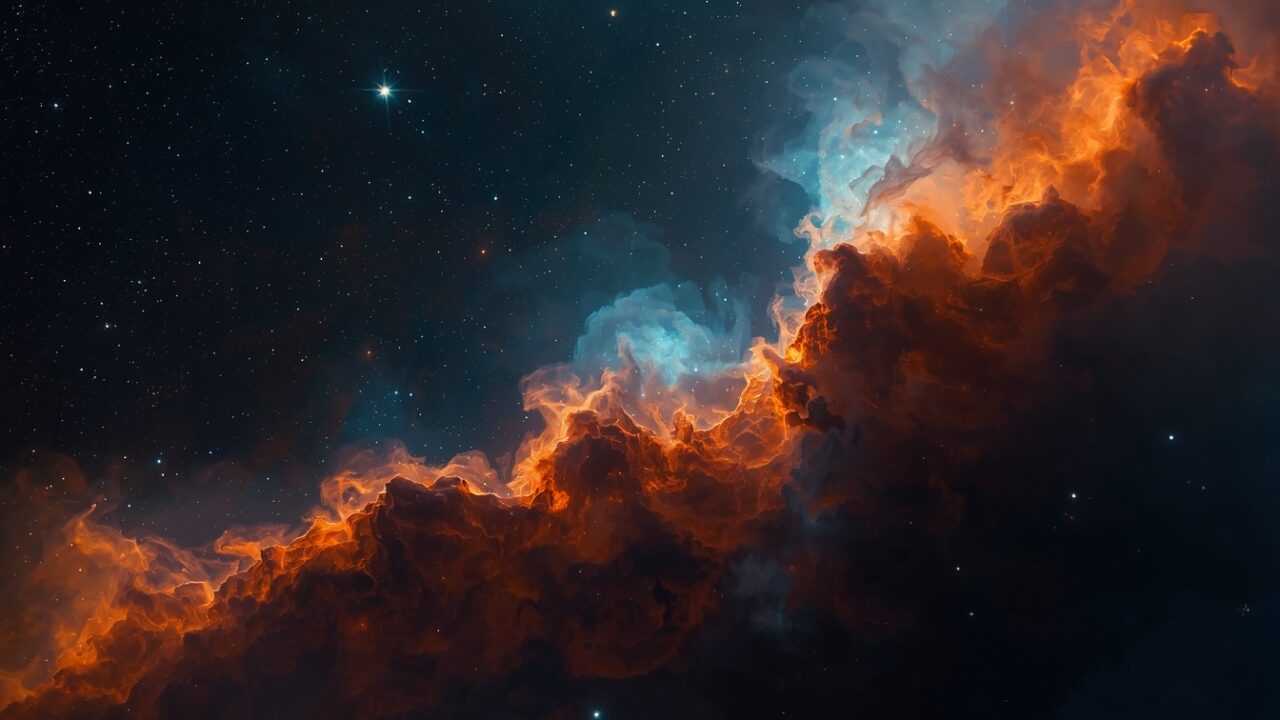
On July 12, 2022, NASA unveiled the James Webb first images 2022 to a global audience, marking the official start of the telescope’s science mission after decades of development and a nail-biting six-month deployment sequence. These five images weren’t chosen randomly — each one was selected to demonstrate a specific capability of Webb’s infrared instruments, and together they reshaped public expectations of what space photography could achieve.
Image One: SMACS 0723 Galaxy Cluster
The first of the James Webb first images 2022 showed the galaxy cluster SMACS 0723, later nicknamed “Webb’s First Deep Field.” This single image, requiring roughly 12.5 hours of exposure, revealed thousands of galaxies, some seen as they existed over 13 billion years ago, gravitationally lensed and magnified by the massive cluster in the foreground.
Image Two: WASP-96b Atmospheric Spectrum
Rather than a traditional photo, the second release was a spectrum showing the atmospheric composition of exoplanet WASP-96b, including clear evidence of water vapor. This demonstrated Webb’s spectroscopic capabilities, proving the telescope could analyze distant planetary atmospheres in far greater detail than any previous instrument.
Image Three: Southern Ring Nebula
The Southern Ring Nebula appeared in two versions — near-infrared and mid-infrared — showing a dying star surrounded by expanding gas shells. The James Webb first images 2022 release of this planetary nebula revealed a second, previously obscured star at the nebula’s center, hidden in dust that only infrared light could penetrate.
Image Four: Stephan’s Quintet
This compact group of five galaxies, famously used in the 1946 film “It’s a Wonderful Life,” was captured in a massive 150-million-pixel mosaic. The image showed shockwaves from galactic collisions, star-forming regions, and sweeping tails of gas and dust in unprecedented resolution.
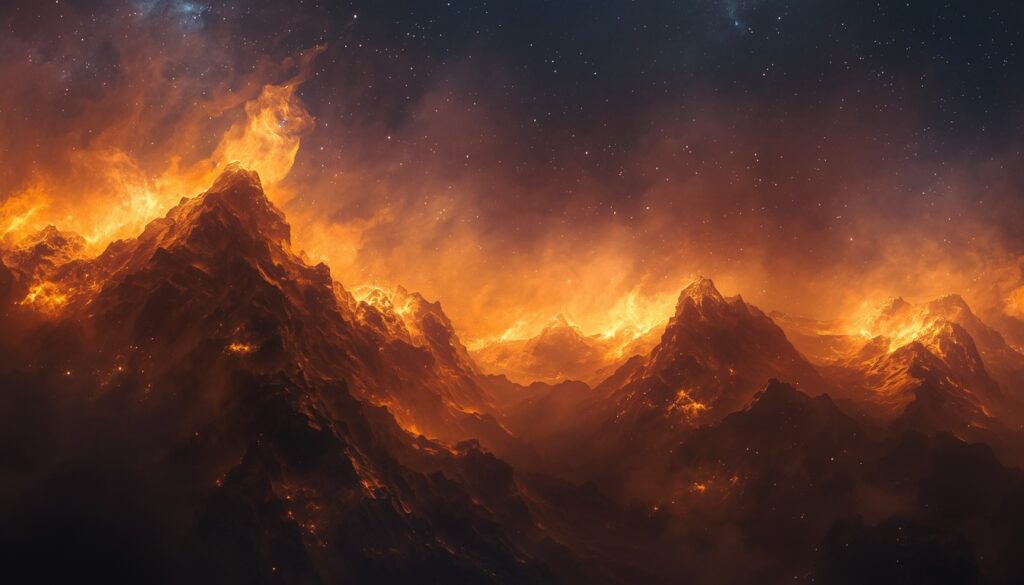
Image Five: Carina Nebula “Cosmic Cliffs”
Perhaps the most visually striking of the first images, this photo showed the edge of a young star-forming region in the Carina Nebula, resembling a mountainous, glowing landscape. The image revealed dozens of previously hidden stars and detailed structures within the nebula’s gas and dust.
The Global Reaction
The July 2022 release was broadcast live and covered by major news outlets worldwide. For many casual observers, this was their first real introduction to what infrared space telescopes could reveal — colors and structures invisible to the human eye, translated into breathtaking, scientifically accurate imagery.
Why These Images Mattered Scientifically
Each image in the first images set was chosen to validate a different Webb instrument — NIRCam, NIRSpec, and MIRI — under real observational conditions. Their success confirmed that years of engineering and testing had paid off, giving astronomers confidence in the telescope’s long-term reliability.
Setting the Stage for Future Discoveries
These five images represented just the beginning. In the years since, Webb has gone on to capture thousands of additional images and datasets, but the first images 2022 release remains historically significant as the moment the world got its first real proof of the telescope’s capabilities.
How the Five Targets Were Chosen
The first images were not picked at random. An international committee from NASA, the European Space Agency, the Canadian Space Agency and the Space Telescope Science Institute spent years planning a first release that would show off every major capability of the observatory. Their shortlist had to include deep-field imaging, exoplanet science, stellar death, galaxy interactions and star birth.
Each target also had to be observable during the commissioning window in mid-2022, when the telescope was pointed toward specific parts of the sky. That is why the lineup feels so balanced: it was designed as a showcase, covering objects from our galactic neighborhood to galaxies billions of light-years away.
The White House Preview and the Public Launch
The rollout itself became part of the story. On July 11, 2022, President Joe Biden unveiled the SMACS 0723 deep field in a White House briefing, a day before the planned release. The remaining four images were revealed by NASA on July 12 during a live broadcast from Goddard Space Flight Center, streamed to millions of viewers around the world.
Within hours, the images dominated social media, news front pages and even billboards in major cities. For many people it was the first time since the early Hubble years that a space telescope had captured such broad public attention, and it gave the mission a strong start after decades of development delays and budget debates.
What Changed Since the First Release
The first images were only the opening act. Since July 2022, Webb has delivered deep fields that push even further back in time, detailed atmosphere studies of dozens of exoplanets, and sharper views of nearby nebulae and galaxies. Several targets from the first set have been revisited with additional instruments and filters.
Revisiting the originals now is a useful way to measure progress. The SMACS 0723 image, for example, used about 12.5 hours of observing time, while later deep surveys have spent far longer on single fields. Researchers are still publishing papers based on the first-release data, which shows that the showcase images were scientifically valuable, not just beautiful publicity shots.
Where to Download the Full-Resolution Files
All five images are free to download from NASA’s Webb website and from the ESA/Webb archive, in resolutions ranging from phone wallpapers to huge files meant for printing. Each release page also includes annotated versions that label the key features, which is the fastest way to understand what you are looking at.
If you want the raw data, the Mikulski Archive for Space Telescopes hosts the original observations. Amateur image processors have used those files to create their own color versions, and comparing their choices with NASA’s official releases is a good way to learn how much artistic judgment goes into every published space image.
Why the Images Took Months to Arrive
Webb launched on December 25, 2021, but the first images were not released until July 2022. The telescope first had to travel to its orbit around the second Lagrange point, about 1.5 million kilometers from Earth, unfold its sunshield and mirror, and cool down to its operating temperature.
Engineers then spent months aligning the 18 hexagonal mirror segments so they worked as a single mirror, and calibrating every instrument. The first images were only released once that process was complete, which is why their sharpness surprised even members of the science team.
Final Thoughts
The didn’t just showcase pretty pictures — they demonstrated exoplanet atmosphere analysis, deep field imaging, dying star observation, galaxy interaction mapping, and star-forming region photography, all within a single day. It was a defining moment for 21st-century astronomy.
Keep exploring with our guides to James Webb galaxy cluster SMACS 0723, James Webb Southern Ring Nebula and James Webb star formation images. For official information, visit NASA’s James Webb Space Telescope page.
Frequently Asked Questions
When were the James Webb first images 2022 released?
NASA revealed them on July 12, 2022, following a preview of the deep field image on July
2. What was the first image shown?
The SMACS 0723 galaxy cluster, showcasing thousands of ancient, distant galaxies.
Did any of the images include exoplanet data?
Yes, WASP-96b’s atmospheric spectrum revealed water vapor, showcasing Webb’s spectroscopy tools.
Which image showed galaxy collisions?
Stephan’s Quintet displayed interacting galaxies with visible shockwaves and gas tails.
Why is the Carina Nebula image so popular?
Its “Cosmic Cliffs” appearance resembles a glowing mountain landscape, making it one of the most visually striking Webb images.