Sagittarius A Star Black Hole Image: 5 Remarkable Facts

Sagittarius A Star Black Hole Image:
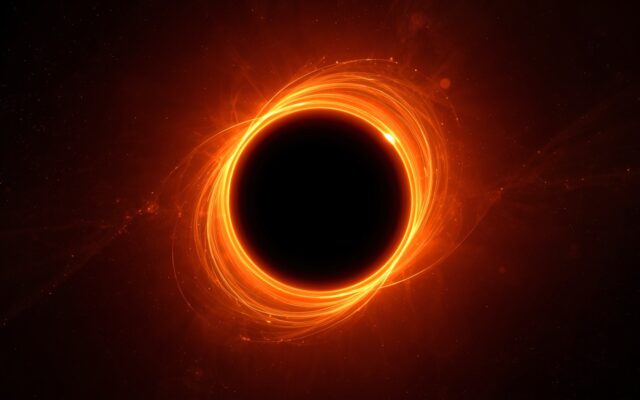
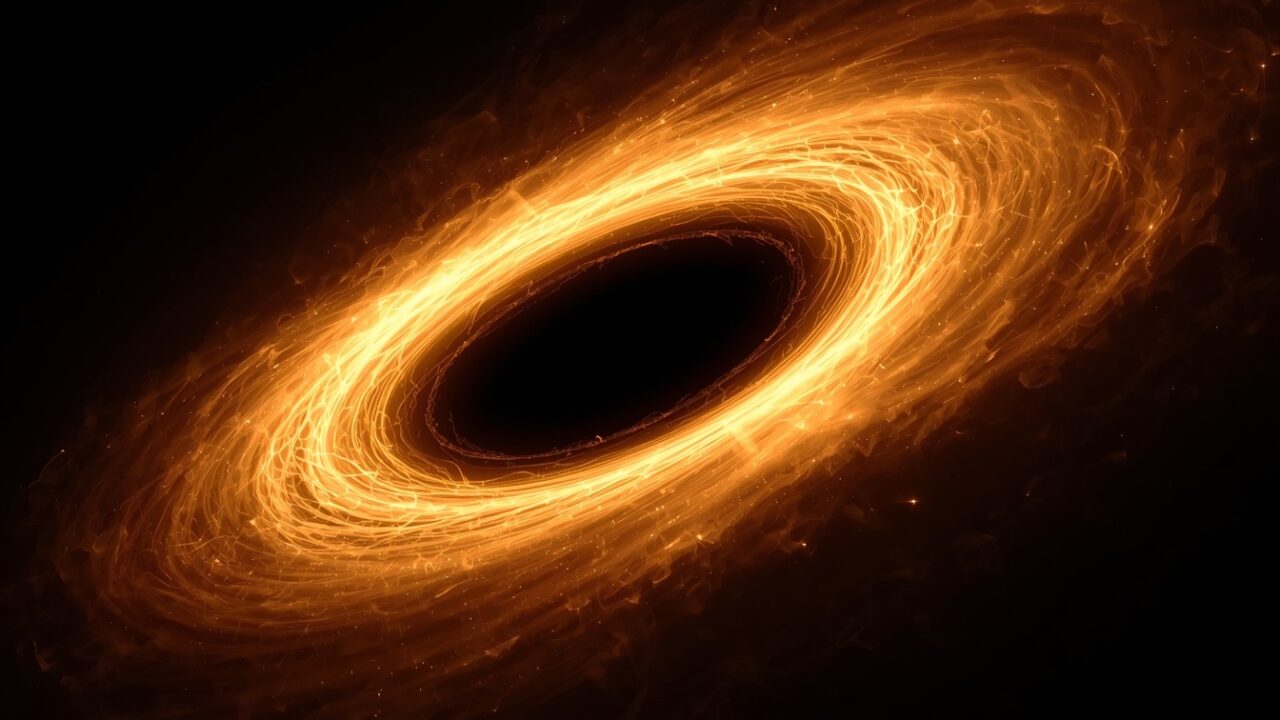
In May 2022, astronomers released the Sagittarius A star black hole image, offering humanity its first direct visual confirmation of the supermassive black hole residing at the heart of our own galaxy. Unlike the more distant M87 black hole photographed years earlier, this object sits remarkably close by, cosmically speaking, at just about 27,000 light-years from Earth.
A Long-Awaited Confirmation
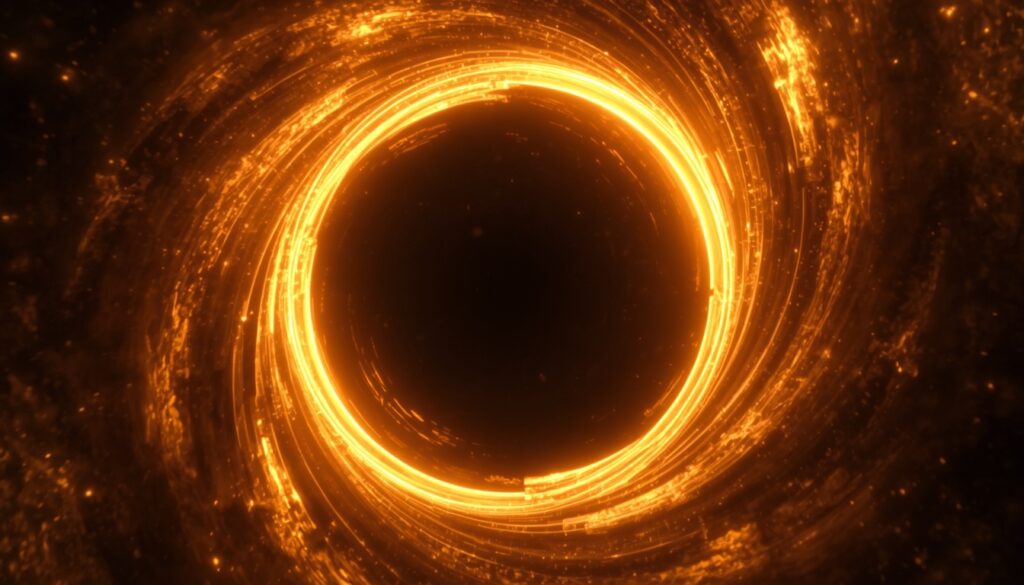
Astronomers had strong indirect evidence of Sagittarius A* for decades, based on the orbital motion of stars near the galactic center. The Sagittarius A star black hole image finally provided direct visual proof, capturing the glowing ring of material surrounding the black hole’s shadow.
Why This Image Took Longer Than M87’s
Despite being much closer than M87’s black hole, Sagittarius A* proved significantly harder to photograph. Its smaller size meant gas surrounding it orbits and changes appearance in mere minutes, compared to the days or weeks it takes for material to orbit the much larger M87 black hole, requiring far more complex data processing.
Comparing Size and Mass
While the Sagittarius A star black hole image shows an object with a mass around 4 million times that of our Sun, it’s dramatically smaller than M87’s black hole, which weighs in at roughly 6.5 billion solar masses, despite both appearing similar in apparent size from Earth due to their vastly different distances.
The Same Event Horizon Telescope Technology
Capturing this image relied on the same globally synchronized Event Horizon Telescope network used for the M87 photograph, combining data from radio observatories across multiple continents to achieve the resolution necessary to image something so small and distant.
Turbulent Surrounding Material
Unlike M87’s relatively stable ring appearance, the image showed evidence of rapid, turbulent gas movement surrounding the black hole, requiring astronomers to average data across many hours to produce a stable, representative image rather than a single instantaneous snapshot.
Confirming Predictions About Our Galaxy’s Center
This image provided strong confirmation that the massive, invisible object long suspected at our galaxy’s center is indeed a black hole, matching theoretical predictions derived from decades of stellar orbit observations conducted by teams studying stars orbiting closely around this region.
A Milestone for the Event Horizon Telescope Team
The successful imaging of two vastly different black holes — one supermassive and relatively calm, another much smaller and turbulent — demonstrated the versatility and reliability of the Event Horizon Telescope’s imaging techniques across different astronomical scenarios.
What This Means for Future Black Hole Research
With two successful black hole images now available for comparison, astronomers have valuable data for testing general relativity under different mass and environmental conditions, helping refine models of how black holes of varying sizes behave.
A Black Hole That Changes by the Minute
Sagittarius A* is about 1,500 times less massive than M87’s black hole, which makes it far smaller. Gas orbiting it completes a loop in minutes rather than days or weeks. For astronomers trying to take a picture, that is like photographing a spinning top with a long exposure.
This rapid change is the main reason the image took longer to produce. Scientists had to develop new techniques to average over thousands of possible images, rather than relying on a single stable view.
Looking Through the Milky Way’s Disk
Our galaxy’s center lies about 27,000 light-years away, behind a thick layer of gas and dust in the Milky Way’s disk. Visible light from the center is almost completely blocked, which is why we cannot see it with ordinary telescopes.
Radio waves pass through much of that material, but they are still scattered by electrons in the interstellar gas, which blurs the image. The Event Horizon Telescope team had to model and correct for this scattering, much like looking through frosted glass.
The Stars That Proved It Was There
Long before the image, astronomers were confident a supermassive black hole sat at the center of our galaxy. Teams led by Reinhard Genzel and Andrea Ghez tracked stars orbiting an invisible point for decades, using infrared telescopes that see through the dust.
One star, known as S2, completes an orbit every 16 years and passes very close to the central object. Its motion showed that about 4 million solar masses are packed into a tiny region. Genzel and Ghez shared the 2020 Nobel Prize in Physics for this work.
Similar Looks, Very Different Black Holes
The images of Sagittarius A* and M87’s black hole look remarkably similar: a bright ring around a dark center. This is exactly what general relativity predicts. The appearance depends mostly on the black hole’s mass and our distance, not on the galaxy around it.
The two black holes live in very different environments, though. M87’s is enormous and powers a huge jet, while Sagittarius A* is relatively quiet and consumes only a small amount of gas. Seeing the same basic ring in both cases strongly supports Einstein’s theory across a huge range of scales.
A Magnetic View in 2024
In 2024, the Event Horizon Telescope published a polarized image of Sagittarius A*. It revealed strong, organized magnetic fields spiraling around the black hole, similar to the pattern seen at M87.
The similarity suggests that strong magnetic fields may be common around black holes. Some researchers think Sagittarius A* could have a faint, hidden jet, and future observations may test that idea.
Flares From the Galactic Center
Sagittarius A* is usually quiet, but it produces flares in infrared and X-ray light several times a day. These bursts are thought to come from hot spots of gas moving close to the black hole or from magnetic activity in the surrounding material.
Studying these flares helps scientists understand how gas behaves just outside the event horizon. Webb and other observatories have monitored the galactic center for long periods, recording frequent flickering that adds another layer to the Event Horizon Telescope images.
Why Our Black Hole Is So Quiet
Sagittarius A* consumes very little gas compared with active black holes elsewhere, and only a tiny fraction of the gas near it ever falls in. That makes it one of the dimmest supermassive black holes known relative to its size, and it explains why our galaxy’s center looks calm compared with the blazing cores of quasars.
Final Thoughts
The image represents a deeply personal astronomical achievement, offering direct visual proof of the massive, invisible object anchoring our entire galaxy’s rotation, hiding in plain sight at the Milky Way’s very center.
Keep exploring with our guides to Black hole event horizon image explained, M87 black hole first image and First black hole photo story. For official information, visit NASA’s universe science hub.
Frequently Asked Questions
What is Sagittarius A?
The supermassive black hole located at the center of our own Milky Way galaxy.
How far away is it from Earth?
Approximately 27,000 light-years, making it relatively close compared to other imaged black holes.
Why was it harder to photograph than M87’s black hole?
Its smaller size means surrounding gas changes rapidly, complicating data processing.
How massive is Sagittarius A?
Roughly 4 million times the mass of our Sun.
What technology captured this image?
The Event Horizon Telescope, a global network of synchronized radio observatories.
Keep exploring