Exciting NASA Artemis III Rocket Assembly Begins as Artemis II Orion Successfully Returns to Kennedy Space Center in 2026:

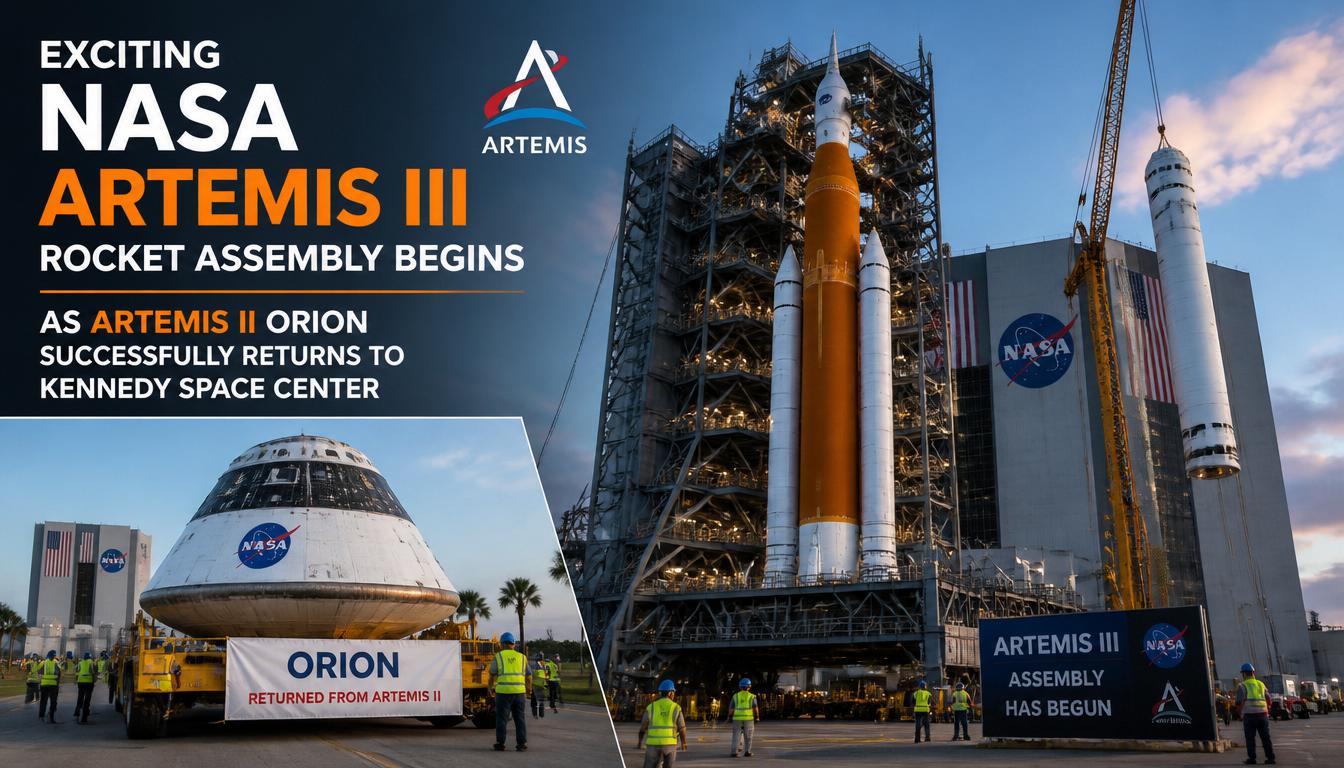
Exciting NASA Artemis III Rocket Assembly Begins as Artemis II Orion Successfully Returns to Kennedy Space Center
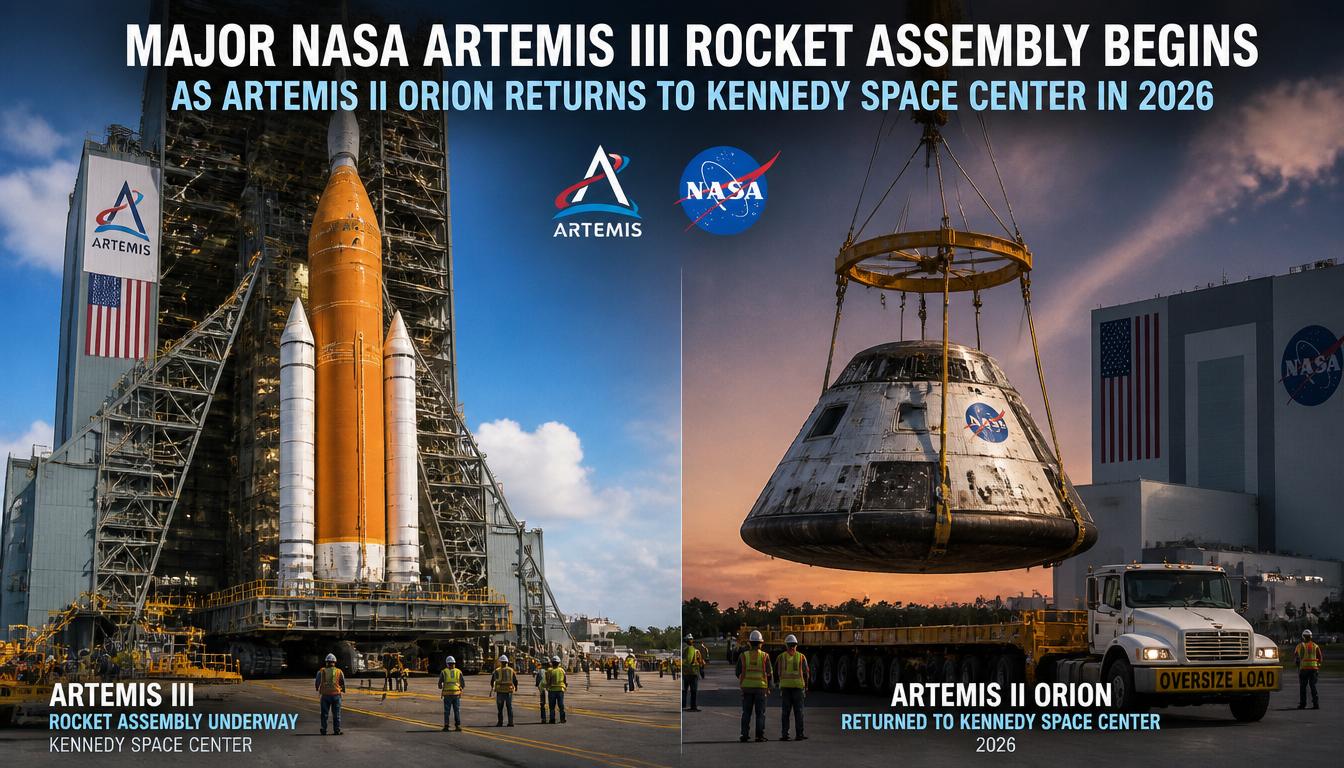
NASA is rapidly advancing toward its next lunar mission as major hardware for the Artemis III mission arrives at Kennedy Space Center in Florida. Following the successful Artemis II crewed test flight around the Moon, NASA engineers are now focusing on preparing the powerful Space Launch System (SLS) rocket and Orion spacecraft for the next phase of human lunar exploration.
At the same time, the Artemis II Orion capsule has officially returned to Kennedy Space Center for post-flight inspections and detailed performance analysis after safely carrying astronauts around the Moon and back to Earth.
Artemis III Rocket Hardware Arrives at Kennedy Space Center
NASA recently received the upper portion of the Artemis III SLS core stage after it arrived aboard the agency’s Pegasus barge. Engineers transported the hardware into the Vehicle Assembly Building (VAB), where assembly operations for the mission are now beginning.
This marks an important milestone because it is the first time NASA is performing full core stage assembly work for an Artemis mission directly at Kennedy Space Center.
The Artemis III mission is expected to play a critical role in NASA’s long-term Moon exploration goals and future missions to Mars.
Inside the Massive Artemis III Core Stage
The SLS core stage is one of the largest and most powerful rocket components ever built by NASA. When fully assembled, the core stage stands approximately 212 feet tall and contains two enormous propellant tanks.
These tanks can store more than 733,000 gallons of super-cooled liquid hydrogen and liquid oxygen propellant used to power the rocket’s four RS-25 engines.
The core stage also contains advanced avionics systems, which act as the rocket’s onboard computers. These systems control navigation, flight guidance, communication, and vehicle performance during launch and ascent into space.
Core Stage Integration Process Begins
NASA teams will first position the Artemis III core stage horizontally inside the transfer aisle of the Vehicle Assembly Building before lifting it into High Bay 2 for final assembly operations.
Once inside the high bay, engineers will connect the stage to the engine section and boat-tail components that were previously integrated during earlier preparation work in 2025.
This careful assembly process requires precision engineering because every component must align perfectly before launch.
Booster Segments for Artemis III Arrive in Florida
NASA has also started receiving the booster motor segments needed for the Artemis III mission. The first shipment arrived at Kennedy Space Center on April 13, with additional shipments expected later in the year.
These giant booster segments were manufactured by Northrop Grumman in Utah and transported across eight states using specialized rail systems.
The booster hardware is now being processed at Kennedy’s Rotation, Processing and Surge Facility, where technicians inspect and prepare each segment before integration.
Why the Solid Rocket Boosters Are Important
The twin solid rocket boosters attached to the SLS rocket provide most of the power needed during launch.
Key Booster Facts
- Generate more than 75% of total launch thrust
- Reach approximately 17 stories in height
- Work together with the core stage and RS-25 engines
- Help produce around 8.8 million pounds of thrust
This enormous power allows the SLS rocket to carry astronauts, spacecraft, and cargo beyond Earth orbit toward the Moon.
Artemis II Orion Spacecraft Returns to Kennedy
While Artemis III hardware preparation continues, the Orion spacecraft from the Artemis II mission has officially returned to Kennedy Space Center following its successful lunar test flight.
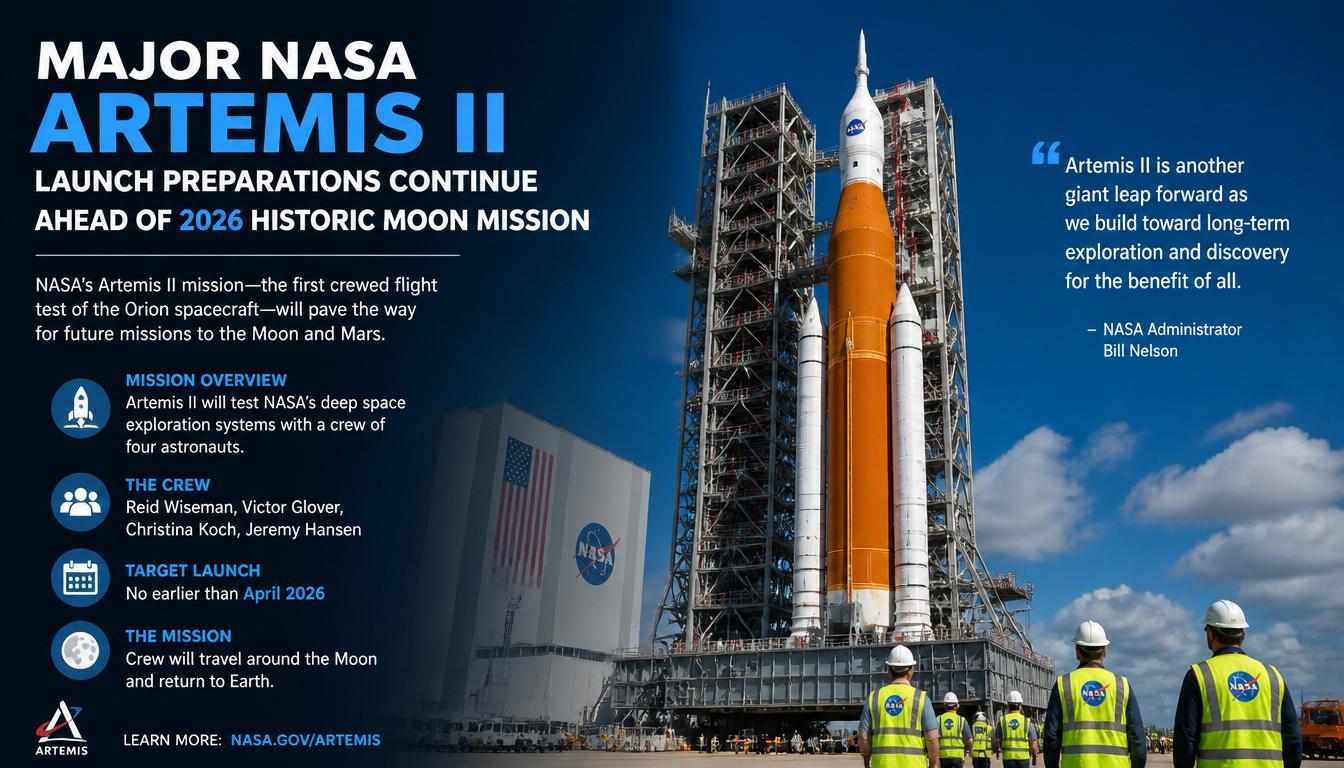
The spacecraft safely transported NASA astronauts:
- Reid Wiseman
- Victor Glover
- Christina Koch
along with Jeremy Hansen from the Canadian Space Agency around the Moon and back to Earth.
The Orion capsule has now been transferred to Kennedy’s Multi-Processing Payload Facility for thorough post-flight examination.
Engineers Begin Orion Post-Flight Analysis
NASA technicians are now carefully examining the Artemis II Orion spacecraft to understand how it performed during deep-space operations.
Major Inspection Activities Include:
- Removing scientific payloads
- Recovering flight data
- Inspecting avionics systems
- Analyzing spacecraft performance
- Removing remaining propellant
- Examining the heat shield
These evaluations help NASA improve future Artemis missions and ensure spacecraft safety for future crews.
Orion Heat Shield Undergoes Detailed Examination
One of the most important parts of the Orion spacecraft is its heat shield, which protects astronauts during the extremely hot reentry into Earth’s atmosphere.
The Artemis II heat shield and several other spacecraft systems will now undergo detailed analysis to determine how they handled the intense temperatures and stress experienced during the mission.
NASA engineers use this information to improve future spacecraft designs and mission safety procedures.
Artemis III Orion Spacecraft Nears Completion
While Artemis II analysis continues, NASA is also making major progress on the Orion spacecraft for Artemis III.
Technicians have already completed important testing procedures, including:
- Thermal cycle testing
- Ultrasonic inspections
- Solar array deployment checks
- Heat shield installation and inspection
All 186 Avcoat heat shield blocks for the Artemis III Orion capsule have been installed, cured, and inspected.
The service module has also successfully completed thermal testing and solar array deployment evaluations.
Upcoming Orion Integration Milestones
NASA plans to connect the Artemis III Orion crew module with its service module later this year. Afterward, engineers will integrate the spacecraft with the launch abort system.
The launch abort system is designed to quickly move astronauts away from the rocket in case of an emergency during launch.
This safety system remains one of the most important crew protection technologies used during human spaceflight.
Artemis III Mission Objectives
NASA’s Artemis III mission is expected to help test important technologies needed for future lunar missions and deep-space exploration.
The mission will evaluate:
- Rendezvous operations in Earth orbit
- Docking systems between spacecraft
- Orion spacecraft performance
- Crew operations in deep space
- Lunar mission support technologies
These capabilities will later support Artemis IV and future Moon missions planned for 2028 and beyond.
NASA’s Long-Term Artemis Vision
The Artemis program represents NASA’s broader goal of building a sustainable human presence on and around the Moon.
Future missions are expected to support:
- Lunar surface exploration
- Scientific research stations
- Deep-space technology development
- International space partnerships
- Human missions to Mars
NASA believes the Moon will serve as a training ground for future human exploration deeper into the solar system.
International Cooperation in Artemis Missions
The Artemis program continues to involve international cooperation from agencies around the world. Canada’s participation through the Canadian Space Agency highlights the growing importance of global partnerships in space exploration.
Future missions may involve additional international spacecraft, lunar systems, and scientific collaboration projects.
Frequently Asked Questions (FAQs)
What is Artemis III?
Artemis III is NASA’s planned lunar mission designed to support future Moon exploration and advanced deep-space operations.
What is the SLS rocket?
The Space Launch System (SLS) is NASA’s most powerful rocket developed for deep-space human missions.
Why did Artemis II Orion return to Kennedy Space Center?
After finishing its mission around the Moon, the spacecraft came back for post-flight checks, data review, and system assessments.
What are RS-25 engines?
RS-25 engines are powerful rocket engines used on the SLS core stage to help launch astronauts into space.
Why are the solid rocket boosters important?
The boosters provide more than 75% of the rocket’s total thrust during liftoff.
What testing is being done on Artemis III Orion?
NASA is conducting thermal tests, ultrasonic inspections, solar array checks, and heat shield evaluations.
What is the purpose of Artemis III?
The mission will help test technologies needed for future lunar missions and long-term Moon exploration.
How does Artemis help future Mars missions?
NASA plans to use Artemis missions to develop technologies and experience needed for eventual human missions to Mars.
Conclusion
NASA’s continued progress on Artemis III demonstrates how quickly the agency is moving toward the next era of lunar exploration. With major rocket hardware arriving at Kennedy Space Center and post-flight analysis of Artemis II already underway, engineers are gathering critical data while preparing for future missions.
The Artemis program is not only focused on returning humans to the Moon but also building the foundation for long-term space exploration beyond Earth. As NASA continues assembling the Artemis III mission, the dream of sustainable lunar exploration and future Mars missions moves closer to reality every day.
read another articles
Keep exploring
1 comment