6 Fascinating Facts in This Pulsar Visual Guide Explained

Pulsar Visual Guide Explained:
Among the most precisely predictable objects in the universe, pulsars have fascinated astronomers since their accidental discovery in 1967. This Pulsar visual guide explained breaks down how these rapidly rotating neutron stars create their distinctive, remarkably regular signal patterns.
The Discovery That Sparked Alien Speculation
This Pulsar visual guide explained recounts the object’s accidental 1967 discovery by Jocelyn Bell Burnell, whose initial detection of an impossibly regular radio signal briefly led researchers to jokingly consider extraterrestrial origin before identifying the true astrophysical explanation.
How Pulsars Create Their Signal
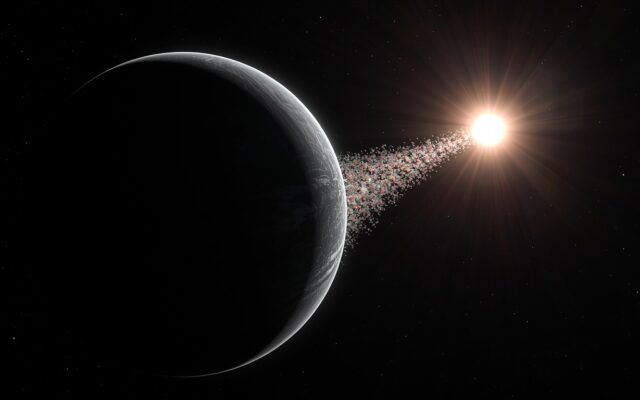
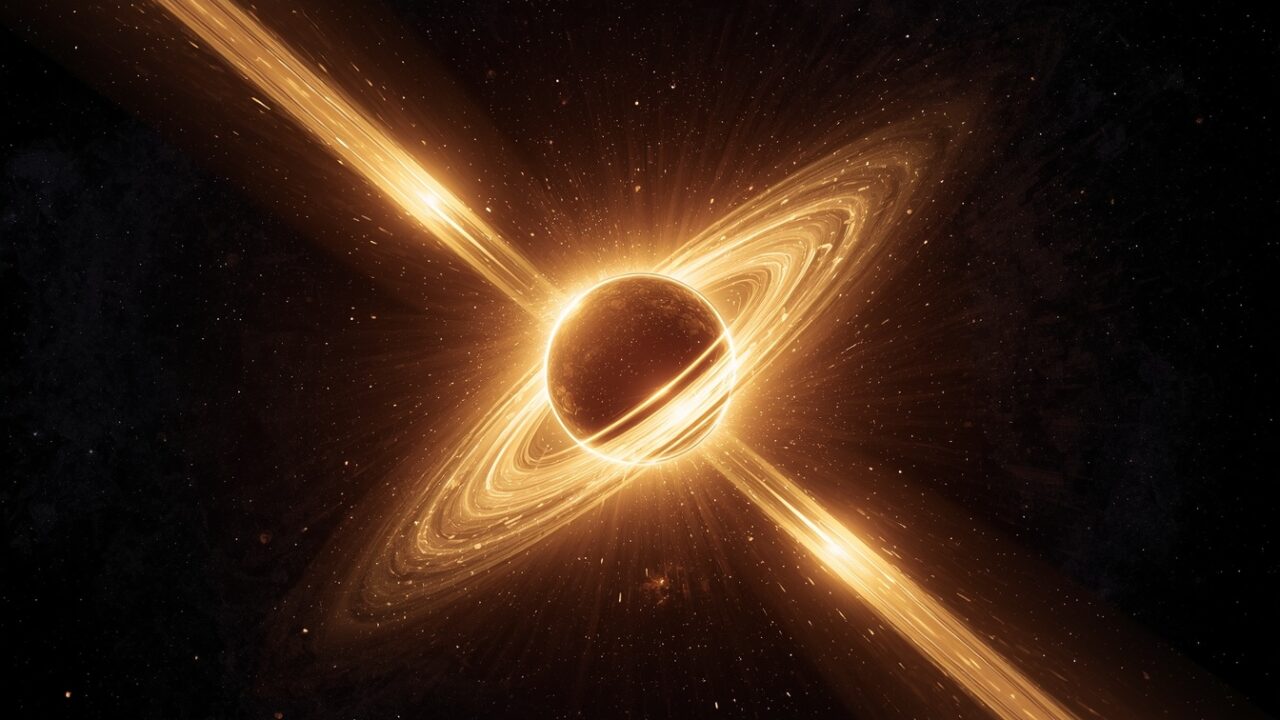
At its core, this Pulsar visual guide explained describes a rapidly rotating neutron star with a powerful magnetic field misaligned from its rotation axis, creating beams of radiation that sweep across space like a lighthouse, detectable as regular pulses whenever a beam crosses Earth’s line of sight.
Rotation Speeds That Defy Imagination
Some pulsars rotate incredibly fast, and this Pulsar visual guide explained highlights millisecond pulsars completing hundreds of rotations every second, representing some of the most rapidly rotating macroscopic objects known anywhere in the observable universe.
Why Pulsar Timing Is So Remarkably Precise
Certain pulsars maintain timing precision rivaling atomic clocks, making them valuable tools for testing fundamental physics theories and even potentially serving as cosmic navigation beacons for future deep space missions.
The Crab Pulsar: A Famous Example
Located within the Crab Nebula, this Pulsar visual guide explained highlights the Crab Pulsar as one of the most studied examples, representing the collapsed remnant of the supernova recorded by ancient astronomers in the year 1054.
Gradual Slowing Over Time
While incredibly regular in the short term, pulsars gradually slow their rotation over long timescales as they lose rotational energy, eventually becoming too slow to produce detectable pulses after millions of years.
Detecting Pulsars Across the Electromagnetic Spectrum
Beyond radio detection, the mentions that some pulsars also emit detectable pulses in X-ray, gamma-ray, or even visible light wavelengths, providing astronomers multiple complementary methods for studying these objects’ characteristics.
Pulsars as Gravitational Wave Detectors
Interestingly, networks of precisely timed pulsars, called pulsar timing arrays, are being used to search for extremely long-wavelength gravitational waves, offering a complementary detection method to dedicated gravitational wave observatories.
Jocelyn Bell Burnell’s Discovery
The first pulsar was discovered in 1967 by Jocelyn Bell Burnell, then a graduate student at the University of Cambridge. She noticed an unusual repeating signal in radio telescope data.
The signal pulsed every 1.33 seconds with remarkable regularity, leading to the jokey nickname LGM-1, for Little Green Men. A pulsar guide often starts with this story.
The Lighthouse Model
Pulsars emit beams of radiation from their magnetic poles. As the pulsar rotates, these beams sweep across space like a lighthouse.
We detect a pulse each time a beam points toward Earth.
Millisecond Pulsars
Some pulsars spin hundreds of times per second. These millisecond pulsars are thought to have been spun up by gaining material from a companion star.
The fastest known pulsar spins 716 times per second.
The First Planets Found Around a Pulsar
In 1992, astronomers discovered planets orbiting the pulsar PSR B1257+12. These were the first confirmed planets outside our solar system.
The planets likely formed from debris after the supernova.
Nanohertz Gravitational Waves
In 2023, pulsar timing arrays, including NANOGrav, reported evidence of a gravitational wave background. This was detected by tracking tiny variations in pulsar timing.
The signal may come from pairs of supermassive black holes.
Binary Pulsars and Nobel Prizes
The Hulse-Taylor binary pulsar, discovered in 1974, showed orbital decay consistent with gravitational wave emission. Russell Hulse and Joseph Taylor won the 1993 Nobel Prize in Physics.
This was indirect evidence of gravitational waves.
How Pulsars Are Found
Most pulsars are discovered by radio telescopes that search the sky for regular pulses. Large dishes like Arecibo, before its collapse in 2020, the Green Bank Telescope and China’s FAST telescope have discovered many pulsars. Surveys process enormous amounts of data using computers and sometimes citizen scientists through projects like Einstein@Home.
A pulsar guide through these discoveries shows how technology and collaboration have expanded the known pulsar population.
The Vela Pulsar
The Vela pulsar, located in the Vela supernova remnant, spins about 11 times per second. It is one of the brightest pulsars in radio and gamma rays and is known for frequent glitches, sudden increases in rotation speed.
Pulsars in Popular Culture
The first pulsar’s signal inspired the famous album cover of Joy Division’s Unknown Pleasures, which shows stacked radio pulses from pulsar CP 1919. The image has become one of the most recognizable graphics in music history.
The Crab Pulsar in Detail
The Crab Pulsar, at the heart of the Crab Nebula, spins about 30 times per second. It was discovered in 1968 and was one of the first pulsars linked directly to a supernova remnant, confirming that pulsars are neutron stars born in stellar explosions.
A pulsar guide through images of the Crab shows glowing rings and jets powered by the pulsar’s energy, captured in detail by Hubble and Chandra.
Pulsars as Cosmic Clocks
Some millisecond pulsars rival atomic clocks in stability. Their regular pulses allow astronomers to detect tiny changes in timing caused by orbiting companions, planets or passing gravitational waves.
This precision makes pulsars valuable tools for testing physics.
Pulsar Navigation
Scientists have tested using pulsars for spacecraft navigation, similar to GPS. NASA’s SEXTANT experiment on the International Space Station demonstrated this concept in 2017.
Future deep space missions could use pulsars to determine their positions.
Pulsars in Globular Clusters
Globular clusters host many millisecond pulsars, since their crowded environments encourage stars to interact and form binaries. Terzan 5, a cluster near the galactic center, contains dozens of known pulsars.
A pulsar guide through these clusters shows how environment shapes pulsar populations.
The Number of Known Pulsars
Astronomers have cataloged more than 3,000 pulsars, and radio surveys continue to find more each year. China’s FAST telescope has discovered hundreds of them.
Final Thoughts
This pulsar guide demonstrates how a chance discovery of an oddly regular radio signal revealed one of astronomy’s most precisely predictable phenomena, transforming rapidly rotating neutron stars into valuable tools for both fundamental physics research and practical astronomical timing applications.
In Short
Pulsars are nature’s most precise clocks, spinning remnants of dead stars.
Keep exploring with our guides to Neutron star visual explainer, Hubble Crab Nebula photos and Supernova remnant nebula images. For official information, visit NASA’s universe science hub.
Frequently Asked Questions
Who discovered the first pulsar?
Jocelyn Bell Burnell in 1967, initially detecting a puzzlingly regular radio signal.
How do pulsars create their signal?
A rotating neutron star’s misaligned magnetic field creates sweeping radiation beams detectable as regular pulses.
How fast can pulsars rotate?
Millisecond pulsars can complete hundreds of rotations every second.
What is the Crab Pulsar?
A famous pulsar within the Crab Nebula, remnant of the supernova recorded in
5. How are pulsars used for gravitational wave detection?
Precisely timed pulsar networks, called timing arrays, help search for long-wavelength gravitational waves.