Major NASA Artemis II Launch Preparations Continue Ahead of 2026 Historic Moon Mission

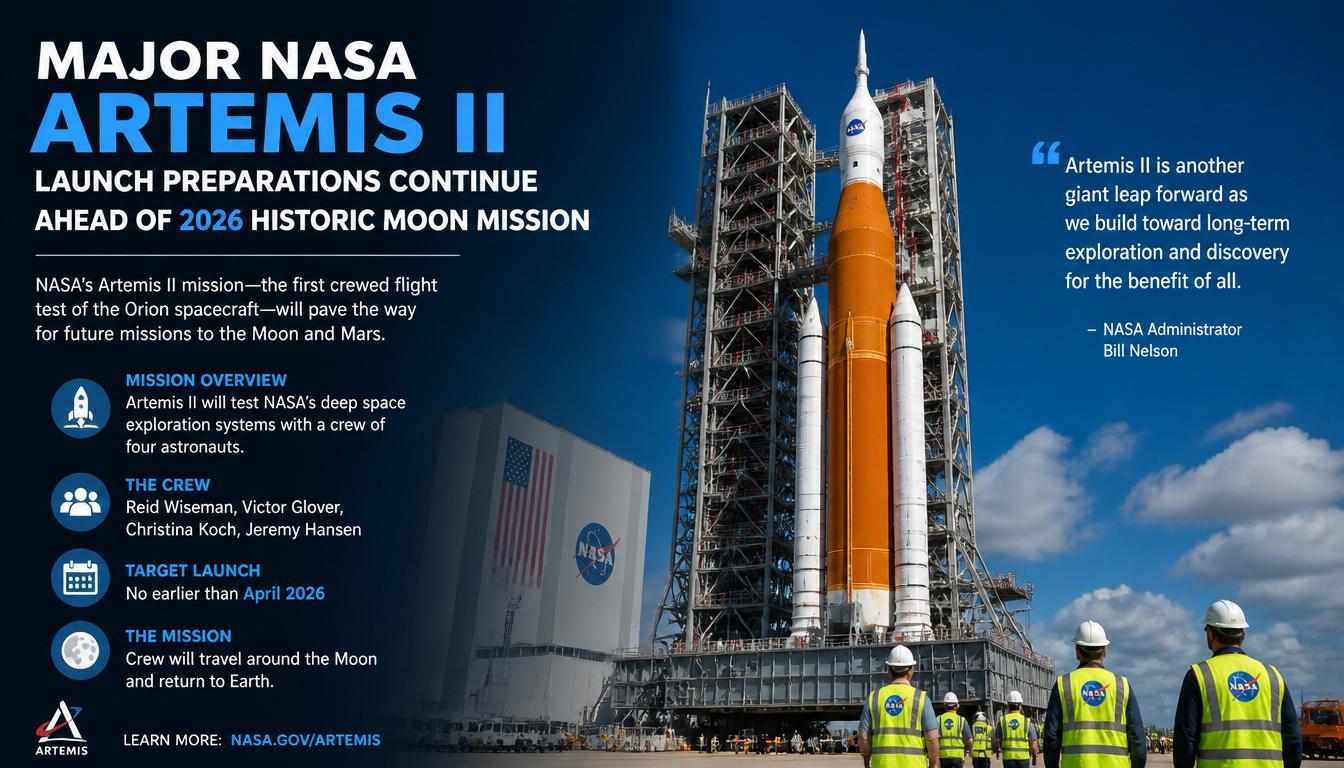
Major NASA Artemis II Launch Preparations Continue Ahead of 2026 Historic Moon Mission
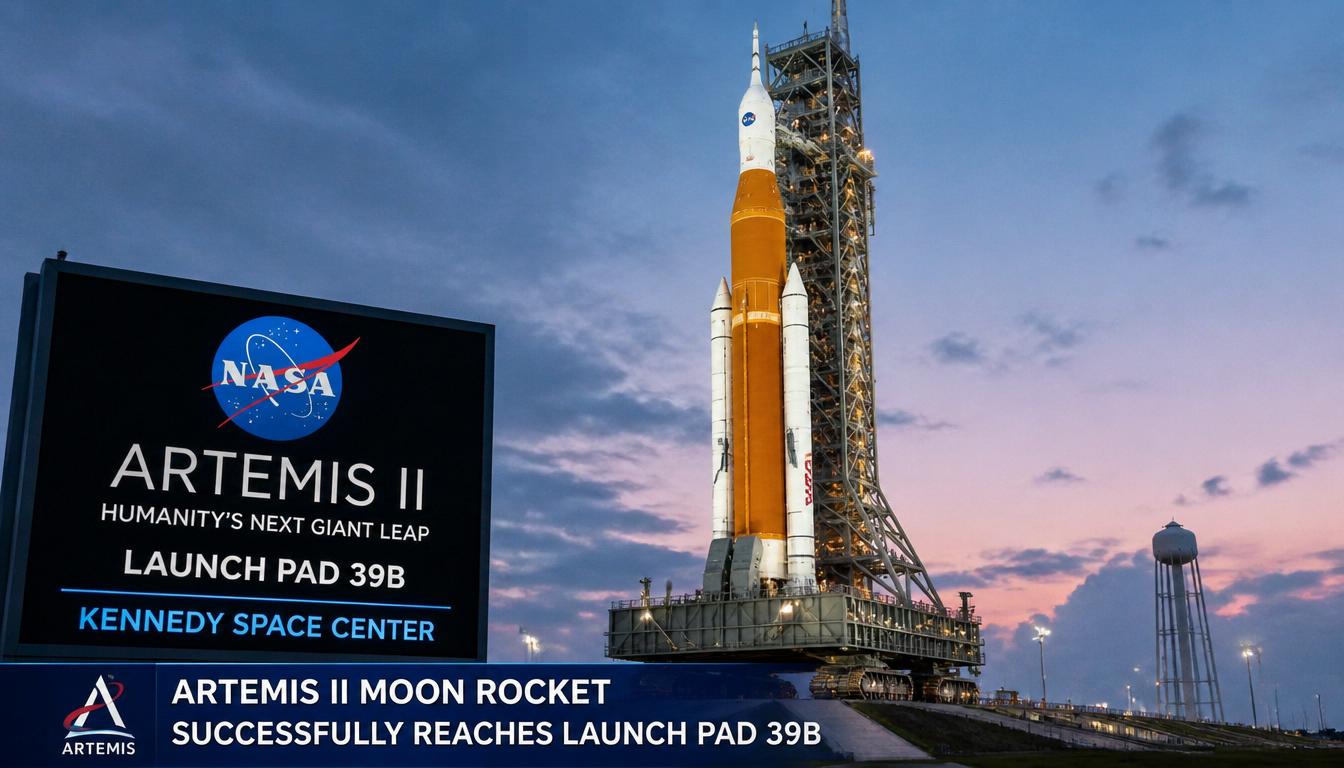
NASA teams are continuing important preparations for the Artemis II mission at Launch Pad 39B at Kennedy Space Center in Florida. The mission will mark the first crewed flight of NASA’s Artemis program and will send four astronauts on a journey around the Moon before safely returning them to Earth.
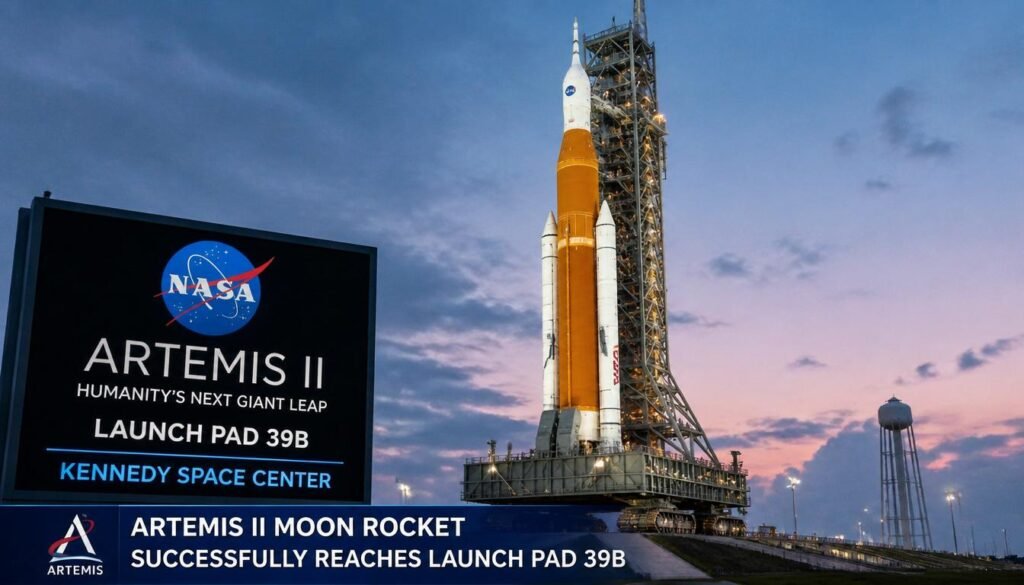
Following the successful rollout of the Space Launch System (SLS) rocket and Orion spacecraft to the launch pad on March 20, engineers and technicians are now working through the final stages of testing and launch readiness activities before the targeted April launch window.
Artemis II Enters Final Prelaunch Phase
After arriving at Launch Pad 39B, NASA teams immediately began connecting the rocket, spacecraft, and mobile launcher to critical launch pad systems. These connections are necessary to provide electrical power, communication support, fueling operations, and monitoring capabilities during the final countdown period.
The launch infrastructure at Kennedy Space Center plays a major role in preparing the rocket for flight. Engineers must carefully verify every system to ensure the mission meets strict safety and performance standards before astronauts board the spacecraft.
NASA is currently targeting launch opportunities beginning in early April 2026.
Engineers Conduct Critical System Testing
One of the most important tasks during prelaunch operations involves testing communication and safety systems between the rocket and ground teams.
Technicians are carrying out several engineering checks, including:
- Flight termination system connectivity tests
- Radio frequency communication testing
- Orion spacecraft system verification
- Core stage communication checks
- Final rocket and spacecraft inspections
These tests help NASA confirm that all onboard systems can properly communicate with launch control teams during the mission.
Emergency Escape Systems Prepared for Crew Safety
NASA teams also connected the emergency egress baskets to the mobile launcher. These baskets are an important astronaut safety feature designed to quickly evacuate the crew from the launch tower in case of an emergency before liftoff.
The baskets slide down cables away from the launch pad to a protected area, allowing astronauts and support personnel to escape rapidly if needed.
Crew safety remains one of NASA’s highest priorities during all Artemis missions.
Orion Crew Access Arm Extended
Another important milestone involved extending the crew access arm toward the Orion spacecraft. This structure allows astronauts and support personnel to enter the spacecraft through the White Room before launch.
The White Room is the final location astronauts pass through before boarding the spacecraft. Technicians use this area to complete last-minute checks, assist the astronauts with equipment, and secure the hatch before launch.
The same concept was used during the Apollo and Space Shuttle eras, although modern Artemis systems use more advanced technologies and procedures.
Artemis II Astronauts Begin Quarantine
The four Artemis II crew members officially started their quarantine period on March 18 to protect their health before launch.
The crew includes:
- Reid Wiseman — Commander
- Victor Glover — Pilot
- Christina Koch — Mission Specialist
- Jeremy Hansen, a Mission Specialist representing the Canadian Space Agency
Astronaut quarantine procedures are common before major space missions because even minor illnesses could affect crew performance in space.
During quarantine, astronauts avoid close contact with people outside the quarantine group while continuing mission training and preparation activities.
Artemis II Crew Continues Mission Training
Even while in quarantine, the Artemis II astronauts are continuing important training activities at NASA’s Johnson Space Center in Houston.
The crew is reviewing:
- Mission procedures
- Emergency response plans
- Spacecraft operations
- Lunar flyby sequences
- Communication protocols
Training helps ensure astronauts are fully prepared for every stage of the approximately 10-day mission around the Moon.
NASA astronauts spend years preparing for missions like Artemis II because deep-space travel requires extensive technical knowledge, teamwork, and emergency readiness.
Crew Scheduled to Arrive in Florida
NASA announced that the Artemis II astronauts are expected to travel to Florida on Friday, March 27. Once they arrive at Kennedy Space Center, they will continue the remainder of their quarantine near the launch site.
Additional mission milestones, public appearances, and launch-related activities are expected to be announced by NASA as launch day approaches.
Why Artemis II Is a Historic Mission
Artemis II is considered one of NASA’s most important missions in modern space exploration because it will be the first time astronauts travel around the Moon since the Apollo era.
Unlike earlier test flights, Artemis II will carry humans aboard the Orion spacecraft, allowing NASA to evaluate life-support systems, navigation technology, communication systems, and crew operations in deep space.
The mission will also help NASA prepare for Artemis III, which aims to land astronauts on the lunar surface in the coming years.
NASA’s Long-Term Goals for Artemis
The Artemis program is designed to establish a sustainable human presence on and around the Moon while preparing for future missions to Mars.
NASA hopes future Artemis missions will support:
- Lunar scientific research
- Deep-space technology testing
- Long-term Moon habitats
- International space partnerships
- Human missions to Mars
The program represents a major shift from short-term lunar missions toward continuous deep-space exploration.
International Cooperation in Artemis Missions
The Artemis program includes international support from several global space agencies. The participation of the Canadian Space Agency and astronaut Jeremy Hansen highlights the growing cooperation between countries in space exploration.
NASA also works closely with private companies and international partners to develop new technologies for future missions.
The Importance of Launch Pad 39B
Launch Pad 39B at Kennedy Space Center has a long history in human spaceflight. The launch complex previously supported Apollo and Space Shuttle missions and has now been upgraded for Artemis operations.
The launch pad includes advanced fueling systems, communication networks, lightning protection systems, and crew access structures designed for modern deep-space missions.
Frequently Asked Questions (FAQs)
What is Artemis II?
Artemis II is NASA’s first crewed Artemis mission that will send astronauts around the Moon before returning to Earth.
When could Artemis II launch?
NASA is targeting launch opportunities beginning in April 2026.
Why are astronauts quarantined before launch?
Astronauts enter quarantine to reduce the risk of illness before spaceflight and ensure crew health during the mission.
What is the purpose of the crew access arm?
The crew access arm allows astronauts and support personnel to safely enter the Orion spacecraft before launch.
What is the White Room?
The White Room is the final area astronauts enter before boarding the spacecraft.
How long will the Artemis II mission last?
The mission will likely take around 10 days to complete.
Why is Artemis II important?
The mission will test NASA’s deep-space systems with astronauts onboard and help prepare for future Moon landings.
What is NASA’s long-term Artemis goal?
NASA aims to establish a sustainable human presence on the Moon and eventually send astronauts to Mars.
Conclusion
NASA’s continued preparations for Artemis II highlight the enormous effort required to safely launch astronauts into deep space. From technical testing and astronaut training to launch pad operations and safety procedures, every step plays an important role in mission success.
As launch day approaches, Artemis II stands as a symbol of a new era in space exploration. The mission will not only return humans to deep-space travel around the Moon but also help build the foundation for future lunar bases and eventual human missions to Mars.
another article is here
Keep exploring
1 comment