Beneath the Night Sky in a Nearby Galaxy: Webb Telescope’s Stunning View of WLM in 2026

Beneath the Night Sky in a Nearby Galaxy: Webb Telescope’s Stunning View of WLM in 2026
Introduction
The universe is filled with billions of galaxies, but only a few are close enough for scientists to study in extraordinary detail. One of these fascinating galaxies is the Wolf–Lundmark–Melotte galaxy, commonly known as WLM. Using the powerful NASA James Webb Space Telescope, astronomers captured breathtaking images of this dwarf galaxy and uncovered important clues about how stars and galaxies formed in the early universe.
These observations are helping scientists understand cosmic history in ways that were impossible before the launch of the James Webb Space Telescope. The images not only reveal thousands of stars but also provide insight into galaxy evolution, stellar life cycles, and the origins of the universe itself.
What Is the WLM Galaxy?
Wolf–Lundmark–Melotte Galaxy is a small dwarf galaxy located around 3 million light-years away from Earth. Although it is considered part of our galactic neighborhood, it remains relatively isolated from other large galaxies.
This isolation makes WLM extremely valuable for astronomers because it has not experienced major interactions or collisions with nearby galaxies. Many galaxies near the Milky Way are heavily influenced by gravitational forces and galactic mergers, making them difficult to study clearly. WLM, however, offers scientists a cleaner environment for testing theories about galaxy formation and evolution.
Because the galaxy remained mostly undisturbed over billions of years, researchers can study it as a natural laboratory that preserves clues about the ancient universe.
Why Scientists Are Interested in WLM
One of the main reasons astronomers are excited about WLM is its chemical composition. The gas inside the galaxy contains very low amounts of heavy elements such as carbon, oxygen, and iron. Scientists describe this condition as “chemically unenriched.”
This is important because galaxies in the early universe also had low amounts of heavy elements. By studying WLM, researchers can better understand what early galaxies looked like shortly after the Big Bang.
Massive stars inside WLM create heavier elements during their lifetimes. However, when these stars explode as supernovae, powerful galactic winds push much of that material out of the small galaxy. As a result, WLM loses many of the heavy elements it produces.
This process makes WLM resemble the primitive galaxies that existed billions of years ago, giving astronomers a rare opportunity to observe conditions similar to the early universe.
James Webb Telescope’s Incredible Observation
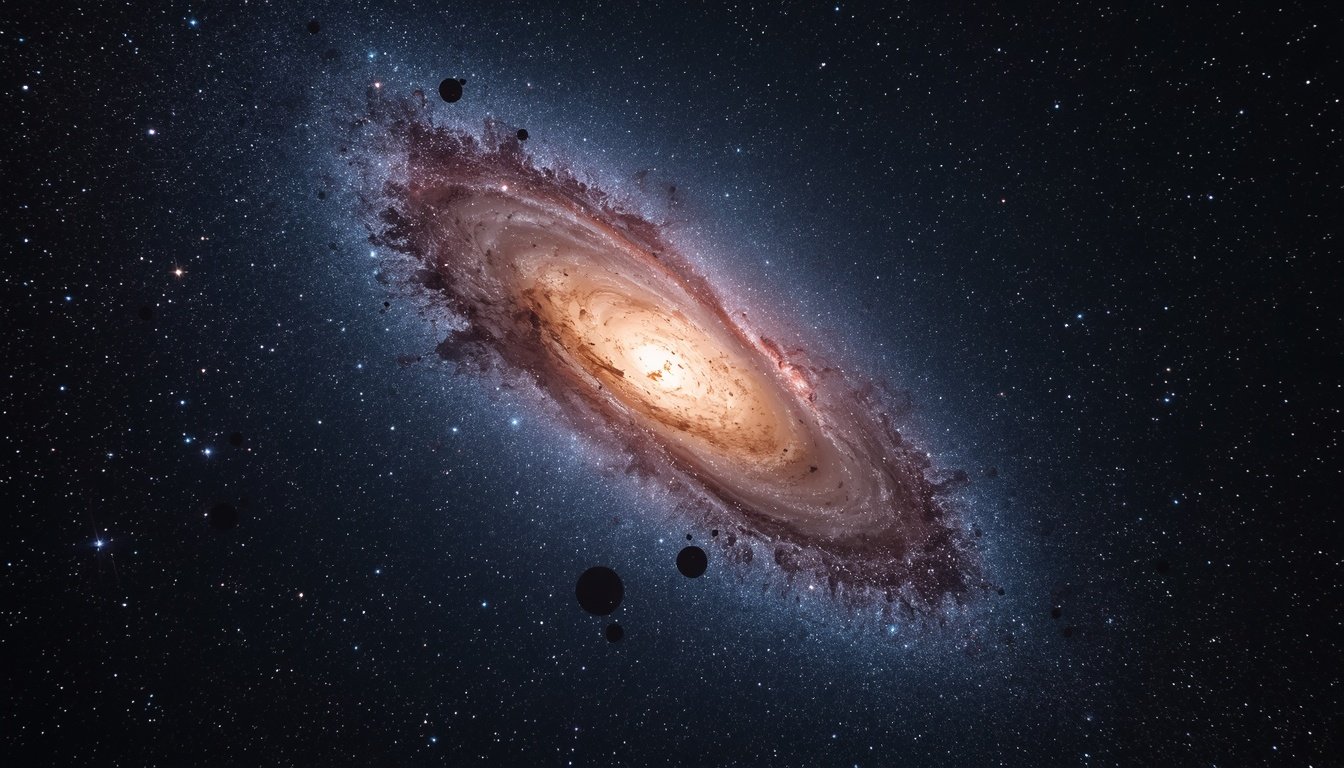
The James Webb Space Telescope observed WLM using its advanced Near-Infrared Camera (NIRCam). The telescope captured a highly detailed image filled with stars of different sizes, temperatures, colors, and ages.
Compared to older observations from the Spitzer Space Telescope, Webb’s image revealed significantly more detail. Stars that once appeared blurry or invisible became clearly distinguishable in Webb’s powerful infrared view.
The telescope also detected glowing gas clouds, distant background galaxies, and foreground stars featuring Webb’s unique diffraction spikes. These observations demonstrate the telescope’s unmatched ability to study faint celestial objects far beyond the Milky Way.
Scientists explained that even if humans stood on a planet inside the WLM galaxy, the naked eye would never see the level of detail captured by Webb. The telescope effectively acts like a superpowered infrared vision system for astronomers.
A Beautiful Cosmic Experience
Astronomer Kristen McQuinn described the emotional impact of viewing the WLM image projected onto a planetarium dome.
She explained that the experience felt similar to standing beneath a perfectly dark night sky on Earth while looking up at the Milky Way. The projection created the illusion of standing inside the WLM galaxy itself.
The enormous number of visible stars created a breathtaking cosmic panorama. Different star colors represented varying temperatures and stages of stellar evolution, while glowing nebulae added even more beauty to the scene.
This immersive experience highlighted not only Webb’s scientific power but also its ability to inspire wonder and curiosity about the universe.
Understanding Star Formation History
One of the main goals of studying WLM is reconstructing its star formation history.
Low-mass stars can survive for billions of years, meaning some stars visible in WLM today were born during the early stages of the universe. By measuring the ages and properties of these ancient stars, scientists can learn how galaxies evolved over cosmic time.
Researchers compare this information with observations of distant galaxies seen at high redshift — galaxies viewed as they existed shortly after formation. Together, these studies help astronomers create a clearer picture of how galaxies changed throughout the history of the universe.
This research may eventually answer some of astronomy’s biggest questions, including:
- How did the first galaxies form?
- How were heavy elements created?
- What processes shaped modern galaxies like the Milky Way?
How Webb Helps Future Astronomy Research
The WLM observations are part of the Webb Early Release Science (ERS) program, designed to demonstrate the telescope’s capabilities and prepare astronomers for future research projects.
Scientists are using these observations to test and improve several important astronomical tools and techniques.
Improving Instrument Calibration
Researchers are carefully checking the calibration of Webb’s NIRCam instrument to ensure that measurements of star brightness are extremely accurate.
Accurate brightness measurements are essential because even tiny errors can affect estimates of a star’s age, mass, and chemical composition.
Testing Stellar Evolution Models
Astronomers are also comparing Webb data with existing stellar evolution models. These models explain how stars change throughout their lifetimes.
Since Webb observes infrared light with unprecedented sensitivity, scientists must confirm that current models correctly predict how stars behave in these wavelengths.
Developing Public Astronomy Software
Another major achievement of the project is the creation of a public software tool capable of measuring the brightness of crowded stars in Webb images.
This tool will allow astronomers worldwide to study dense star fields more effectively. Because the software is non-proprietary, it will become a valuable resource for future space research.
Why Infrared Astronomy Matters
Unlike visible light, infrared light can pass through dust clouds that normally block our view of stars and galaxies.
The James Webb Space Telescope specializes in infrared astronomy, allowing it to see objects hidden behind cosmic dust. This capability helps astronomers explore regions where stars are actively forming and observe extremely distant galaxies from the early universe.
Infrared observations also allow scientists to study cooler objects in space that are invisible to ordinary optical telescopes.
Because of these abilities, Webb is transforming modern astronomy and opening entirely new windows into the cosmos.
The Future of Webb Discoveries
The WLM project represents only a small portion of what the James Webb Space Telescope can accomplish.
Astronomers expect Webb to revolutionize understanding in areas such as:
- Exoplanet atmospheres
- Black holes
- Galaxy evolution
- Star formation
- Dark matter research
- Early universe exploration
Every new Webb observation continues to surprise scientists with unprecedented detail and discoveries.
As technology advances, the telescope may help answer fundamental questions about humanity’s place in the universe and whether life exists elsewhere beyond Earth.
Conclusion
The remarkable observations of the WLM galaxy showcase the exceptional capability of the James Webb Space Telescope. By studying this isolated dwarf galaxy, scientists are uncovering valuable information about star formation, galaxy evolution, and the ancient universe.
The detailed infrared images reveal countless stars, glowing gas clouds, and distant galaxies that were previously impossible to study with such clarity. In addition to scientific findings, these observations evoke wonder and serve as a reminder to humanity of the vast beauty concealed throughout the universe.
The James Webb Space Telescope is not only changing astronomy — it is reshaping our understanding of the universe itself.
FAQs
1. What does WLM stand for?
WLM stands for Wolf–Lundmark–Melotte, the names of the astronomers who discovered the galaxy.
2. What is the distance between Earth and the WLM galaxy?
The WLM galaxy is approximately 3 million light-years away from Earth.
3. Why is the WLM galaxy important?
WLM is important because its chemical composition resembles galaxies from the early universe, helping scientists study ancient cosmic conditions.
4. What telescope captured the WLM images?
The images were captured using the James Webb Space Telescope’s Near-Infrared Camera (NIRCam).
5. What makes Webb different from older telescopes?
Webb observes infrared light with extremely high sensitivity, allowing it to see distant galaxies, hidden stars, and cosmic dust clouds more clearly than previous telescopes.
6. What is infrared astronomy?
Infrared astronomy studies infrared radiation emitted by objects in space. It helps scientists observe objects hidden behind dust and detect very distant galaxies.
7. What are dwarf galaxies?
Dwarf galaxies are small galaxies containing fewer stars than large galaxies like the Milky Way.
8. How does studying WLM help scientists?
By studying WLM, scientists can better understand how stars and galaxies formed and evolved over billions of years.