NASA’s Artemis II Moon Rocket Successfully Reaches Launch Pad 39B

NASA’s Artemis II Moon Rocket Successfully Reaches Launch Pad 39B
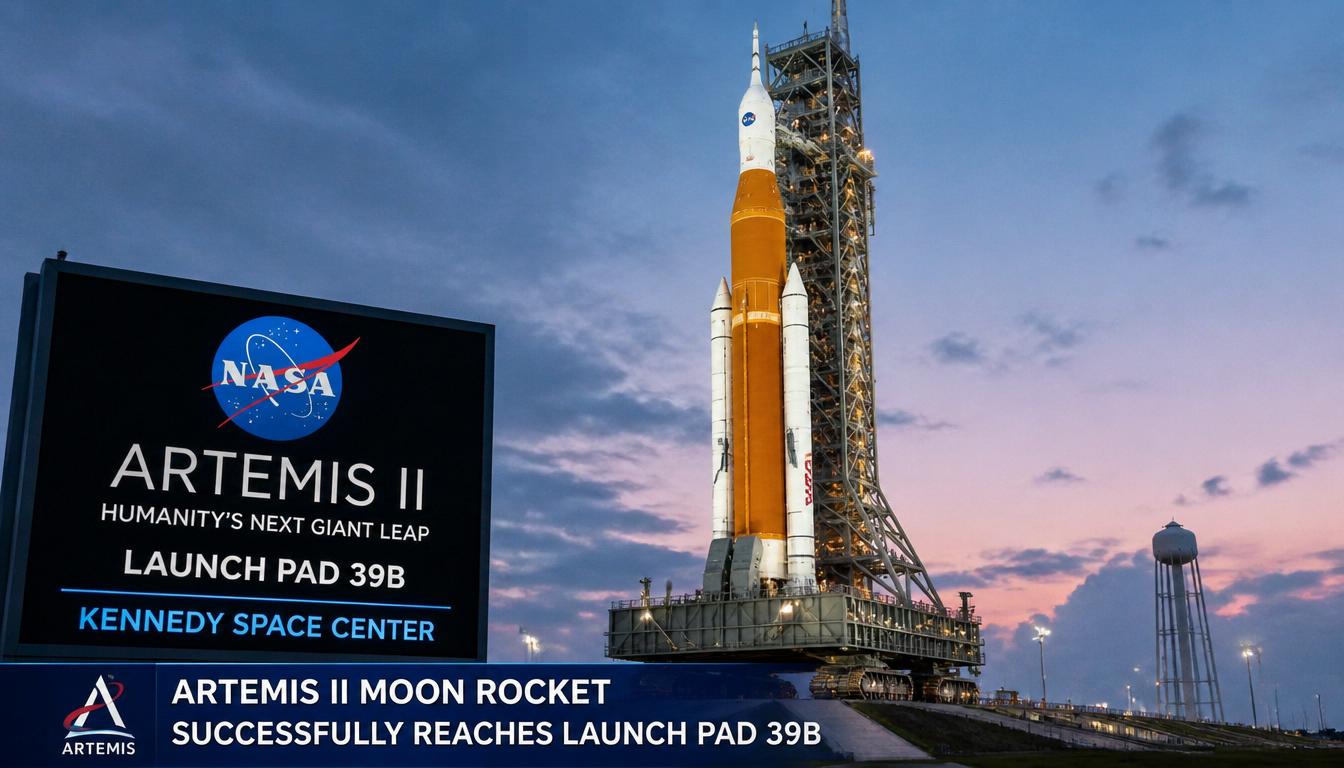
NASA has achieved another major milestone in its Artemis program as the powerful Artemis II Space Launch System (SLS) rocket and Orion spacecraft officially arrived at Launch Pad 39B at Kennedy Space Center in Florida. The successful rollout marks an important step toward the agency’s upcoming crewed mission around the Moon.
Artemis II finishes its lengthy trip to the launch platform.
The massive Moon rocket reached Launch Pad 39B at 11:21 a.m. EDT on Friday, March 20, after completing an 11-hour journey from the Vehicle Assembly Building (VAB).
NASA’s giant crawler-transporter 2 began moving the integrated rocket and spacecraft shortly after midnight. The crawler carefully transported the vehicle across a 4-mile crawlerway while maintaining a maximum speed of only 0.82 miles per hour.
Because the Artemis II rocket stands approximately 322 feet tall, engineers moved the vehicle slowly and steadily to avoid unnecessary vibrations or structural stress during transportation.
NASA Begins Final Launch Preparations
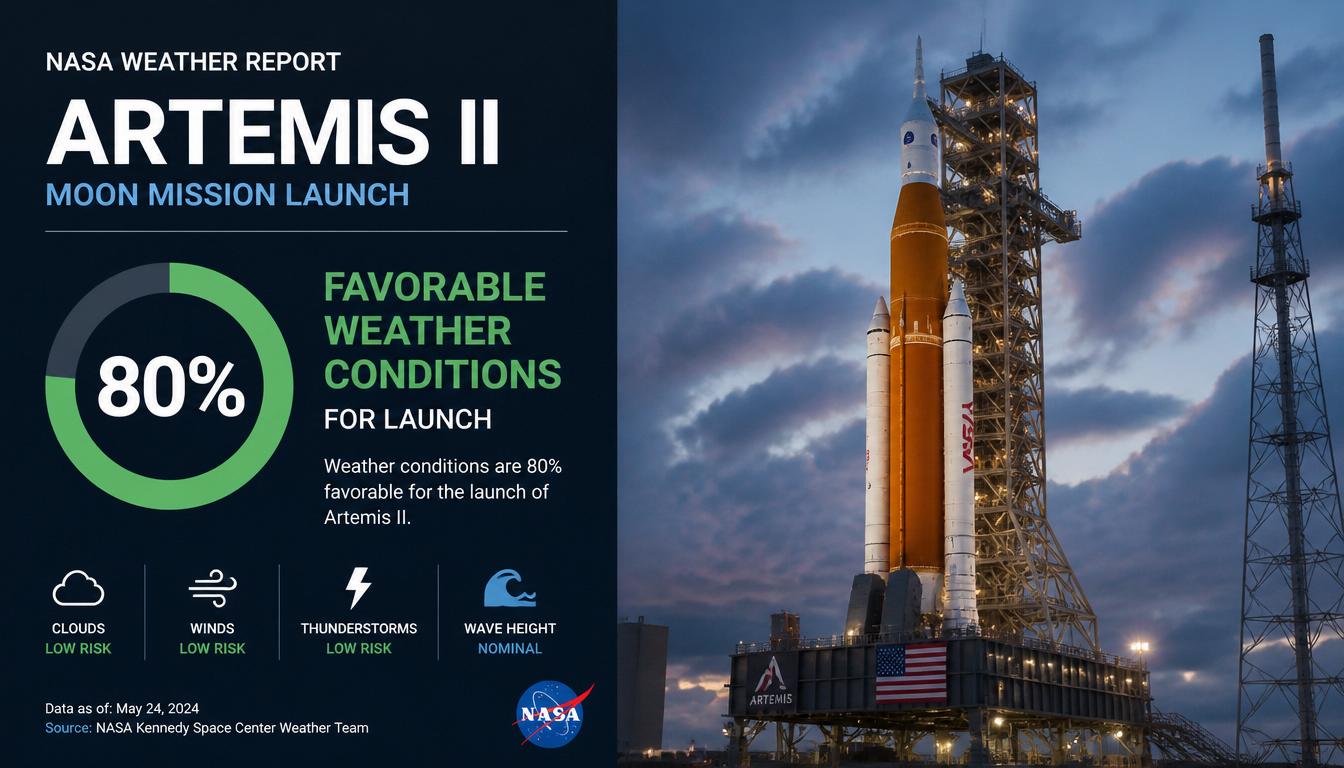
With the rocket now positioned at Launch Pad 39B, NASA teams are entering the final stage of prelaunch operations. Engineers will continue testing systems, monitoring weather conditions, and preparing the rocket for liftoff.
NASA is currently targeting launch as early as Wednesday, April 1. The available launch window extends through Monday, April 6, depending on technical readiness and weather conditions.
During this phase, teams will inspect fueling systems, communication equipment, guidance software, and astronaut support systems to ensure mission safety and reliability.
Artemis II Astronaut Crew Ready for Historic Mission
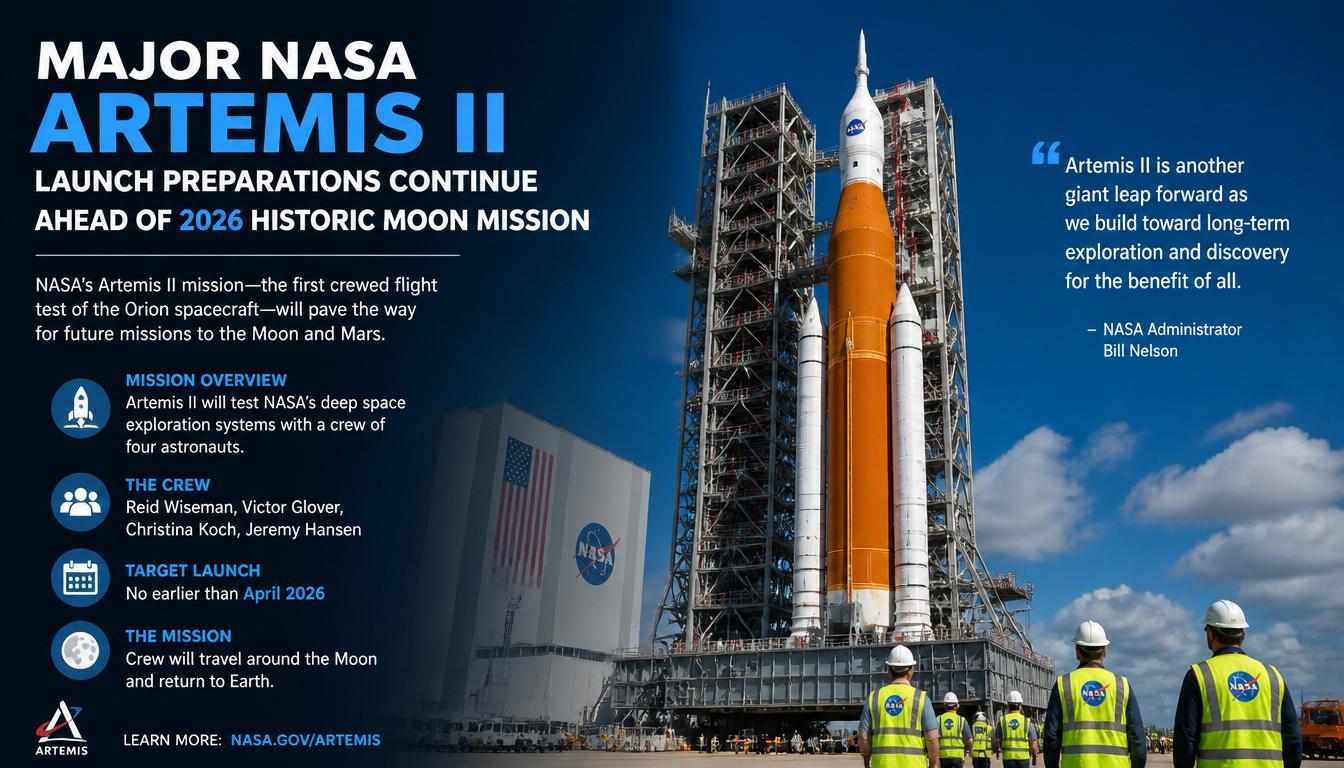
The Artemis II mission will send four astronauts on a 10-day journey around the Moon and safely back to Earth. The crew includes:
- Reid Wiseman — Mission Commander
- Victor Glover — Pilot
- Christina Koch — Mission Specialist
- Jeremy Hansen — Mission Specialist representing the Canadian Space Agency
This mission will become the first crewed flight of NASA’s Artemis program and one of the most significant lunar exploration missions in modern history.
Why Artemis II Is Important for Future Space Exploration
Artemis II is designed to test NASA’s deep-space systems with astronauts onboard before future lunar landing missions. This mission will assist NASA in assessing how well the Orion spacecraft, life-support systems, navigation technology, and crew operations function in deep space.
The success of Artemis II will directly support future missions such as Artemis III, which aims to land astronauts on the lunar surface.
NASA also views Artemis as an important step toward long-term human exploration of Mars.
The Role of the Space Launch System (SLS)
The Space Launch System, commonly known as SLS, is currently NASA’s most powerful rocket ever developed. It is specifically designed for deep-space exploration missions beyond Earth orbit.
Key Features of the SLS Rocket
- Height: 322 feet
- Designed for human deep-space missions
- Uses solid rocket boosters and a massive core stage
- Capable of carrying Orion spacecraft beyond the Moon
The rocket generates millions of pounds of thrust during launch, making it powerful enough to send astronauts into deep space.
International Cooperation in the Artemis Program
The Artemis program is not only a NASA project but also an international effort involving several global space agencies.
The participation of the Canadian Space Agency through astronaut Jeremy Hansen highlights the growing international collaboration in space exploration.
Future Artemis missions are also expected to involve partnerships with European and other international space organizations.
How Artemis Differs from Apollo Missions
Although Artemis missions are inspired by NASA’s historic Apollo program, the goals are much broader today.
| Apollo Program | Artemis Program |
| Focused on Moon landing competition | Focused on sustainable exploration |
| Short lunar missions | Long-term Moon presence |
| Older space technology | Advanced modern spacecraft |
| Limited global partnerships | International collaboration |
Unlike Apollo, Artemis aims to create a long-term human presence on and around the Moon while preparing for missions to Mars.
Launch Pad 39B’s Historic Legacy
Launch Pad 39B at Kennedy Space Center has played an important role in NASA’s history for decades. The launch complex previously supported Apollo missions and Space Shuttle launches.
Now, the pad has been upgraded to support Artemis missions and future deep-space exploration programs.
Frequently Asked Questions (FAQs)
What is Artemis II?
Artemis II is NASA’s first crewed Artemis mission that will send astronauts around the Moon and back to Earth.
When is the Artemis II launch planned?
NASA is targeting launch as early as April 1, with additional opportunities available through April 6.
How tall is the Artemis II rocket?
The Space Launch System rocket used for Artemis II stands approximately 322 feet tall.
What was the duration of the rollout to Launch Pad 39B?
The rollout journey from the Vehicle Assembly Building to the launch pad took about 11 hours.
Who are the Artemis II astronauts?
The crew includes Reid Wiseman, Victor Glover, Christina Koch, and Canadian astronaut Jeremy Hansen.
Why is Artemis II important?
The mission will test NASA’s deep-space systems with astronauts onboard and prepare for future Moon landing missions.
What is NASA’s long-term Artemis goal?
NASA aims to establish a sustainable human presence on the Moon and eventually send astronauts to Mars.
Conclusion
The successful arrival of NASA’s Artemis II rocket at Launch Pad 39B marks another major achievement in the agency’s return-to-the-Moon efforts. With final launch preparations now underway, excitement continues to grow for the first crewed Artemis mission.
As NASA moves closer to launch day, Artemis II represents not only a journey around the Moon but also the beginning of a new era in deep-space exploration and international space cooperation.
Time to read others articles
Keep exploring