Black hole event horizon image explained: 6 Best Shocking Facts

Black hole event horizon image explained:
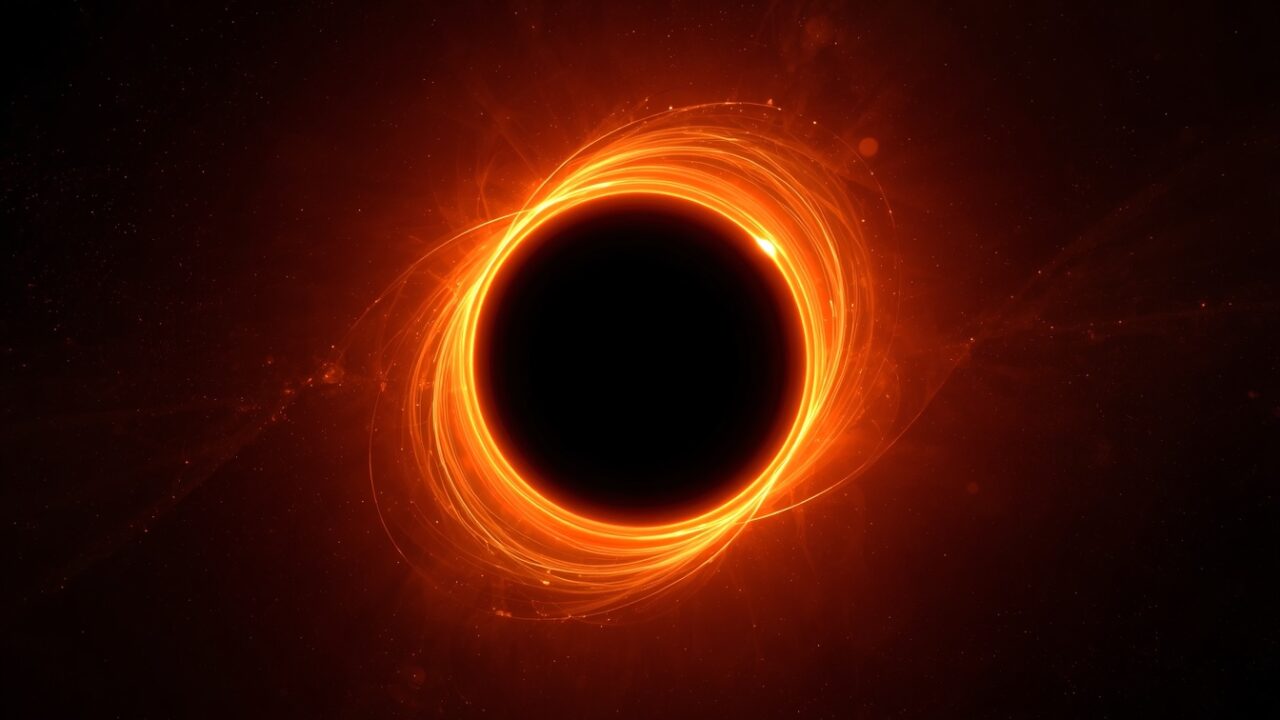
In 2019, humanity saw its first photograph of a black hole’s silhouette, sparking global fascination. With this Black hole event horizon image explained in detail, readers can understand exactly what was captured, how, and why it represented such a monumental scientific achievement.
What Is an Event Horizon?
The event horizon is the theoretical boundary surrounding a black hole beyond which nothing, not even light, can escape its gravitational pull. In this Black hole event horizon image explained context, the photograph doesn’t show the event horizon directly but rather the glowing ring of superheated material surrounding it, silhouetting the black hole’s shadow.
The Event Horizon Telescope Project
Capturing this image required the Event Horizon Telescope, a global network of radio observatories synchronized to function as a single Earth-sized telescope. This massive coordination effort was necessary because black holes are incredibly small in apparent size from Earth, even though they’re physically enormous in mass.
Why the Image Shows a Ring, Not a Black Circle
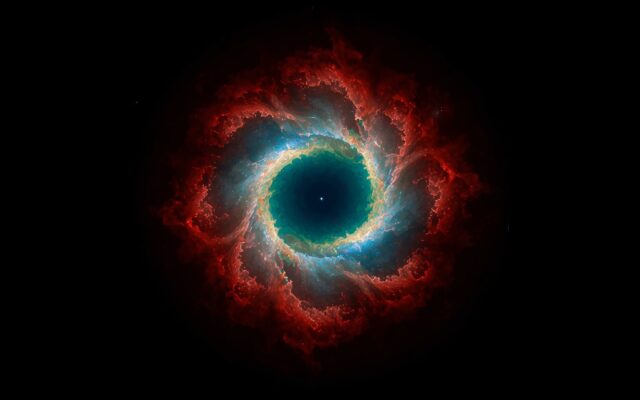
The Black hole event horizon image explained through physics shows a bright ring of glowing plasma surrounding a dark central shadow. This shadow is roughly two and a half times larger than the actual event horizon itself, an effect caused by gravitational light bending as photons pass near the black hole.
The Photon Ring Phenomenon
Light passing extremely close to a black hole can orbit it multiple times before escaping, creating a subtle, brighter inner ring within the image known as the photon ring. While not clearly resolved in the first image, this feature has become a major target for future, higher-resolution observations.
Processing Radio Data Into a Visual Image
Unlike a typical photograph, the black hole image technically was constructed from radio wave data collected across multiple observatories, then processed using complex algorithms to reconstruct a coherent image — a process that took roughly two years of data analysis before release.
M87’s Supermassive Black Hole
The first-ever image captured the supermassive black hole at the center of galaxy M87, located about 55 million light-years away, with a mass roughly 6.5 billion times that of our Sun, making its event horizon large enough to be resolved despite its immense distance.
Confirming Einstein’s Predictions
The a major real-world confirmation of Einstein’s general theory of relativity, matching theoretical predictions about how gravity bends light near extremely massive objects almost exactly, reinforcing decades of theoretical physics research.
A Second Image: Sagittarius A*
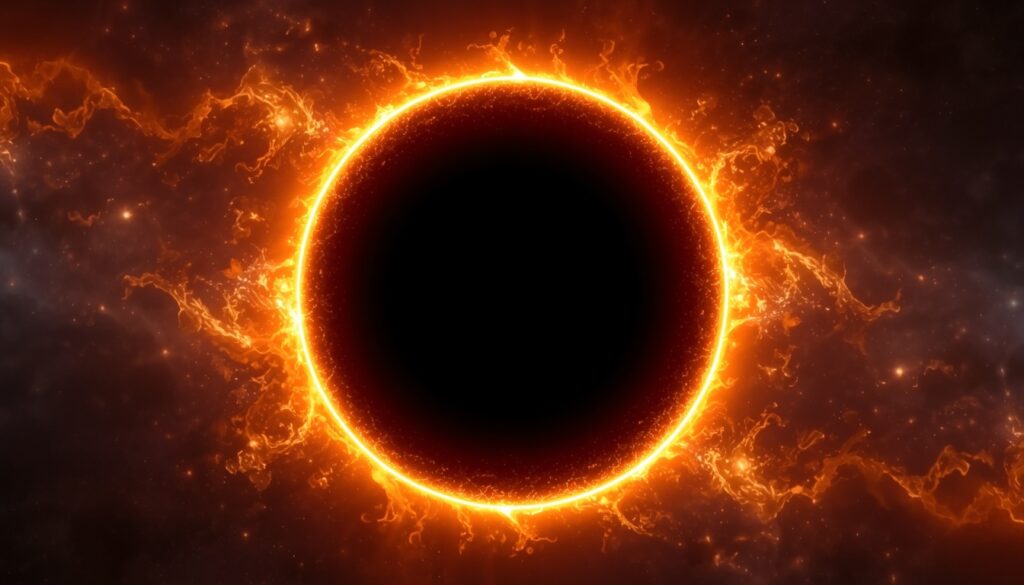
Following the M87 success, the same research team later captured a similar image of Sagittarius A*, the supermassive black hole at the center of our own Milky Way galaxy, providing a second, much closer example for direct comparison.
The Shadow Is Larger Than the Event Horizon
One point that surprises many readers is that the dark center in the images is not the event horizon itself. It is the black hole’s shadow, which appears roughly two and a half times wider than the event horizon. Gravity bends light so strongly near the black hole that it magnifies the dark region.
So when you see a black hole image in the news, the dark patch you are looking at is the region where light cannot escape toward us, enlarged by gravitational lensing. The event horizon sits inside it, too small to resolve directly even with the Event Horizon Telescope.
Very Long Baseline Interferometry in Simple Terms
No single dish on Earth could produce this image. The Event Horizon Telescope links radio observatories across the planet, from Hawaii and Chile to Spain and the South Pole, using a technique called very long baseline interferometry. Each site records radio waves at the same time, marked with atomic clocks.
The recordings are later combined, and the effective size of the telescope becomes the distance between the farthest dishes, almost the diameter of Earth. That gives a resolution so fine that it could, in principle, read a newspaper in New York from a cafe in Paris.
Why the Data Was Shipped on Hard Drives
Each observing night produces an enormous amount of data, far too much to send over the internet. For the 2017 campaign, the telescopes stored their recordings on hundreds of hard drives, which were then physically flown to correlation centers in the United States and Germany.
Data from the South Pole Telescope had to wait months until the Antarctic winter ended and planes could fly out. Only when all the drives arrived could scientists combine the signals and start building the image.
Polarized Light and Magnetic Fields
In 2021, the Event Horizon Telescope released a new view of M87’s black hole in polarized light. Polarization describes the orientation of light waves, and it can reveal the structure of magnetic fields near the black hole.
The swirling lines in that image showed that strong, organized magnetic fields thread the glowing ring. Those fields are thought to help launch the powerful jet that shoots out of M87, extending thousands of light-years into space.
How the Images Keep Improving
The first image was based on observations from 2017. Since then, the collaboration has added more telescopes and observed at higher frequencies, which sharpens the view. Later analyses of M87 showed the ring’s bright spot shifting position between years, as expected for turbulent material.
Researchers are also working toward black hole movies, capturing changes over time. A space-based radio antenna has been proposed to extend the network beyond Earth, which could produce much sharper images in the future.
Why Radio Waves Were Used
The Event Horizon Telescope observes at a wavelength of about 1.3 millimeters, in the radio part of the spectrum. At this wavelength, the gas around a black hole becomes more transparent, allowing the telescope to see close to the event horizon.
Radio waves also pass through Earth’s atmosphere relatively well at high, dry sites like mountaintops and the South Pole. That is why many of the participating observatories sit in extreme locations, where water vapor in the air is minimal.
Final Thoughts
With this black hole image fully, it becomes clear that this photograph represents far more than a striking visual — it’s a triumph of global scientific collaboration and a direct visual confirmation of some of physics’ most extreme theoretical predictions.
Keep exploring with our guides to First black hole photo story, Sagittarius A star black hole image and M87 black hole first image. For official information, visit NASA’s universe science hub.
Frequently Asked Questions
What does the black hole image actually show?
A glowing ring of hot plasma surrounding the dark shadow cast by the black hole’s gravity.
How was the image captured?
Using the Event Horizon Telescope, a global network of radio observatories acting as one giant telescope.
Why is the shadow larger than the event horizon?
Gravitational light bending makes the shadow appear about 2.5 times larger than the actual event horizon.
Which black hole was photographed first?
The supermassive black hole at the center of galaxy M87, in
5. Was a second black hole photographed later?
Yes, Sagittarius A* at the center of the Milky Way was imaged afterward.
Keep exploring

1 comment