6 Spectacular Star Nursery Nebula Images

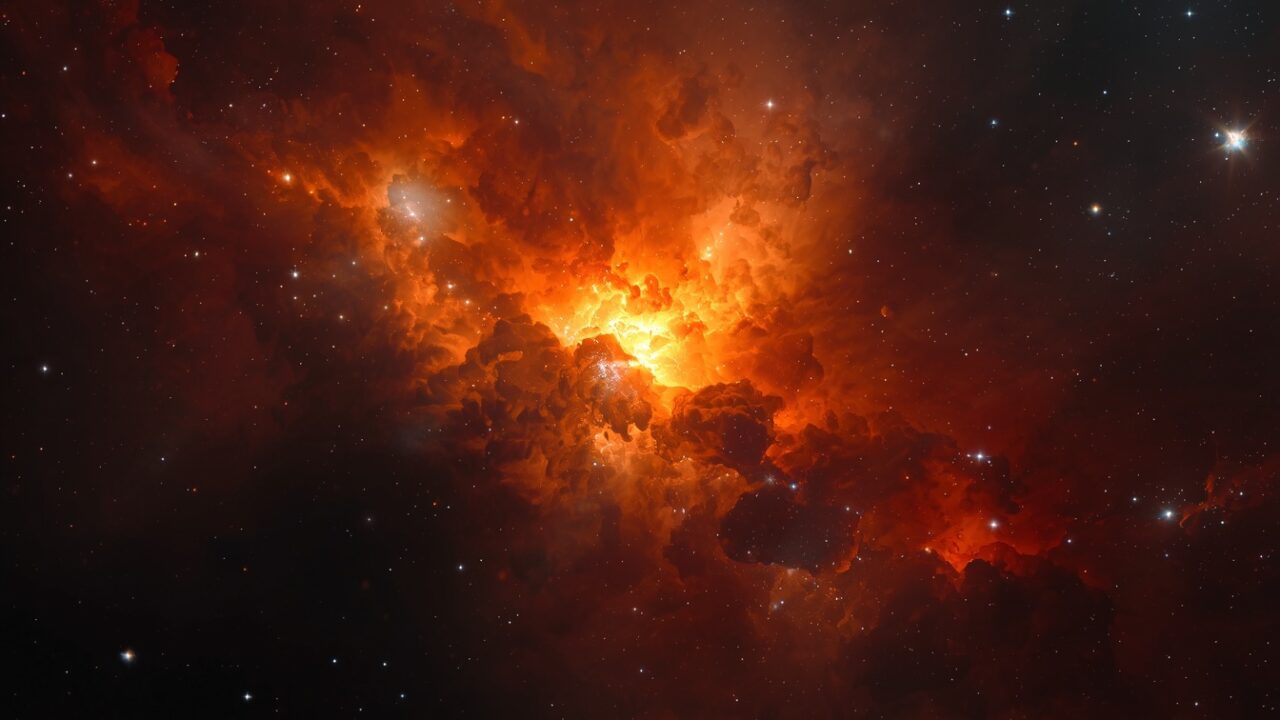
Star Nursery Nebula Images:
Some of the most photographed regions in the night sky are stellar nurseries — dense clouds of gas and dust actively forming new stars. Star nursery nebula images capture this ongoing process, offering a visual window into the earliest chapters of stellar life.
What Defines a Star Nursery
Star nurseries, also called stellar nurseries or star-forming regions, consist of dense molecular clouds where gravity gradually compresses gas until nuclear fusion ignites, creating new stars. These images typically highlight bright, glowing regions surrounding these newly formed stellar objects.
The Orion Nebula: A Prime Example
As one of the closest and most studied star-forming regions, the Orion Nebula offers some of the most detailed Star nursery nebula images available, showcasing hundreds of young stars in various stages of formation, surrounded by glowing ionized gas illuminated by intense radiation from massive newborn stars.
Protostars Hidden Within Dust
Many stars are still forming deep within dense dust clouds, invisible in standard visible-light photography. Infrared telescopes have transformed Star nursery nebula images by revealing these hidden protostars, detected through heat signatures penetrating dust that would otherwise completely obscure them.
The Role of Gravitational Collapse
Within star nurseries, gravity gradually pulls together denser knots of gas, a process visible in high-resolution Star nursery nebula images as small, dark, compact structures called Bok globules — regions actively collapsing toward eventual star formation.
Radiation Pressure and Stellar Winds
Once massive young stars ignite within a nursery, their intense radiation and stellar winds begin eroding surrounding gas clouds, sometimes triggering additional nearby star formation through compression while simultaneously dispersing the original nursery material over time.
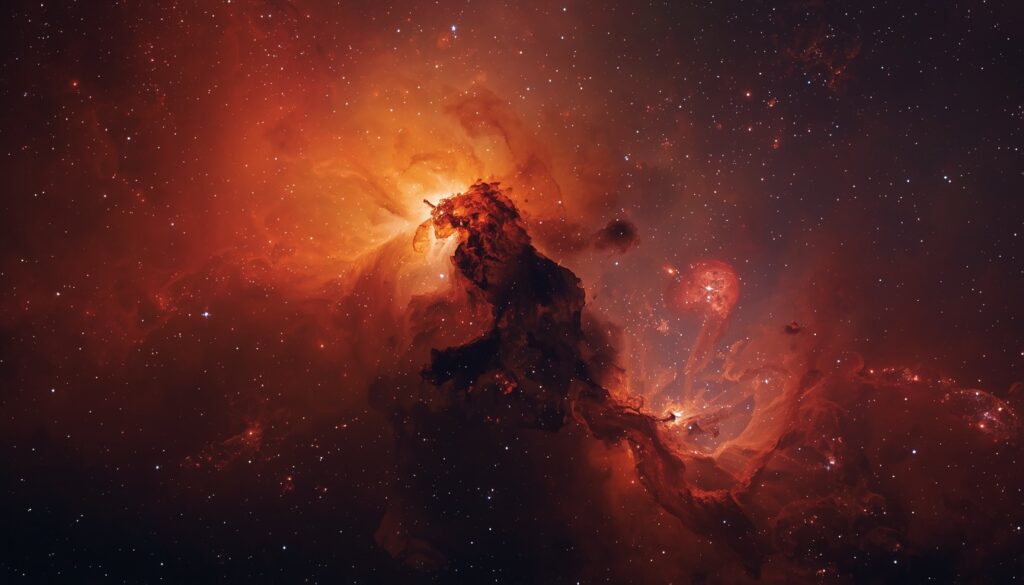
The Tarantula Nebula: An Extreme Example
Located in a nearby satellite galaxy, the Tarantula Nebula represents one of the most active star-forming regions known, and these images from this object reveal extraordinarily massive young stars, some of the largest and most luminous known anywhere in the observable universe.
Comparing Different Star Nursery Sizes
These images vary dramatically in scale, from relatively small, localized star-forming regions to massive complexes spanning hundreds of light-years, each offering different insights into how stellar mass and environment affect the star formation process.
Why These Regions Matter for Understanding Our Own Origins
Studying Star nursery nebula images helps astronomers understand the conditions that likely gave rise to our own Sun and solar system billions of years ago, offering a present-day visual analog for processes that occurred long before Earth existed.
Molecular Clouds: The Raw Material
Every star nursery begins as part of a giant molecular cloud, a huge, cold region of gas and dust that can contain enough material to form thousands of stars. These clouds are mostly molecular hydrogen, which is difficult to detect directly, so astronomers usually map them using carbon monoxide, which emits radio waves.
Giant molecular clouds can stretch for dozens or even hundreds of light-years. Only small, dense parts of them actually form stars at any time. These images usually show the bright, active regions where young stars have begun to light up the surrounding gas.
Protoplanetary Disks in Orion
One of Hubble’s most remarkable discoveries in the Orion Nebula was the detection of proplyds, short for protoplanetary disks. These are flattened disks of gas and dust around young stars, the raw material from which planets may form.
Some proplyds appear as dark silhouettes against the bright nebula, while others glow as they are heated by nearby massive stars. Their discovery provided direct visual evidence that planet-forming disks are common around newborn stars, supporting the idea that planetary systems like ours are widespread.
How Long It Takes to Form a Star
Forming a star like the Sun takes millions of years. First, a dense core in a molecular cloud collapses under gravity. Material falls inward, forming a protostar surrounded by a disk. The protostar grows as it gathers material, often launching jets from its poles.
After a few hundred thousand years, the young star becomes visible as its surrounding envelope clears. It then contracts slowly for tens of millions of years before nuclear fusion in its core becomes stable, marking its arrival on the main sequence.
Herbig-Haro Objects
Herbig-Haro objects are bright patches of nebulosity created when jets from young stars collide with surrounding gas. They were first identified in the mid-twentieth century by astronomers George Herbig and Guillermo Haro.
Webb has produced striking images of Herbig-Haro objects, including HH 211 and HH 46/47, revealing detailed shock waves and outflows. These jets help young stars shed excess spin, allowing them to keep growing without spinning apart.
Nurseries Close Enough to Photograph
The Orion Nebula is the closest large star nursery, about 1,300 to 1,400 light-years away, and it is easy to photograph with modest equipment. The Lagoon Nebula (M8) and the Trifid Nebula (M20) in Sagittarius are also excellent targets in summer.
For southern observers, the Carina Nebula is one of the most spectacular star-forming regions in the sky. Even a short exposure with a camera and telephoto lens can capture its glowing gas and dark dust lanes.
Triggered Star Formation
Star formation can spread through a nebula in waves. When massive stars form, their radiation and winds compress nearby gas, sometimes triggering new stars to form. This process can create chains of star-forming regions of different ages.
Astronomers see evidence of triggered star formation in many nebulae, including the edges of the Rosette Nebula and the pillars of the Eagle Nebula. Understanding this process helps explain why stars often form in clusters rather than alone.
How Efficient Star Formation Really Is
Star formation is surprisingly inefficient. Only a few percent of the gas in a molecular cloud typically turns into stars before radiation, winds and supernovae from the first stars disperse the rest. This inefficiency explains why galaxies still have plenty of gas after billions of years.
Understanding this efficiency is one of the main goals of studying star nurseries. It helps astronomers predict how quickly galaxies use up their fuel and how many stars they can make.
Final Thoughts
These images provide some of astronomy’s most visually stunning and scientifically valuable photographs, capturing the ongoing birth of stars and offering direct insight into the same fundamental processes that once created our own solar system.
Keep exploring with our guides to James Webb star formation images, Hubble Orion Nebula images, Pillars of Creation photo science explained and Dark nebula visual explainer. For official information, visit NASA’s universe science hub.
Frequently Asked Questions
What is a star nursery?
A dense cloud of gas and dust where gravity compresses material to form new stars.
Which nebula is the most studied star nursery?
The Orion Nebula, due to its relative closeness and detailed visibility.
What are Bok globules?
Small, dark, compact clouds actively collapsing toward eventual star formation.
Why do infrared telescopes reveal more star nursery detail?
They can detect protostars hidden within dust that blocks visible light.
What is the Tarantula Nebula known for?
It’s one of the most active star-forming regions known, hosting extremely massive young stars.
Keep exploring