6 Memorable Facts in the Comet Hale-Bopp Photo Story

The Comet Hale-Bopp Photo Story:
Visible for an unusually long period during 1996 and 1997, Comet Hale-Bopp became one of the most photographed celestial objects of its era, and the Comet Hale-Bopp photo story reflects both its exceptional visibility and its lasting impact on public astronomical interest.
An Early and Fortunate Discovery
Discovered independently by amateur astronomers Alan Hale and Thomas Bopp in July 1995, the Comet Hale-Bopp photo story benefited enormously from this early detection, occurring while the comet was still extremely far from the Sun, allowing over a year of advance visibility planning.
Why This Comet Remained Visible So Long
Unlike many comets with brief visibility windows, the Comet Hale-Bopp photo story notes it remained visible to the naked eye for a record-breaking 18 months, largely due to its unusually large nucleus, estimated at roughly 40-60 kilometers in diameter.
Capturing Its Distinctive Dual Tails
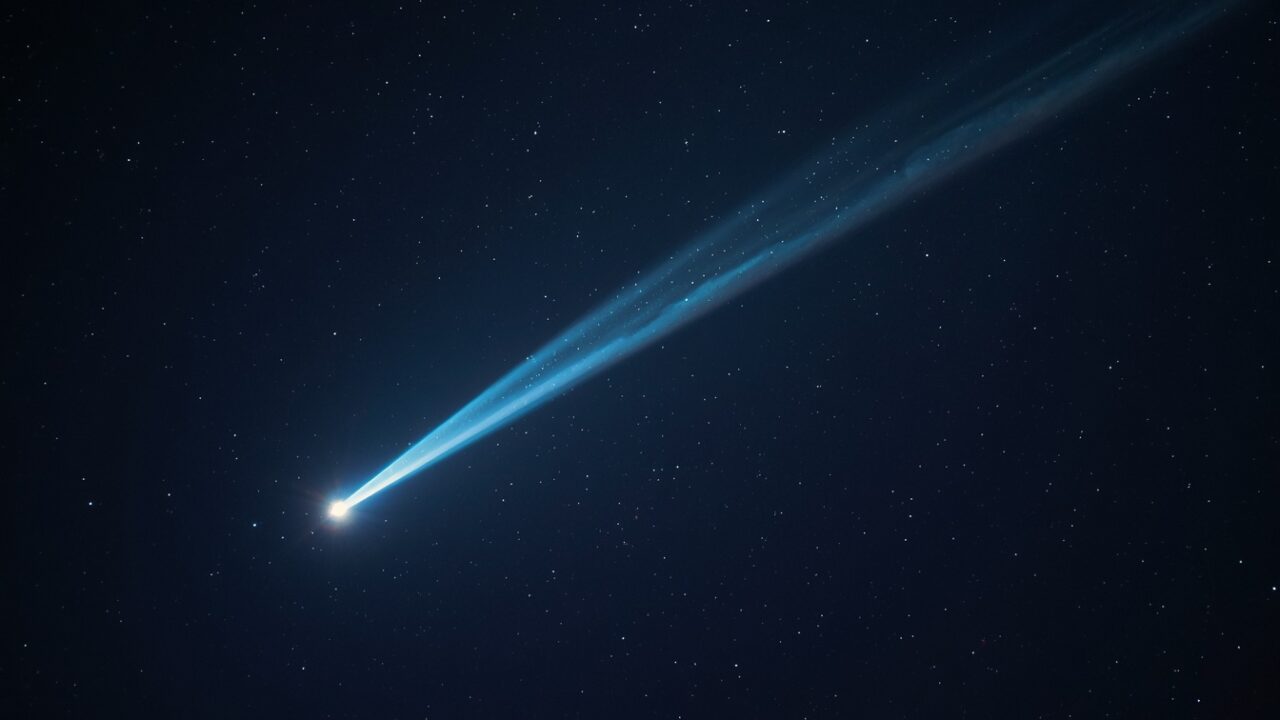
Detailed Comet Hale-Bopp photo story images showcase its striking dual-tail structure, with a bluish ion tail pointing directly away from the Sun and a yellowish-white dust tail curving slightly along the comet’s orbital path, creating a visually complex, layered appearance.
Peak Visibility During Spring 1997
The Comet Hale-Bopp photo story reached its most photographed period during March and April 1997, when the comet achieved peak brightness and was widely visible across the night sky, generating an enormous volume of both amateur and professional astrophotography.
Comparing to Comet Hyakutake
Interestingly, the story often gets compared to Comet Hyakutake, which passed much closer to Earth just a year earlier in 1996, with Hale-Bopp’s greater intrinsic brightness allowing comparable visibility despite passing at a considerably greater distance.
Scientific Observations During Its Passage
Beyond casual photography, the story includes extensive scientific observation, with researchers studying its composition and behavior in unprecedented detail due to its extended visibility window, contributing significantly to broader understanding of comet nucleus composition.
Cultural Impact Beyond Astronomy
The extends into broader cultural territory, becoming associated with widespread public astronomical interest during its visibility period, inspiring increased amateur astronomy participation and telescope purchases throughout the mid-1990s.
When Comet Hale-Bopp Will Return
As a long-period comet, Hale-Bopp won’t return to the inner solar system for approximately 2,500 years, meaning the story represents another genuinely rare astronomical event captured extensively by a single generation of observers.
Discovered by Two Amateurs
Comet Hale-Bopp was discovered independently on July 23, 1995, by Alan Hale in New Mexico and Thomas Bopp in Arizona. Both were observing the same region of sky, and Bopp was using a friend’s telescope.
The comet was discovered far from the Sun, beyond Jupiter’s orbit, which suggested it was unusually large and bright. The story began with that lucky coincidence.
A Nucleus Much Larger Than Most
Hale-Bopp’s nucleus was estimated to be around 40 to 60 kilometers across, much larger than typical comets. This large size explained its exceptional brightness.
Its size allowed it to release large amounts of dust and gas as it approached the Sun.
Visible to the Naked Eye for 18 Months
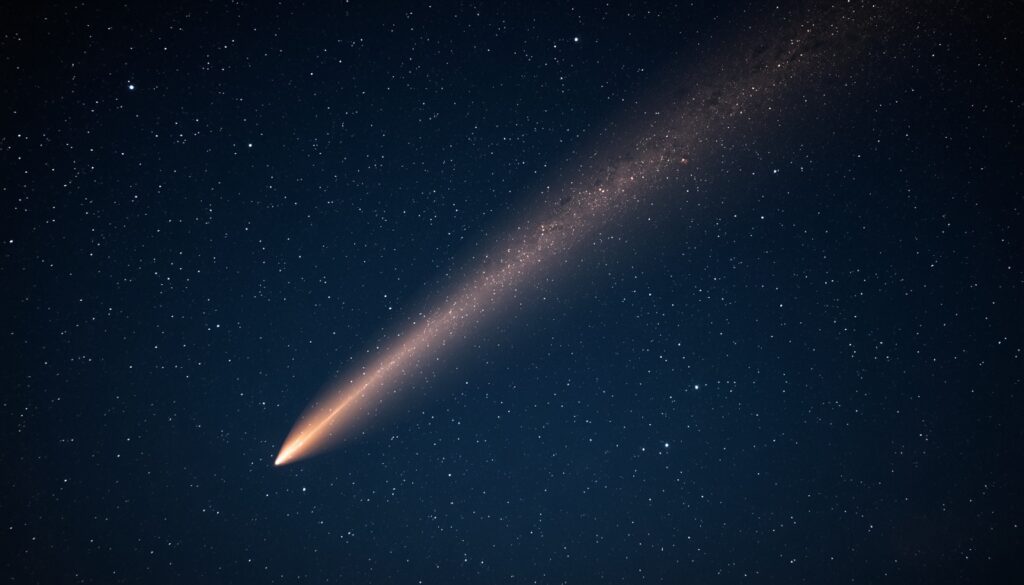
The comet remained visible to the naked eye for about 18 months, a record at the time. This long visibility allowed millions of people to see it.
Many observers remember it as one of the most spectacular comets of the twentieth century.
The Sodium Tail Discovery
Observations revealed a third tail made of neutral sodium atoms. This faint tail was detected using special filters and had not been clearly seen in comets before.
The discovery added to understanding of comet composition.
Photographing Hale-Bopp
Photographers captured Hale-Bopp over landscapes and landmarks around the world. Its bright tails made it an ideal subject for wide-field photography.
Film cameras were still common, and many iconic images were captured on slide film.
Its Last Visit Thousands of Years Ago
Hale-Bopp’s previous visit to the inner solar system occurred about 4,200 years ago. Its orbit has since been altered by planetary gravity.
It is expected to return in about 2,400 years.
How Hale-Bopp Was Studied
Scientists used telescopes on the ground and in space to study Hale-Bopp. They detected many molecules in its coma, including water, carbon monoxide, carbon dioxide and complex organics. The comet’s high activity allowed detailed measurements rarely possible for other comets.
These studies helped scientists understand the composition of comets from the outer solar system.
Why Hale-Bopp Was So Bright
Hale-Bopp’s large nucleus released huge amounts of gas and dust, far more than most comets. At its peak, it was estimated to release hundreds of tons of material per second, creating long, bright tails visible even from light-polluted cities.
A Record-Setting Discovery Distance
When found, Hale-Bopp was about 7 astronomical units from the Sun, farther than any comet previously discovered by amateurs. That early detection gave astronomers nearly two years to prepare.
Hale-Bopp and the Heaven’s Gate Tragedy
Hale-Bopp became tied to tragedy in March 1997 when members of the Heaven’s Gate group died in California, believing a spacecraft followed the comet. The event highlighted how astronomical phenomena can be misinterpreted.
Astronomers stressed that no object followed the comet. The story includes this dark chapter as a reminder of the importance of clear science communication.
Observations From Around the World
Hale-Bopp was observed by amateur and professional astronomers worldwide. Its long visibility allowed extensive studies of its composition and activity.
Scientists detected many molecules in its coma, including water, carbon monoxide and complex organics.
A Generation’s Comet
For many people, Hale-Bopp was the first comet they ever saw. Its brightness and long visibility made it a shared experience across the world.
Hale-Bopp’s Place in History
Hale-Bopp remains one of the most observed comets in history. Its combination of brightness, long visibility and scientific value made it a landmark event for astronomy and public engagement.
Lessons for Today
Hale-Bopp showed the value of amateur astronomers, who discovered the comet and contributed countless observations. It also demonstrated how comets can inspire public interest in science for years.
Final Thoughts
The story demonstrates how an unusually large, bright, and long-visible comet can generate widespread public and scientific interest, leaving behind an extensive photographic legacy from its extended 1996-1997 appearance.
Keep exploring with our guides to Comet NEOWISE photo story, Comet ISON close-up images and Comet 67P images Rosetta mission. For official information, visit NASA’s solar system exploration hub.
Frequently Asked Questions
Who discovered Comet Hale-Bopp?
Amateur astronomers Alan Hale and Thomas Bopp, independently, in July
2. Why was it visible for so long?
Its unusually large nucleus, roughly 40-60 kilometers in diameter, sustained visibility for 18 months.
What made its tails so photogenic?
A distinctive dual-tail structure with a bluish ion tail and a yellowish-white dust tail.
When was it most visible?
During March and April 1997, at peak brightness.
When will it return?
Not for approximately 2,500 years, making its appearance a rare, once-in-a-lifetime event.
Keep exploring