6 Iconic Solar Eclipse Famous Photos Explained in Detail

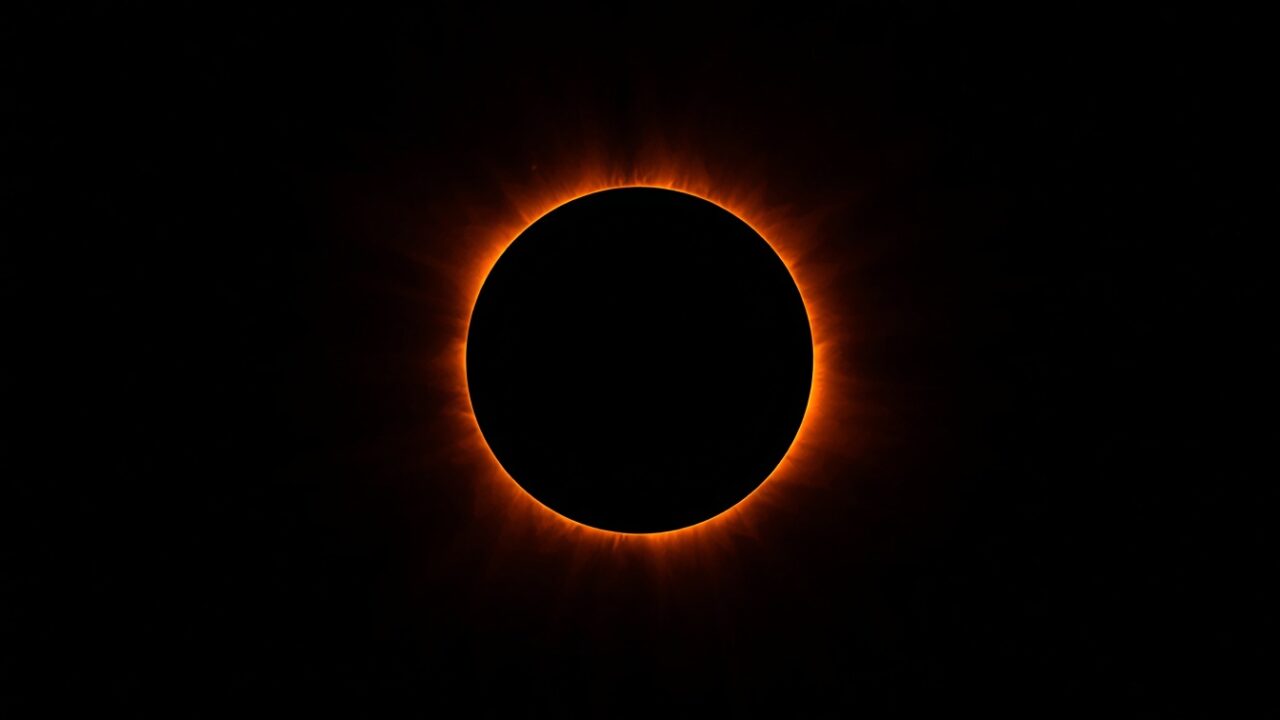
Solar eclipse famous photos explained:
Few astronomical events produce as many dramatic photographs as total solar eclipses, and these Solar eclipse famous photos explained cover both the science behind capturing these images and the historical significance several iconic examples hold within astronomy.
The 1919 Eddington Eclipse Expedition
Among the most scientifically significant images in this Solar eclipse famous photos explained collection, Arthur Eddington’s 1919 eclipse photographs provided crucial evidence supporting Einstein’s general theory of relativity, capturing star positions shifted by the Sun’s gravitational field during totality.
Why Eclipses Enable Unique Solar Observations
During totality, the Moon completely blocks the Sun’s overwhelming brightness, allowing visibility of the faint outer solar corona normally invisible against the Sun’s intense glare. These Solar eclipse famous photos explained this brief window as scientifically invaluable for studying solar atmosphere phenomena.
The Diamond Ring Effect
One of the most photographed eclipse phenomena, the “diamond ring” effect occurs just before and after totality, when a single bright point of sunlight combines with the surrounding corona to create a ring-like appearance. These Solar eclipse famous photos explained this fleeting, dramatic moment as a favorite target for eclipse photographers.
Baily’s Beads Phenomenon
Named after astronomer Francis Baily, this phenomenon creates a beaded appearance of light around the Moon’s edge just before totality, caused by sunlight passing through lunar valleys. The detail remains a popular technical challenge for eclipse photographers seeking precisely timed shots.
The 2017 Great American Eclipse
More recently, the 2017 total solar eclipse crossing the continental United States generated an unprecedented number of high-quality images, and the the event’s significance partly through the sheer volume of skilled photographers positioned along its path.
Composite Eclipse Sequence Images
Many famous eclipse photographs aren’t single shots but composite sequences showing the Moon’s progression across the Sun over time. The this technique as a popular way to visually document an eclipse’s complete multi-hour timeline within a single striking image.
Solar Corona Detail Captured During Totality
The brief totality period allows photographers to capture intricate solar corona structures, and the how specialized high-dynamic-range imaging techniques help reveal both the bright inner corona and fainter outer streamers within a single composite image.
Safety Considerations Behind These Images
Capturing these famous images requires strict safety protocols, and these photos that photographers use specialized solar filters throughout the partial phases, removing them only during the brief total phase when direct viewing becomes temporarily safe.
How Eddington Tested Einstein
On May 29, 1919, Arthur Eddington and his colleagues photographed a total solar eclipse from the island of Príncipe, while another team observed from Sobral in Brazil. They measured how stars near the Sun appeared slightly displaced, as predicted by Einstein’s theory that gravity bends light.
The results, announced later that year, supported general relativity and made Einstein famous worldwide. These photos often begin with this historic expedition.
Photographing the Corona’s Structure
During totality, the Sun’s corona becomes visible, revealing streamers, loops and plumes shaped by magnetic fields. The corona’s appearance changes with the solar cycle, appearing more symmetrical near solar maximum.
Photographers often combine many exposures to capture both bright inner regions and faint outer streamers.
Miloslav Druckmüller’s Processing Techniques
Czech mathematician Miloslav Druckmüller developed image processing techniques that reveal extraordinary detail in the corona. His images combine dozens of exposures and specialized algorithms.
His work has set a high standard for eclipse photography worldwide.
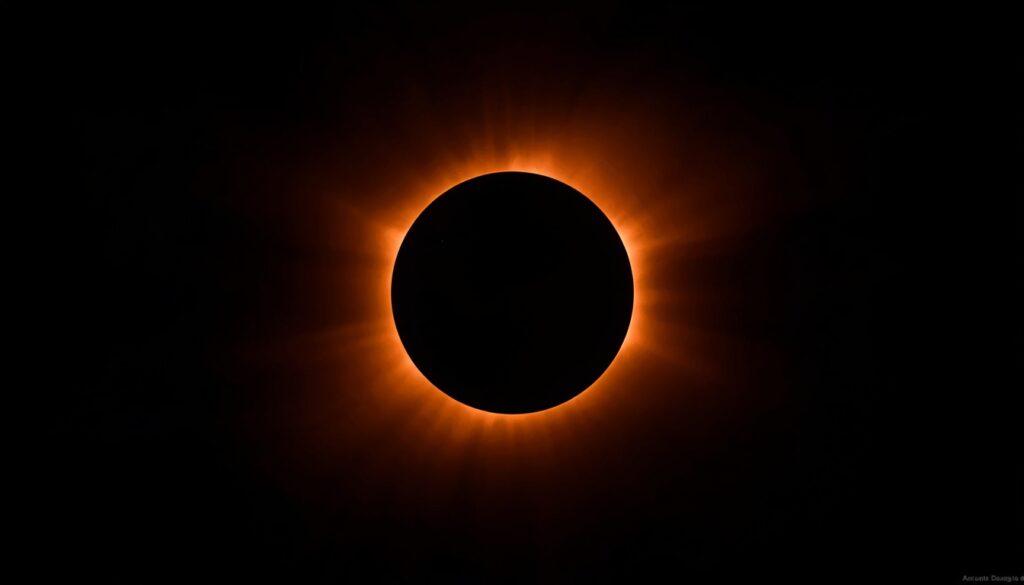
The 2024 North American Eclipse
The total solar eclipse of April 8, 2024, crossed Mexico, the United States and Canada. Millions of people witnessed it, and countless photographs captured prominences, the corona and the diamond ring.
Occurring near solar maximum, the eclipse featured bright red prominences visible to the naked eye.
Prominences in Eclipse Photos
Prominences appear as pink or red loops at the Sun’s edge during totality. They are made of cooler gas held in place by magnetic fields.
Capturing them requires fast exposures during the brief totality window.
Shadow Bands and Other Phenomena
Just before and after totality, faint rippling shadows called shadow bands may appear on the ground. They are caused by atmospheric turbulence.
They are difficult to photograph but add to the eclipse experience.
Upcoming Eclipses
Total solar eclipses will cross Spain in August 2026 and parts of North Africa and the Middle East in August 2027. These events offer new opportunities for photographers.
Planning travel and equipment early is important for capturing these rare events.
A Photograph That Changed Physics
Eddington’s 1919 photographs were small and blurry by modern standards, yet they changed physics by supporting Einstein’s theory of gravity. Modern eclipse photography is far more beautiful, but that first scientific use remains one of the most important.
Photographing an Eclipse Safely
During partial phases, photographers must use certified solar filters on their lenses or telescopes. Looking at the Sun through an unfiltered camera viewfinder or telescope can cause permanent eye damage in seconds.
Only during totality, when the Moon completely covers the Sun, is it safe to remove filters and photograph the corona directly. The filter must go back on as soon as the first bead of sunlight reappears. These photos often leave out this discipline, but every great eclipse image depends on it.
Bracketing for the Corona
The corona’s brightness changes dramatically from the inner edge to the outer streamers. Photographers use exposure bracketing, taking a series of images from very short to much longer exposures, then blend them in processing.
This technique, known as HDR compositing, reveals the full structure of the corona, similar to what the human eye sees during totality.
Eclipse Chasing
Eclipse chasers travel the world to experience totality. Some have seen dozens of eclipses across continents, from deserts to cruise ships. Each eclipse offers a different experience depending on weather, location and solar activity.
The Future of Eclipse Photography
Modern eclipse photography combines ground-based images with data from solar observatories in space. Missions like ESA’s Proba-3, which launched in 2024, create artificial eclipses by flying two spacecraft in precise formation, allowing long observations of the corona without waiting for the Moon.
Final Thoughts
These photos demonstrate how this relatively brief celestial event has produced some of astronomy’s most scientifically valuable and visually stunning photographs throughout history.
Keep exploring with our guides to Total lunar eclipse blood moon photos, Mercury transit photo science explained and International Space Station transit photos. For official information, visit NASA’s skywatching tips.
Frequently Asked Questions
Why was the 1919 eclipse photo scientifically important?
It provided evidence supporting Einstein’s general theory of relativity through observed star position shifts.
What is the diamond ring effect?
A bright point of sunlight combined with the corona, creating a ring-like appearance just before or after totality.
What causes Baily’s Beads?
Sunlight passing through lunar valleys just before totality, creating a beaded light pattern.
Why was the 2017 eclipse so widely photographed?
It crossed the continental United States, allowing an unprecedented number of photographers along its path.
What safety measures do eclipse photographers use?
Specialized solar filters during partial phases, removed only during the brief safe totality period.