Critical Artemis II Flight Update: NASA Successfully Restores Orion Toilet System During 2026 Mission

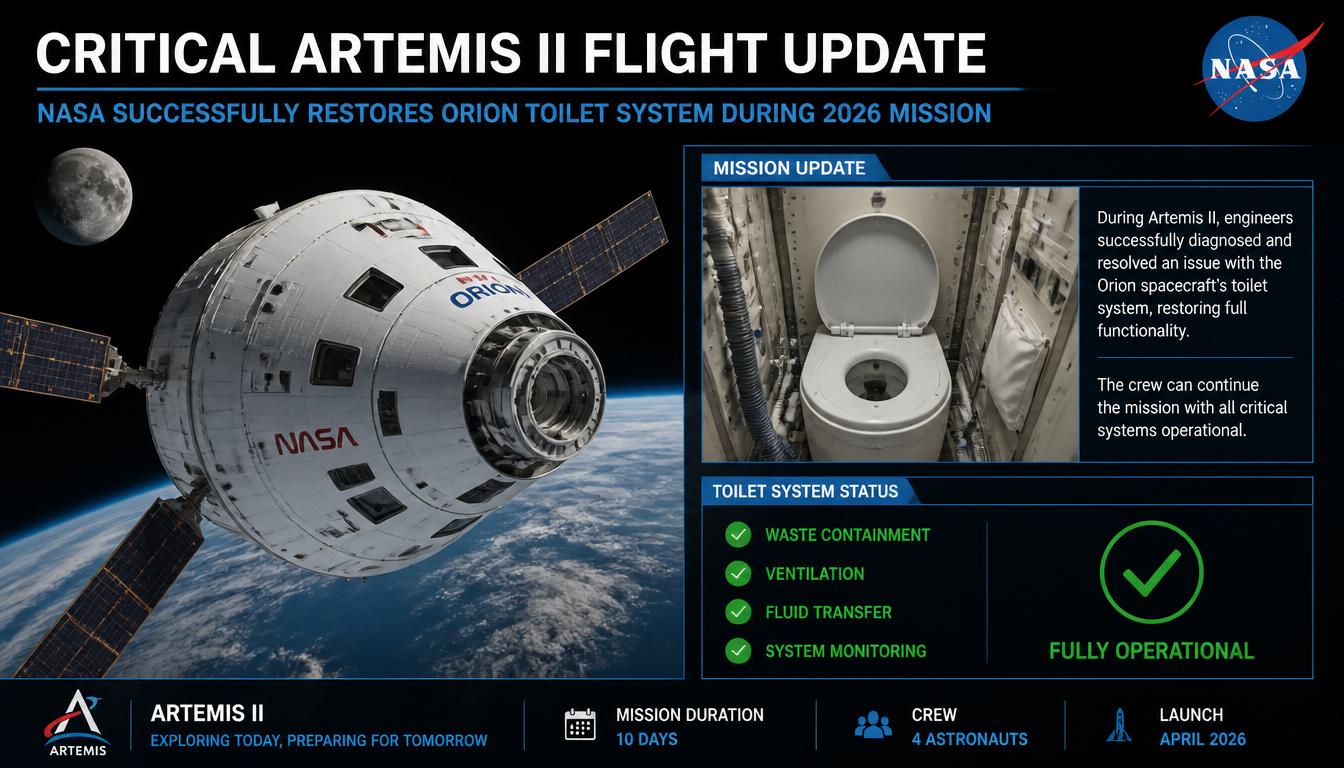
Critical Artemis II Flight Update: NASA Successfully Restores Orion Toilet System During 2026 Mission
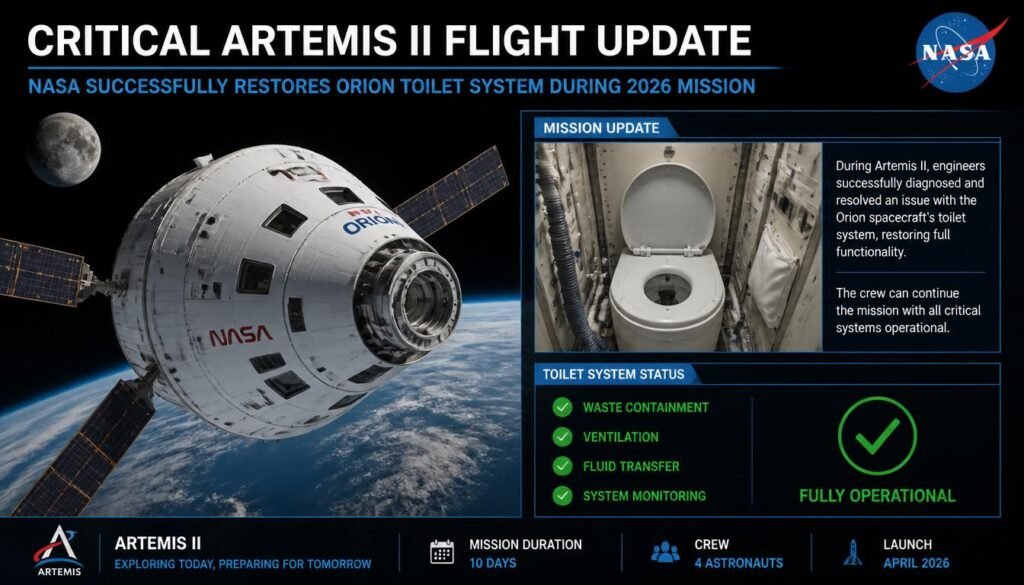
NASA’s Artemis II mission continues making steady progress as astronauts aboard the Orion spacecraft successfully resolved a technical issue involving the spacecraft’s toilet system. Working closely with engineers and specialists at mission control in Houston, the Artemis II crew restored the system to normal operations after earlier reporting a blinking fault light during spacecraft checks.
The quick resolution of the issue highlights the importance of teamwork between astronauts in space and engineers on Earth. It also demonstrates how NASA carefully monitors every spacecraft system during deep space missions to ensure crew safety and mission success.
The Artemis II mission remains one of NASA’s most important modern space exploration programs as the agency prepares for future human missions around the Moon and eventually to Mars.
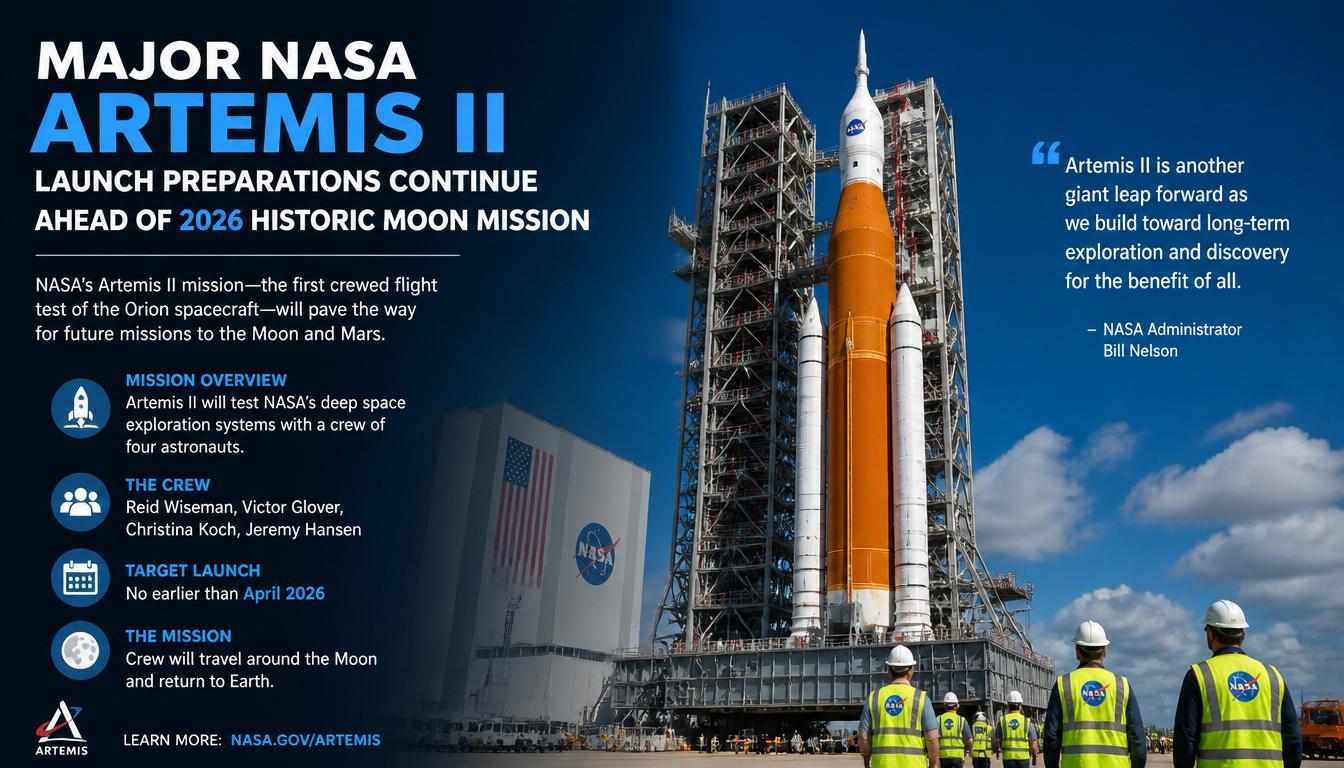
The crew aboard Orion includes NASA astronauts Reid Wiseman, Victor Glover, Christina Koch, and Canadian astronaut Jeremy Hansen.
Orion’s Toilet System Experiences Technical Warning
Ahead of the important apogee raise burn on April 1, the Artemis II astronauts began routine spacecraft configuration activities inside Orion.
During those procedures, the crew noticed a blinking fault light connected to the spacecraft’s toilet system. Even though the issue did not immediately threaten crew safety, astronauts quickly informed mission control so engineers could begin reviewing spacecraft data.
In human spaceflight missions, even small warning indicators are treated seriously because spacecraft systems must operate reliably throughout the journey. NASA engineers immediately started analyzing telemetry and diagnostic information sent from Orion.
The incident demonstrates how carefully astronauts and ground teams monitor every detail during space missions.
Mission Control and Crew Work Together to Solve the Problem
After receiving reports from the astronauts, mission control teams in Houston worked closely with the crew to troubleshoot the issue step by step.
Engineers examined spacecraft data while astronauts inside Orion performed system checks and followed instructions provided by specialists on the ground. Through this coordinated effort, NASA teams successfully identified the issue and restored the toilet system to normal operation.
The quick resolution is an important reminder of how vital communication is during space missions. Astronauts rely heavily on mission control support, especially when handling technical issues far from Earth.
NASA officials confirmed that the toilet system is now functioning normally and that the spacecraft remains in excellent condition.
Why Toilet Systems Are Important During Space Missions
Although toilet systems may seem like a small part of a spacecraft, they are actually one of the most essential life-support components for astronauts living in space.
On long-duration missions, astronauts need reliable waste management systems to maintain hygiene, comfort, and overall health. Space toilets are far more complex than ordinary systems on Earth because they must function in microgravity environments where liquids and waste do not naturally flow downward.
Modern spacecraft toilets use airflow, suction systems, filters, and specialized storage equipment to safely manage waste in space.
A malfunction in these systems can create operational challenges for astronauts, which is why NASA carefully monitors them throughout missions.
Orion Continues Performing Successfully in Space
Despite the temporary toilet issue, Orion continues operating normally as the Artemis II mission progresses through its planned objectives.
NASA engineers confirmed that the spacecraft’s major systems, including navigation, power generation, thermal control, and communications systems, remain within expected operating ranges.
As the spacecraft continues orbiting Earth, Orion’s solar arrays keep producing electrical power, and the onboard computers along with navigation systems remain in stable condition.
The spacecraft has already completed several important mission milestones, including the successful apogee raise burn and the proximity operations demonstration.
Each successful activity provides NASA with valuable data that will help improve future deep space missions.
The Importance of the Apogee Raise Burn
Earlier in the mission, Orion successfully completed the apogee raise burn, one of the first major orbital maneuvers of Artemis II.
This maneuver increased the highest point of Orion’s orbit around Earth using the Interim Cryogenic Propulsion Stage (ICPS). The burn was carefully timed to place the spacecraft into the correct orbital configuration needed for future mission operations.
The apogee raise burn plays a key role in shaping Orion’s flight path before it eventually begins translunar operations around the Moon.
NASA engineers closely monitored the maneuver and confirmed that Orion responded exactly as planned.
Proximity Operations Demonstration Added Valuable Data
Before the toilet system troubleshooting was completed, the Artemis II crew also successfully performed the mission’s proximity operations demonstration.
During this important test, astronauts manually maneuvered Orion near the detached ICPS stage using onboard navigation systems and reaction control thrusters.
The exercise helped NASA evaluate how Orion performs during close-range spacecraft operations. These skills are extremely important for future Moon missions where astronauts may need to dock with lunar stations or maneuver near other spacecraft.
NASA gathered valuable information about Orion’s handling characteristics, navigation accuracy, and crew control systems during the demonstration.
Perigee Raise Burn Scheduled Next
Following the successful troubleshooting efforts, the Artemis II crew entered a scheduled four-hour rest period.
NASA plans to wake the astronauts at 7 a.m. EDT on Thursday, April 2, to prepare for the next major orbital maneuver called the perigee raise burn.
This burn will increase the lowest point of Orion’s orbit around Earth. Combined with the earlier apogee raise burn, the maneuver will further shape the spacecraft’s orbit and prepare it for later translunar flight operations.
Orbital adjustment maneuvers are carefully planned because even small changes can significantly affect the spacecraft’s trajectory during deep space travel.
Why Orbital Burns Matter in Space Missions
Orbital burns are among the most important operations during any space mission. These engine firings allow spacecraft to change speed, altitude, and direction while traveling through space.
For Artemis II, the apogee raise burn and perigee raise burn work together to place Orion into the correct orbital path before it begins traveling farther from Earth.
NASA engineers calculate these burns with incredible precision because spacecraft must follow exact trajectories during missions to the Moon.
Any small error in timing or engine performance could affect the mission, which is why these maneuvers are continuously monitored by flight controllers and onboard systems.
Artemis II Continues Preparing NASA for Future Moon Missions
The Artemis II mission serves as a critical test flight for NASA’s future lunar exploration plans.
Although the current mission does not include a lunar landing, it allows astronauts and engineers to evaluate Orion’s systems in real spaceflight conditions before more advanced missions take place.
The experience gained from Artemis II will directly support future Artemis missions that aim to land astronauts on the Moon, establish long-term lunar operations, and eventually prepare for human missions to Mars.
Every successful test, orbital maneuver, and troubleshooting exercise provides NASA with valuable knowledge for future deep space exploration.
NASA’s Teamwork Remains Key to Mission Success
One of the most impressive aspects of Artemis II is the close teamwork between astronauts in space and engineers on Earth.
The successful resolution of Orion’s toilet system issue demonstrates how quickly NASA teams can respond to unexpected situations during missions.
From spacecraft navigation to life-support systems, every aspect of the mission depends on constant communication and coordination between astronauts and mission control specialists.
As Artemis II continues, NASA will keep gathering important data that will shape the future of human space exploration for years to come.
Frequently Asked Questions (FAQs)
What issue occurred on the Orion spacecraft?
The Artemis II crew reported a blinking fault light connected to Orion’s toilet system during spacecraft configuration activities.
Was the toilet problem dangerous for the crew?
NASA did not report any major safety concerns, and the issue was successfully resolved by the crew and mission control teams.
Who helped fix the Orion toilet system?
NASA astronauts aboard Orion worked closely with mission control engineers in Houston to troubleshoot and restore the system.
What is the perigee raise burn?
The perigee raise burn is an orbital maneuver that increases the lowest point of Orion’s orbit around Earth.
What makes orbital burns significant throughout the Artemis II mission?
Orbital burns help shape Orion’s flight path and prepare the spacecraft for future translunar operations around the Moon.
What was the proximity operations demonstration?
It was a mission test where astronauts manually maneuvered Orion near another spacecraft to evaluate navigation and handling systems.
Is Orion still operating normally after the issue?
Yes, NASA confirmed that Orion’s major spacecraft systems continue operating within expected ranges.
Why is Artemis II important for future space missions?
Artemis II helps NASA test spacecraft systems, astronaut operations, and deep space technologies needed for future Moon and Mars missions.
read another article
Keep exploring
1 comment