6 Intriguing Uranus Moons Close-Up Images and Discoveries


Uranus Moons Close-Up Images:
Since only a single spacecraft has ever visited the Uranian system, Uranus moons close-up images remain relatively limited compared to other outer planets, yet the brief 1986 Voyager 2 flyby still revealed genuinely fascinating detail about these distant, icy worlds.
Voyager 2’s Singular Visit
All existing detailed Uranus moons close-up images trace back to Voyager 2’s brief 1986 flyby, making this the only spacecraft to have ever closely studied Uranus and its major moon system, leaving considerable room for future dedicated mission exploration.
Miranda’s Dramatic Canyon Terrain
Among the most striking discoveries, these images of Miranda revealed a bizarre, patchwork surface featuring some of the tallest known cliffs in the solar system, alongside dramatically varied terrain suggesting a complex and violent geological history.
Ariel’s Complex Canyon Systems
Detailed Uranus moons close-up images of Ariel showed extensive canyon systems and evidence of past resurfacing, suggesting this moon experienced significant geological activity, possibly including cryovolcanic processes similar to those suspected elsewhere in the outer solar system.
Titania and Oberon: Uranus’s Largest Moons
As the largest moons in the Uranian system, these images of Titania and Oberon revealed heavily cratered surfaces alongside some evidence of past internal geological activity, including visible fault lines and canyon structures.
Umbriel’s Unusually Dark Surface
Among the five major moons, Uranus moons close-up images highlighted Umbriel as notably darker than its siblings, covered in old, heavily cratered terrain with comparatively little evidence of the resurfacing activity observed on some neighboring moons.
Why These Moons Remain Understudied
Given the brief nature of Voyager 2’s flyby, these images capture only a limited portion of each moon’s total surface, leaving substantial gaps in our understanding compared to more extensively studied moons around Jupiter and Saturn.
The Case for a Dedicated Uranus Mission
Growing scientific interest in these images and associated data has contributed to increasing calls within the planetary science community for a dedicated orbital mission, similar to Cassini’s extended Saturn study, to properly explore this underexplored system.
What Future Missions Might Reveal
Scientists anticipate that future, more comprehensive Uranus moons close-up images could reveal additional evidence of subsurface oceans or ongoing geological activity, potentially placing some of these icy moons alongside Europa and Enceladus as genuine astrobiology targets.
Uranus’s 29 Known Moons
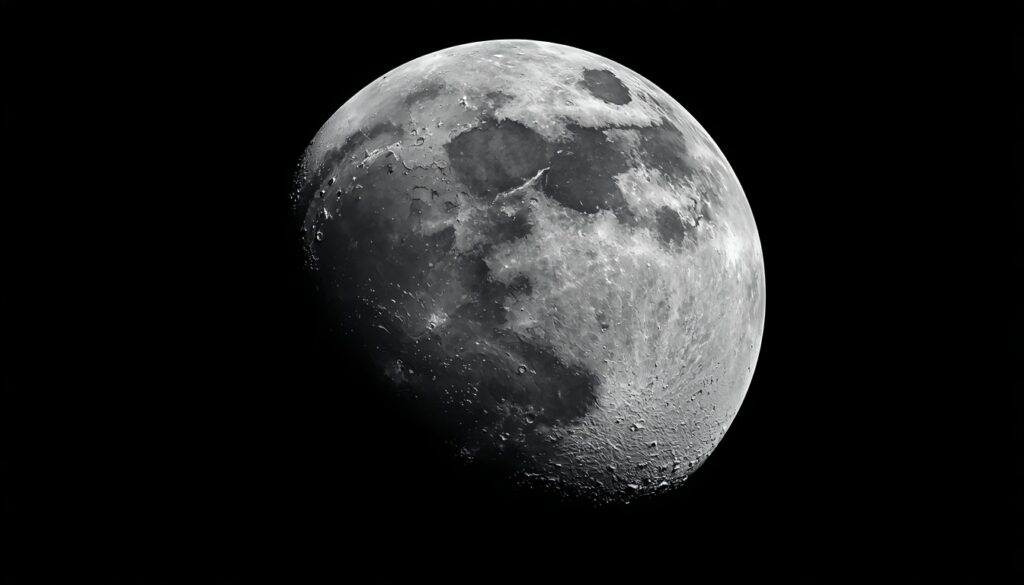
Uranus has 29 known moons, after astronomers announced a new small moon found in Webb data in 2025. Most are small and dark, but five are large enough to be round: Miranda, Ariel, Umbriel, Titania and Oberon.
These images exist only for the southern hemispheres of these five, because Voyager 2 flew past when the Sun was shining on their southern poles. Their northern halves remain unseen up close.
Named After Literary Characters
Unlike most moons, which are named after figures from Greek and Roman mythology, Uranus’s moons are named after characters from the works of William Shakespeare and Alexander Pope. Titania and Oberon come from A Midsummer Night’s Dream, and Miranda from The Tempest.
This tradition began when John Herschel suggested names for the first moons discovered.
Miranda’s Verona Rupes
Miranda has a cliff called Verona Rupes, estimated to be about 20 kilometers high. It may be the tallest known cliff in the solar system.
Because Miranda’s gravity is so weak, something falling from the top would take several minutes to reach the bottom.
Possible Oceans Inside
Studies of Voyager data suggest some of Uranus’s larger moons, such as Ariel and Miranda, may have had subsurface oceans. Some researchers think oceans could still exist today.
A 2023 NASA study suggested four of the moons could host oceans beneath their ice.
The Uranus Orbiter and Probe
The 2022 planetary science decadal survey named a Uranus Orbiter and Probe as the highest priority for NASA’s next flagship mission. It would study the planet, rings and moons.
Launch timing depends on funding and would ideally use a Jupiter gravity assist.
A Tilted World
Uranus is tilted on its side, with an axial tilt of about 98 degrees. This causes extreme seasons, with each pole receiving continuous sunlight for about 42 years.
Its moons orbit around the planet’s tilted equator.
Umbriel and Ariel
Umbriel is the darkest of Uranus’s large moons, with an ancient cratered surface and a mysterious bright ring called Wunda on one crater floor. Ariel, by contrast, is the brightest and appears to have the youngest surface, with long valleys suggesting past geological activity.
Why Uranus’s Moons Matter
Studying Uranus’s moons helps scientists understand how icy worlds form and evolve far from the Sun. If some hide oceans, they would expand the list of potentially habitable places in the solar system.
Miranda’s Patchwork Surface
Miranda has one of the strangest surfaces in the solar system, a patchwork of grooved regions called coronae alongside older cratered terrain. Early theories suggested it had been shattered and reassembled after a massive impact.
Newer studies favor a model in which warm ice rose from the interior, forming the coronae. These images of Miranda from Voyager 2 remain a highlight of the mission.
Voyager 2’s Single Visit
Voyager 2 flew past Uranus on January 24, 1986, taking images of the planet, rings and moons during a brief encounter. It discovered 10 new moons and two new rings.
No spacecraft has returned since. That makes Voyager’s images the only close-up views of Uranus’s moons we have.
Titania and Oberon Up Close
Titania, the largest of Uranus’s moons, has huge canyons and fault systems suggesting it expanded as its interior froze. Oberon, the outermost large moon, is heavily cratered with dark material on some crater floors. Both remain poorly mapped because Voyager 2 saw only one hemisphere of each.
These images from a future orbiter could reveal whether these moons still hold liquid water beneath their surfaces.
Final Thoughts
These images captured decades ago during a single brief flyby continue to intrigue scientists, hinting at genuinely complex geological histories within a moon system that remains largely unexplored compared to its outer solar system neighbors.
Keep exploring with our guides to James Webb Uranus rings image, Jupiter moons close-up images and Neptune moon Triton images. For official information, visit NASA’s Artemis program page.
Frequently Asked Questions
Which mission captured the primary Uranus moon images?
Voyager 2’s brief 1986 flyby remains the only close-up study to date.
What makes Miranda’s surface unusual?
A bizarre patchwork surface with some of the tallest known cliffs in the solar system.
What did images reveal about Ariel?
Extensive canyon systems suggesting significant past geological activity.
Why is Umbriel considered unusual?
It’s notably darker than its sibling moons, with less evidence of resurfacing.
Why do scientists want a dedicated Uranus mission?
Current images only capture a limited portion of each moon, leaving much unexplored.