James Webb Neptune Rings Image: 5 Stunning Discoveries

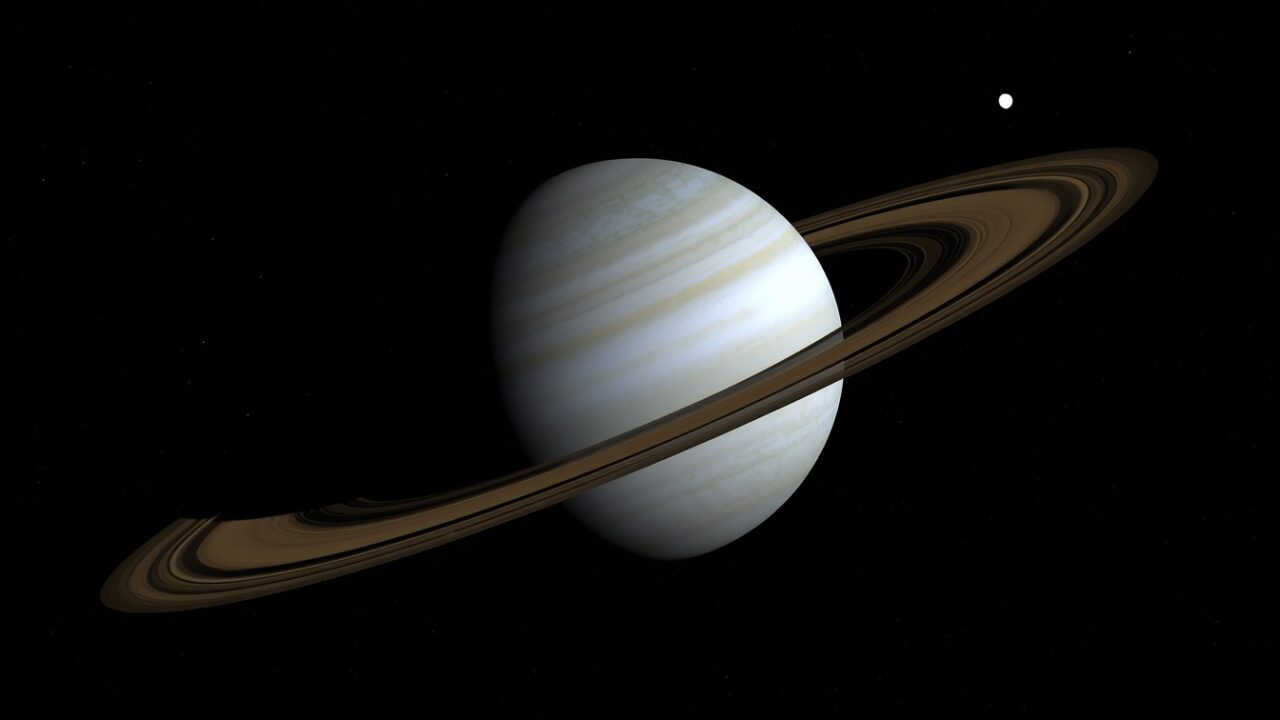
James Webb Neptune Rings Image:
When NASA released the James Webb Neptune rings image in September 2022, it marked the sharpest view of Neptune’s ring system since Voyager 2’s flyby in 1989. Using Webb’s Near-Infrared Camera, astronomers captured not just the planet’s faint rings but also several of its moons and unique atmospheric features, all in a single striking infrared photograph.
Why Neptune’s Rings Are Hard to Photograph
Neptune’s rings are composed of dark, dusty material that reflects very little visible light, making them extremely difficult to observe from Earth-based telescopes or even Hubble. The James Webb Neptune rings image succeeded because Webb’s infrared sensitivity allowed the faint rings to stand out clearly against the darker background of space.
A Complete Ring System Revealed
The image displayed several of Neptune’s ring components, including the bright Adams and Le Verrier rings, along with fainter dust bands not seen clearly since Voyager 2’s historic flyby decades earlier. This level of detail confirmed that Webb could reliably observe faint planetary ring systems within our own solar system.
Neptune’s Icy, Glowing Appearance
Unlike typical visible-light photos showing Neptune as a deep blue orb, the James Webb Neptune rings image displayed the planet in a much lighter, almost white-toned appearance. This is due to infrared imaging responding differently to methane in Neptune’s atmosphere compared to the visible wavelengths that give the planet its familiar blue color in traditional photography.
Bright Atmospheric Features
Webb’s image also captured bright patches near Neptune’s poles, believed to be linked to the planet’s atmospheric circulation patterns and possible polar vortex activity. These features had been difficult to study in detail using earlier telescopes, adding new data for atmospheric scientists studying ice giant weather systems.
Triton: The Standout Moon
One of the most eye-catching details in the James Webb Neptune rings image was the appearance of Neptune’s largest moon, Triton, shining brightly due to frozen nitrogen on its surface reflecting sunlight strongly in infrared wavelengths — making it appear almost like a nearby star in the frame.
Comparing to Voyager 2’s Historic Images
For over three decades, Voyager 2’s 1989 flyby remained the best available data on Neptune’s rings. The image finally surpassed that resolution from Earth-orbit distance, demonstrating just how far infrared space telescope technology has advanced since the late 20th century.
Scientific Value Beyond Aesthetics
Beyond its striking visuals, this image provides valuable data for studying the composition and stability of Neptune’s ring system, helping scientists refine models of how faint planetary rings form and persist over long timescales in the outer solar system.
A Reminder of Webb’s Versatility
While much attention focuses on Webb’s deep-space discoveries, the demonstrated the telescope’s equally impressive capability for solar system imaging, proving its value extends far beyond distant galaxies and nebulae.

When and How the Image Was Taken
Webb captured Neptune in July 2022 using its Near-Infrared Camera, and NASA released the images in September of that year. It was one of the first opportunities to show that the telescope could handle solar system targets as well as distant galaxies. Tracking a planet that moves across the sky requires precise pointing, and the observations confirmed Webb could do it.
The image gave astronomers their clearest look at the rings in more than 30 years. Some of the fainter dust bands had not been seen clearly since Voyager 2 flew past the planet in 1989.
Why Neptune Looks Different From Its Famous Blue Portraits
Most people picture Neptune as a deep blue ball, based on Voyager 2 images and later color-enhanced photos. In Webb’s infrared view it looks pale and almost ghostly. That is because methane in Neptune’s atmosphere strongly absorbs red and infrared light, making the planet appear darker at those wavelengths.
The exceptions are high-altitude clouds made of methane ice. These sit above most of the absorbing gas, so they reflect sunlight before it is absorbed and appear as bright streaks and spots. Webb also picked up a thin bright line around the equator, which may be linked to how gases circulate in the atmosphere.
Seven of Neptune’s Moons in One Frame
Besides the rings, Webb’s wider field captured seven of Neptune’s 14 known moons at the time. Triton dominates, looking like a bright star with Webb’s characteristic diffraction spikes because it reflects so much sunlight from its icy surface. The other visible moons include Galatea, Naiad, Thalassa, Despina, Proteus and Larissa.
Triton is especially interesting because it orbits Neptune backward, opposite the planet’s rotation. Most scientists think it is a captured object from the Kuiper Belt, the region of icy bodies beyond Neptune. Studying it helps researchers understand the population of small worlds in the outer solar system.
What Comes Next for Neptune Science
Neptune has been visited only once by a spacecraft, and no dedicated mission is currently under construction. That makes telescope observations from Webb, Hubble and large ground-based observatories the main way scientists track changes in its weather and ring system.
Researchers use repeated observations over years to follow storms, cloud bands and seasonal shifts. Neptune takes about 165 Earth years to orbit the Sun, so its seasons change very slowly. Long-term monitoring, including future Webb observations, will help fill the gaps until a new mission to the ice giants becomes a reality.
How Neptune’s Ring Arcs Fit In
Neptune’s outermost ring, called the Adams ring, contains unusual bright clumps known as arcs. Instead of spreading evenly around the planet, material in these arcs stays bunched together, a puzzle scientists have studied since Voyager 2 first photographed them.
Ground-based observations over the years suggested that some arcs have faded or shifted, and Webb’s data adds another point to that record. Understanding what keeps the arcs together, possibly the gravitational influence of a small nearby moon, helps explain how ring systems evolve.
Comparing the arcs across Voyager, ground telescopes and Webb gives researchers a timeline spanning more than three decades, which is rare for such distant, faint structures.
How Cold Neptune Really Is
Neptune orbits about 30 times farther from the Sun than Earth, and its cloud tops sit at roughly minus 200 degrees Celsius. Surprisingly, the planet radiates more heat than it receives from the Sun, which means it still has an internal heat source left over from its formation. That hidden heat helps drive the planet’s powerful winds, which are among the fastest measured anywhere in the solar system.
Final Thoughts
The image stands as a landmark solar system photograph, combining scientific precision with visual beauty and giving astronomers their best look yet at one of the solar system’s most elusive ring systems.
Keep exploring with our guides to James Webb Uranus rings image, Neptune moon Triton images and Hubble Saturn images. For official information, visit NASA’s James Webb Space Telescope page.
Frequently Asked Questions
Why were Neptune’s rings hard to photograph before Webb?
They’re made of dark, dusty material that reflects very little visible light.
When was the last comparable image of Neptune’s rings?
Voyager 2’s 1989 flyby provided the previous best view before Webb’s 2022 image.
Why does Neptune look white instead of blue in this image?
Infrared imaging responds differently to atmospheric methane than visible light does.
Which moon stood out in the image?
Triton appeared unusually bright due to frozen nitrogen reflecting infrared light strongly.
What did the image reveal about Neptune’s atmosphere?
Bright polar features suggested active atmospheric circulation and possible polar vortex activity.