Exciting NASA Officially Starts Artemis II Launch Countdown for Historic 2026 Moon Mission

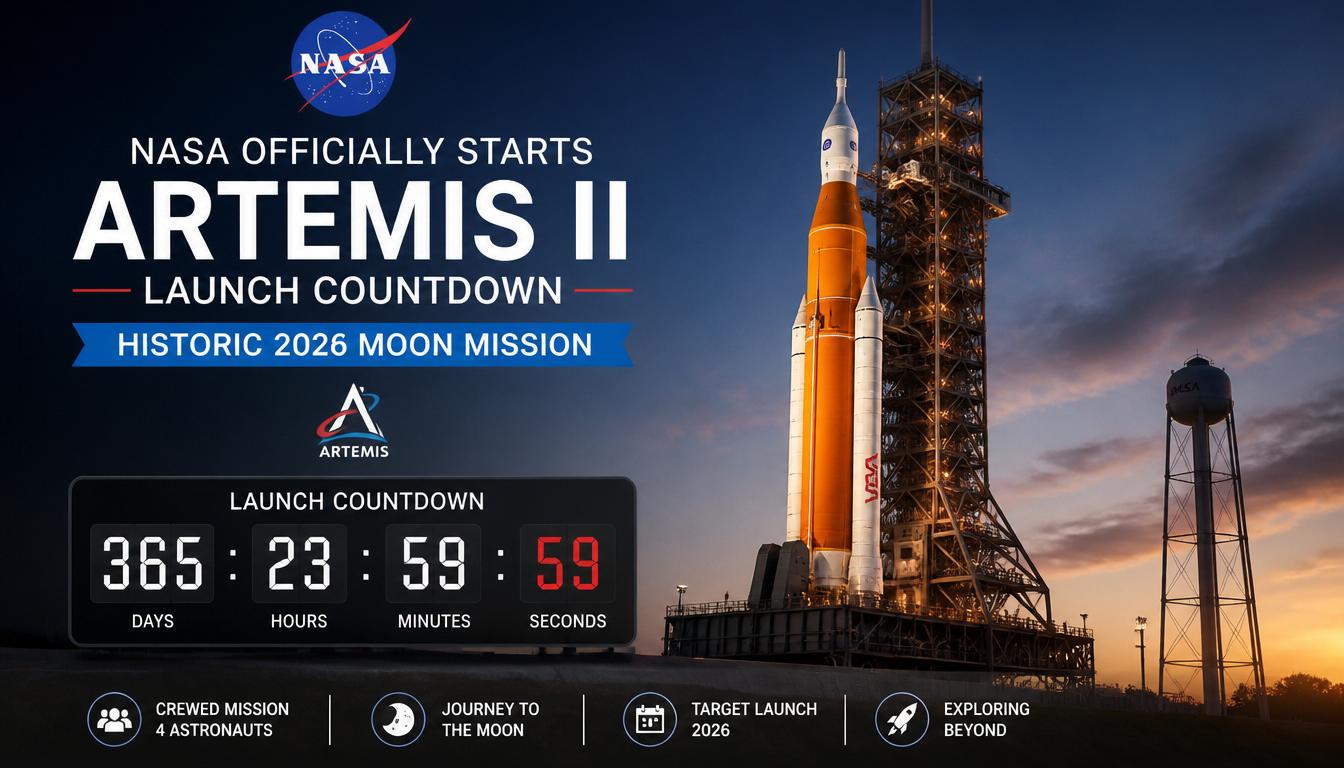
Major NASA Officially Starts Artemis II Launch Countdown for Historic 2026 Moon Mission
NASA has officially started the countdown for the highly anticipated Artemis II mission at Kennedy Space Center in Florida. The mission represents a major milestone in modern space exploration because it will become the first crewed launch of NASA’s powerful Space Launch System (SLS) rocket and Orion spacecraft.
As launch preparations move into their final phase, engineers, astronauts, mission controllers, and weather teams are working around the clock to ensure the mission is ready for liftoff.
Artemis II Countdown Officially Underway
The official countdown began at 4:44 p.m. EDT inside the Rocco Petrone Launch Control Center at NASA’s Kennedy Space Center. Launch team members arrived at their consoles and immediately started monitoring critical systems associated with the rocket, spacecraft, and launch infrastructure.
NASA is currently targeting a launch time of 6:24 p.m. EDT on Wednesday, April 1.
The start of the countdown marks one of the final and most important phases before launch because every system involved in the mission must now pass detailed checks and inspections.
Engineers Power Up Artemis II Rocket Systems
With the countdown clock running, engineers have started powering up the flight hardware aboard the SLS rocket and Orion spacecraft.
NASA teams are carefully checking communication systems, electrical systems, onboard computers, navigation systems, and cryogenic support equipment.
One of the most important operations involves preparing the rocket for fueling. The Space Launch System requires hundreds of thousands of gallons of super-cooled liquid hydrogen and liquid oxygen propellant before launch.
Important Fueling Preparations Include:
- Cryogenic system activation
- Fuel line inspections
- Temperature monitoring
- Pressure testing
- Communication link verification
- Safety system checks
These procedures ensure the rocket can safely handle the massive amounts of fuel required for deep-space missions.
Sound Suppression System Being Prepared
At Launch Pad 39B, technicians are also preparing the sound suppression system, which plays a critical role during liftoff.
The system uses a massive water tank that releases a powerful water deluge beneath the rocket at launch. This water helps absorb extreme acoustic energy and vibrations generated by the rocket engines.
Without this protection system, the intense sound and pressure from the engines could potentially damage the rocket or launch infrastructure.
Artemis II Crew Remains in Quarantine
While launch preparations continue outside, the Artemis II astronauts remain inside the Astronaut Crew Quarters at NASA Kennedy’s Neil A. Armstrong Operations and Checkout Building.
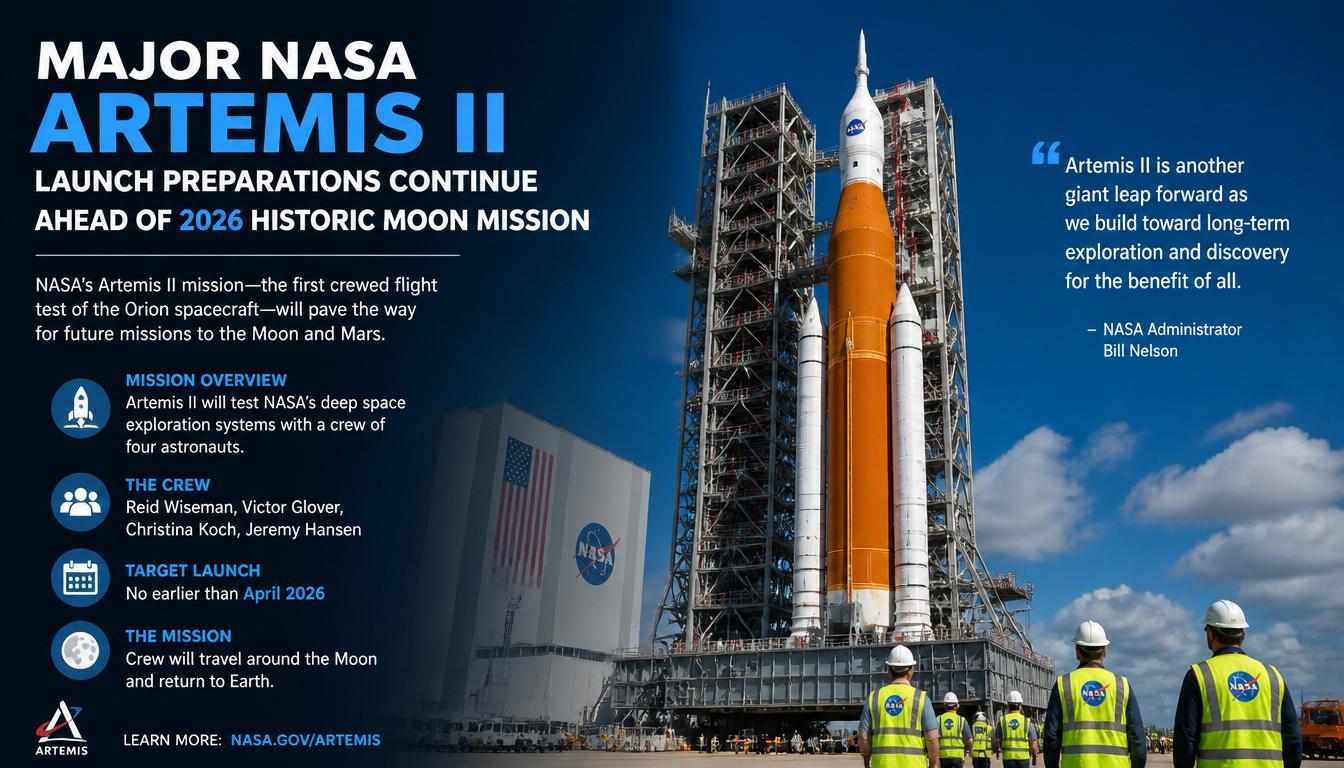
The crew includes:
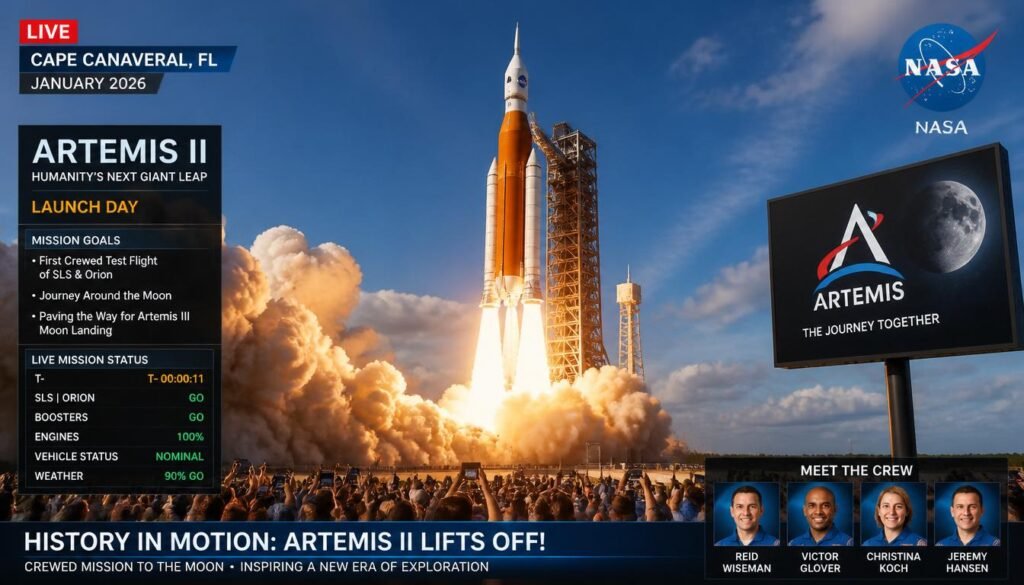
- Reid Wiseman — Commander
- Victor Glover — Pilot
- Christina Koch — Mission Specialist
- Jeremy Hansen — Mission Specialist representing the Canadian Space Agency
The astronauts are currently under strict health monitoring and quarantine procedures to reduce the risk of illness before launch.
Final Health and Medical Checks Underway
NASA medical teams are continuously evaluating the crew’s physical condition before launch.
Astronauts are following:
- Controlled sleep schedules
- Special nutrition plans
- Hydration monitoring
- Daily medical evaluations
- Mission readiness reviews
These preparations help astronauts remain physically and mentally prepared for the demanding mission ahead.
Deep-space missions place enormous stress on the human body, so maintaining astronaut health before launch is extremely important.
Crew Continues Mission Readiness Activities
Even during quarantine, the Artemis II astronauts continue reviewing mission procedures and technical plans.
NASA regularly updates the crew on:
- Rocket configuration status
- Launch weather conditions
- Mission timelines
- Spacecraft readiness
- Emergency procedures
This final preparation period helps ensure astronauts are fully ready for all stages of the approximately 10-day mission around the Moon.
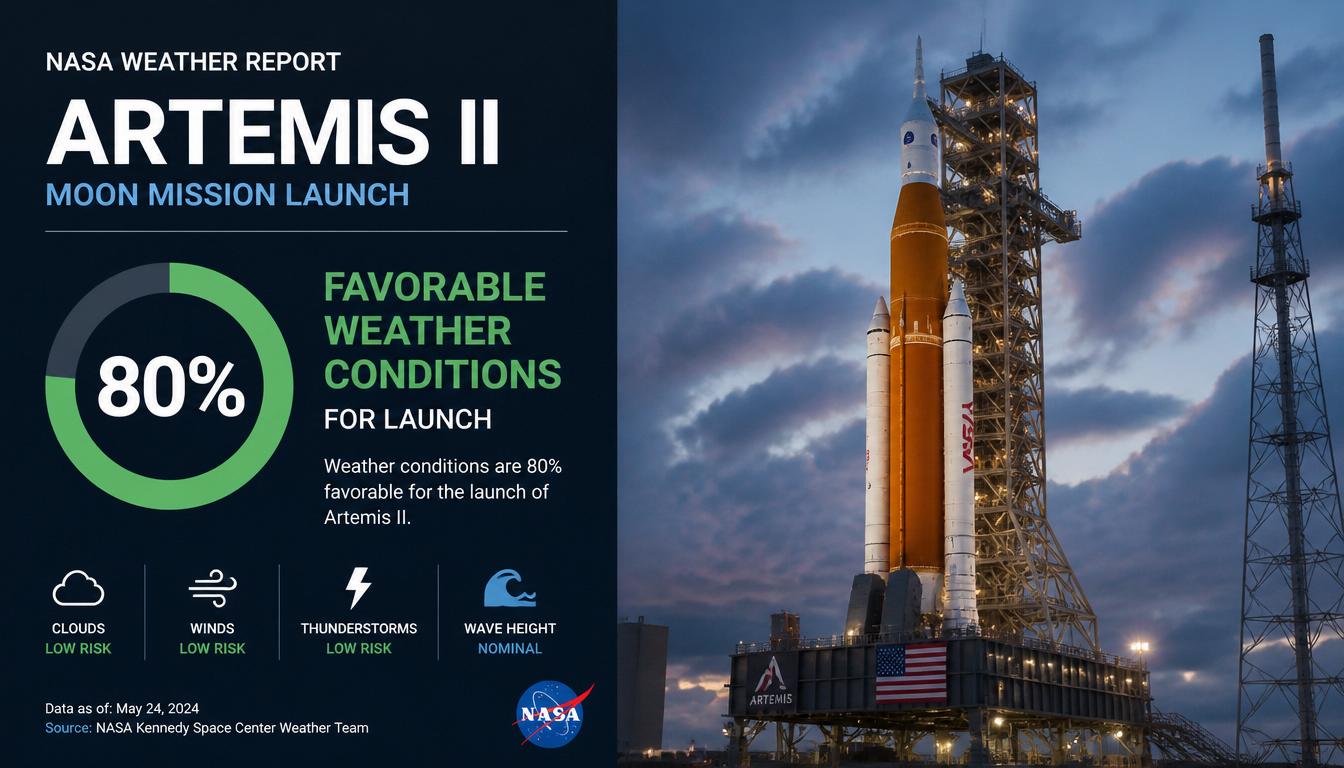
Weather Conditions Remain Favorable for Launch
NASA weather officers and specialists from the U.S. Space Force’s Space Launch Delta 45 continue monitoring conditions around Kennedy Space Center.
Current forecasts show an 80% chance of favorable weather conditions for launch day.
Primary Weather Concerns Include:
- Cloud coverage
- Potential high winds
- Coastal weather changes
- Upper-level atmospheric conditions
Weather remains one of the most important factors during launch operations because unsafe conditions can force delays or postponements.
NASA teams will continue reviewing updated forecasts leading up to fueling operations and launch day.
Artemis II Mission Represents Historic Return to Lunar Exploration
Artemis II will become the first crewed Artemis mission and the first mission to send astronauts around the Moon since NASA’s Apollo program.
The mission is designed to test:
- Orion spacecraft systems
- Deep-space communication technology
- Astronaut life-support systems
- Navigation capabilities
- Crew operations beyond Earth orbit
The mission will help NASA prepare for future lunar landing missions and long-term human exploration of the Moon.
The Power of NASA’s Space Launch System
The Space Launch System is currently NASA’s most powerful rocket ever developed for human deep-space missions.
Key Features of the SLS Rocket
- More than 300 feet tall
- Uses four RS-25 engines
- Equipped with twin solid rocket boosters
- Produces millions of pounds of thrust
- Designed for Moon and Mars missions
The rocket is specifically engineered to carry astronauts farther into space than previous NASA spacecraft.
Orion Spacecraft Built for Deep-Space Travel
Mounted on top of the SLS rocket is the Orion spacecraft, which is designed to safely transport astronauts beyond low-Earth orbit.
The spacecraft includes:
- Crew living systems
- Navigation technology
- Radiation protection
- Emergency safety systems
- Deep-space communication equipment
Orion is one of NASA’s most advanced spacecraft and will support future lunar and Mars exploration missions.
NASA Broadcast Coverage for Artemis II Launch
NASA plans extensive live coverage of Artemis II launch operations.
Broadcast coverage of fueling operations will begin at 7:45 a.m. on April 1 through NASA’s official YouTube channel and other digital platforms.
Full launch coverage on NASA+ will begin at 12:50 p.m.
Watch NASA’s Official Artemis II Coverage
NASA YouTube Channel Live Coverage
Millions of viewers worldwide are expected to watch the historic mission live.
International Cooperation in the Artemis Program
The Artemis program represents a major international effort in human space exploration.
The participation of the Canadian Space Agency and astronaut Jeremy Hansen demonstrates the growing cooperation between countries in future lunar exploration.
NASA is also working with commercial partners and international organizations to support future Artemis missions.
Frequently Asked Questions (FAQs)
What is Artemis II?
Artemis II is NASA’s first crewed Artemis mission that will send astronauts around the Moon and safely return them to Earth.
What is the scheduled launch date for Artemis II?
NASA is targeting launch at 6:24 p.m. EDT on April 1, 2026.
What rocket is being used for Artemis II?
The mission employs NASA’s Orion spacecraft and Space Launch System (SLS) rocket.
Why are astronauts quarantined before launch?
Astronauts are quarantined to reduce the risk of illness before the mission.
What is the sound suppression system?
It is a water-based system that reduces acoustic energy and vibrations during liftoff.
How long will the Artemis II mission last?
The mission is anticipated to go on for about 10 days.
What are the current launch weather conditions?
NASA forecasts an 80% chance of favorable weather for launch day.
Why is Artemis II important?
The mission will test critical deep-space technologies needed for future Moon landings and Mars exploration.
Conclusion
NASA’s official start of the Artemis II launch countdown marks a historic moment in modern space exploration. Engineers are completing critical launch preparations, astronauts are entering the final phase of mission readiness, and weather conditions continue to look promising for liftoff.
As the countdown continues toward launch day, Artemis II represents much more than a mission around the Moon. It symbolizes the beginning of a new era of human deep-space exploration and NASA’s long-term vision for returning humans to the Moon and eventually reaching Mars.
new articles
Keep exploring