Artemis II Flight Update: Orion Successfully Completes Major Perigee Raise Burn Ahead of Epic Moon Journey in 2026

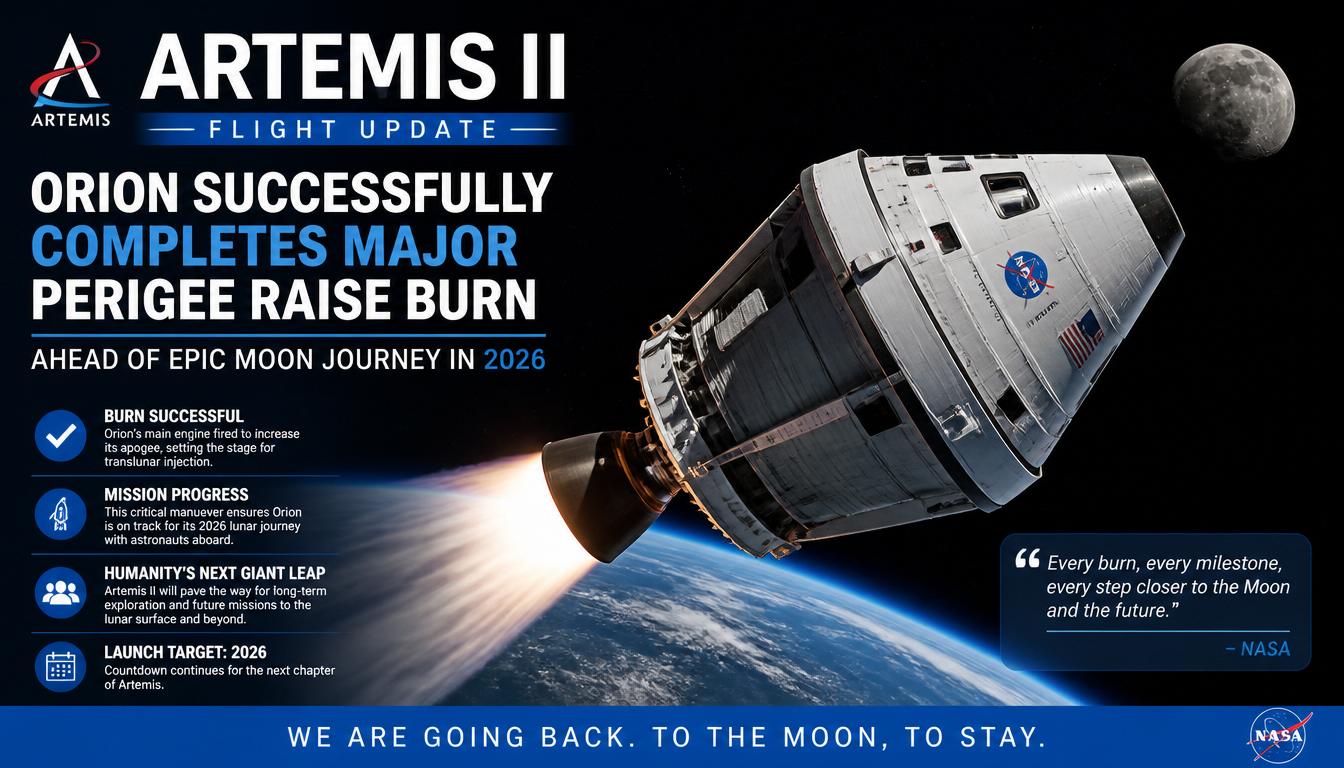
Artemis II Flight Update: Orion Successfully Completes Major Perigee Raise Burn Ahead of Epic Moon Journey in 2026
NASA’s Artemis II mission continues reaching important milestones as the Orion spacecraft successfully completed the perigee raise burn, another critical maneuver in the early stages of humanity’s return toward deep space exploration.
The successful burn represents a major achievement for NASA and the Artemis II crew as the spacecraft moves closer to its historic translunar injection burn — the maneuver that will send astronauts toward the Moon for the first time since the Apollo era ended in 1972.
The Artemis II mission is currently testing the Orion spacecraft and Space Launch System technologies before future missions attempt lunar landings and long-term exploration around the Moon.
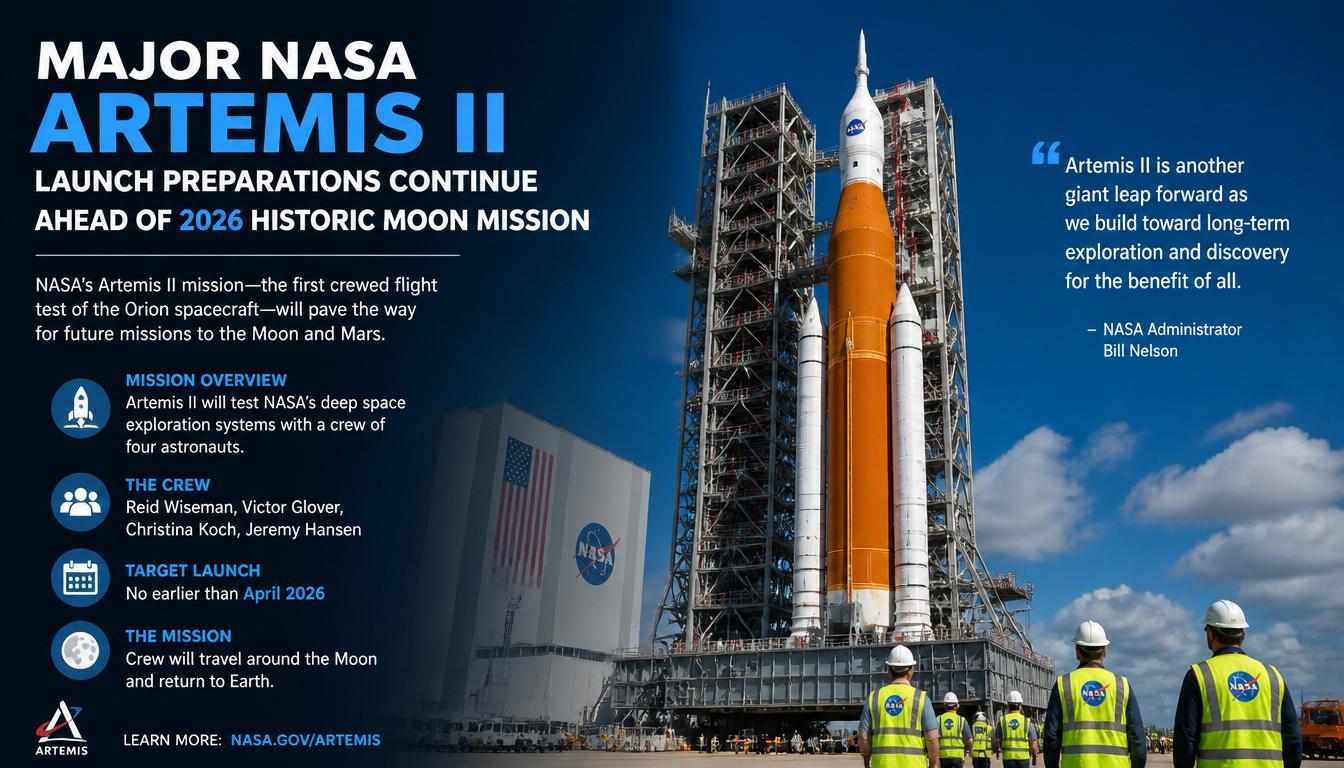
On board the Orion capsule, which is called “Integrity,” are NASA astronauts Reid Wiseman, Victor Glover, Christina Koch, and Jeremy Hansen from the Canadian Space Agency.
Orion Completes Critical Perigee Raise Burn
The perigee raise burn was successfully completed after Orion ignited its service module’s main engine for 43 seconds while orbiting Earth.
This important maneuver raised the lowest point of the spacecraft’s orbit and refined Orion’s trajectory as it continued circling the planet. NASA engineers carefully planned the burn to ensure the spacecraft entered a stable high Earth orbit aligned with its future path toward the Moon.
The successful execution of the burn demonstrates the reliability of Orion’s propulsion and navigation systems during one of the mission’s key early phases.
NASA confirmed that all systems performed normally throughout the operation, allowing the mission to proceed as planned.
What Is the Perigee Raise Burn?
The perigee raise burn is one of several orbital adjustment maneuvers performed during the early stages of the Artemis II mission.
In spaceflight, the term “perigee” describes the nearest point in a spacecraft’s orbit relative to Earth. By firing Orion’s engine at a carefully calculated moment, NASA increased this lowest orbital point to shape the spacecraft’s flight path.
This maneuver works together with the earlier apogee raise burn, which increased the highest point of Orion’s orbit.
Together, these orbital burns place Orion into the proper high Earth orbit needed before astronauts begin traveling beyond Earth’s orbit toward the Moon.
Astronauts Awakened to Monitor the Burn
After a short rest period, the Artemis II astronauts were awakened by mission control at 7:06 a.m. EDT to monitor spacecraft systems during the maneuver.
NASA chose the song “Sleepyhead” by Young and Sick as the crew wake-up music, continuing the long tradition of special wake-up songs used during human spaceflight missions.
Once awake, the crew carefully monitored Orion’s systems while engineers on the ground observed engine performance, navigation data, and spacecraft stability throughout the burn.
Following the successful maneuver, astronauts returned to another scheduled rest period lasting approximately four and a half hours before beginning their first full operational day in space.
Orion Enters Stable High Earth Orbit
The completion of the perigee raise burn officially placed Orion into a stable high Earth orbit.
This orbit is extremely important because it aligns the spacecraft with the precise trajectory required for the upcoming translunar injection burn. Achieving the correct orbital position ensures Orion can safely leave Earth orbit and travel toward the Moon using the least amount of fuel possible.
NASA engineers spend months calculating these orbital adjustments because even tiny trajectory errors can significantly affect long-distance space missions.
The success of this maneuver confirms that Orion remains exactly where it needs to be before beginning the next major phase of the mission.
Translunar Injection Burn Comes Next
The next major milestone for Artemis II is the translunar injection burn, one of the most powerful and important maneuvers of the mission.
Pending final approval from NASA’s mission management team, the burn is scheduled for 7:49 p.m. EDT and is expected to last five minutes and 49 seconds.
During this maneuver, Orion’s engine will dramatically increase the spacecraft’s speed by approximately 1,274 feet per second, allowing it to break free from low Earth orbit and begin its journey toward the Moon.
This will mark the first time astronauts travel beyond low Earth orbit since the Apollo missions over 50 years ago.
Why the Translunar Injection Burn Is Historic
The translunar injection burn is a historic event not just for NASA, but for all of human space exploration.
No crew has traveled beyond low Earth orbit since the Apollo 17 mission in 1972. Artemis II is preparing to change that by sending astronauts on a journey around the Moon before returning safely to Earth.
The burn essentially acts as the spacecraft’s gateway out of Earth’s gravitational environment and onto a path toward deep space.
NASA engineers must execute the maneuver with extreme precision because the spacecraft must remain perfectly aligned during the outbound journey.
Even a small navigation error could affect the mission’s lunar trajectory, which is why flight controllers continuously monitor Orion’s systems during every stage of the maneuver.
Mission Management Team Reviews Spacecraft Systems
Before the translunar injection burn receives final approval, NASA’s mission management team will hold its first major mission review meeting.
During the meeting, engineers and mission specialists will evaluate Orion’s spacecraft systems, propulsion performance, navigation systems, communication networks, thermal systems, and crew safety conditions.
The team will carefully analyze all data collected during the earlier orbital maneuvers to confirm that Orion is fully prepared for translunar flight.
Mission reviews like this are essential because they help NASA identify any potential concerns before proceeding to more critical phases of the mission.
Flight Controllers Closely Monitor Navigation Data
During the upcoming translunar injection burn, NASA flight controllers will closely monitor Orion’s engine performance, guidance systems, and navigation data.
Guidance and navigation systems are among the most important technologies on any deep space mission because they determine the spacecraft’s position, speed, and direction while traveling enormous distances from Earth.
Engineers will ensure Orion remains perfectly aligned throughout the maneuver so the spacecraft follows the exact planned trajectory toward the Moon.
These systems become even more important in deep space because astronauts cannot rely on traditional Earth-based GPS systems during lunar travel.
Artemis II represents the beginning of a new age in human space exploration.
The Artemis II mission is more than just another spaceflight test. It represents the beginning of a new era in human exploration beyond Earth orbit.
NASA designed Artemis II to test the Orion spacecraft and astronaut operations in real deep space conditions before future missions attempt lunar landings.
The lessons learned during Artemis II will directly support upcoming Artemis missions that aim to establish a long-term human presence on the Moon and eventually prepare for human missions to Mars.
Every successful maneuver, system check, and crew operation helps NASA move one step closer to achieving those long-term exploration goals.
Orion Continues Performing as Expected
So far, Orion’s major spacecraft systems continue performing within expected ranges.
NASA engineers have confirmed that the spacecraft’s propulsion systems, communications equipment, thermal controls, and power systems remain stable following the successful perigee raise burn.
The spacecraft’s solar arrays continue generating electricity while onboard navigation systems maintain precise tracking around Earth.
With each successful milestone, confidence continues growing in Orion’s ability to safely transport astronauts during future deep space missions.
The Artemis Program’s Long-Term Vision
NASA’s Artemis program is focused on returning humans to the Moon while building technologies needed for even more ambitious missions in the future.
Unlike the Apollo program, Artemis aims to create sustainable lunar exploration by establishing long-term operations near and on the Moon.
Future missions may involve lunar habitats, space stations in lunar orbit, advanced robotic systems, and international cooperation between space agencies.
Artemis II serves as one of the most important preparation missions because it allows NASA to test spacecraft systems and astronaut operations before attempting lunar landings again.
Frequently Asked Questions (FAQs)
What was the perigee raise burn in Artemis II?
The perigee raise burn was a procedure used to raise the lowest altitude of Orion’s orbit around Earth.
How long did the burn last?
The Orion spacecraft’s engine fired for approximately 43 seconds during the maneuver.
Why is the perigee raise burn important?
The burn helps place Orion into the correct high Earth orbit needed for future translunar operations toward the Moon.
What is the translunar injection burn?
The translunar injection burn is a major engine firing that sends Orion out of Earth orbit and toward the Moon.
When is the translunar injection burn scheduled?
Pending mission approval, the burn is scheduled for 7:49 p.m. EDT.
Who are the astronauts aboard Artemis II?
The crew includes Reid Wiseman, Victor Glover, Christina Koch, and Jeremy Hansen.
Why is Artemis II historically important?
It will be the first mission carrying humans beyond low Earth orbit since the Apollo missions ended in 1972.
Is Orion operating normally after the burn?
Yes, NASA confirmed that Orion’s major systems continue operating within expected ranges after the successful maneuver.
read another articles
Keep exploring